Craft dossier · Steel
Hundred-Refined Steel: How Chinese Smiths Folded Steel
百炼钢bǎiliàngāng
Chinese sword forging explained: cast iron, puddled steel, hundred-refined folding, co-fusion steel and composite blades, with original texts, dates and layer maths.
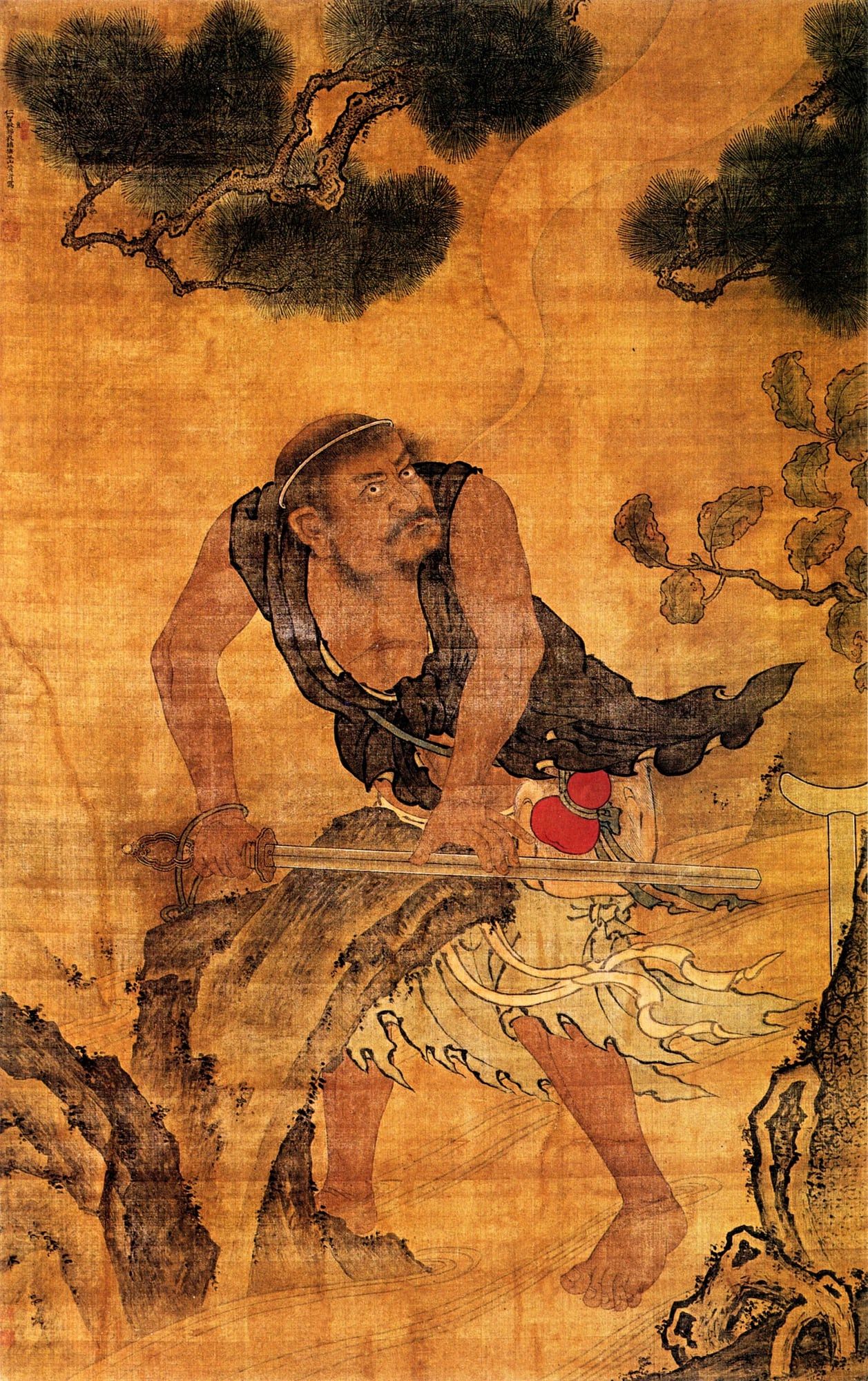
Key facts
- Hundred-refined steel (百炼钢, bǎiliàngāng) is steel that was heated, hammered, folded and forge-welded over and over to drive out slag and even out its carbon.
- China cast iron by the 5th century BCE; from the Han dynasty smiths turned cast iron into steel by puddling (炒钢) and then refined that steel by folding.
- “Hundred” is a grade, not a count: Shen Kuo (c. 1088) says true steel is forged through “a hundred-odd heats” until its weight stops dropping, while 15 folds already make 32,768 layers.
- The best blades were composites: Song Yingxing's Tiangong Kaiwu (1637) says the finest swords wrap hundred-refined steel around an iron core (钢表铁里).
- S-GAME says it sometimes had master swordsmiths forge real replicas to study how a weapon's weight and length affect movement in Phantom Blade Zero.
- Chinese
- 百炼钢 · bǎiliàngāng
- Raw material
- Puddled steel (炒钢) made from cast iron
- Process
- Repeated heating, folding and forge-welding until the bar stops losing weight
- Inscribed example
- “百練清剛” on a Zhongping-era sword (184–189 CE), Tokyo National Museum
- Key texts
- Mengxi Bitan (c. 1088); Tiangong Kaiwu (1637)
- Rival method
- Co-fusion steel (灌钢), described by the 6th century CE
- Layer maths
- n folds give 2ⁿ layers; 15 folds = 32,768
Hundred-refined steel 百炼钢 bǎiliàngāngSteel repeatedly heated, folded and hammered to drive out slag and even out carbon, recorded from the Han dynasty.Glossary → is steel that Chinese smiths heated, hammered, folded and forge-welded again and again until the slag was driven out and the carbon spread evenly. It was the premium material of traditional Chinese sword forging from the Han dynasty onward, but never a single secret recipe. It was the last link in a chain only China had: cast iron first, then steel made from cast iron, then folding, then blades that wrapped hard steel around soft iron.
China’s head start: cast iron first
Most of the ancient world made iron in a bloomery, a furnace too cool to melt it, and hammered the spongy lump into shape. China went another way. By the 5th century BCE its furnaces were hot enough to melt iron, which soaks up carbon as it liquefies and can be poured into moulds like bronze. Some of Europe’s earliest cast iron comes from Swedish furnaces such as Lapphyttan, around 1150–1250 CE.
Cast iron, 生铁 (“raw iron”), carries more than 2% carbon. That makes it castable and hard, but brittle: a cast-iron sword would shatter on the first parry. So Chinese smiths learned to take the carbon out again.
From the Western Han dynasty (206 BCE – 9 CE) they practised puddling , literally “frying steel”: cast iron was heated until pasty and stirred in the open air so that oxygen burned off its carbon. Stopped early, the result was steel; pushed further, it became soft wrought iron, 熟铁 (“cooked iron”). Song Yingxing’s Tiangong Kaiwu (1637) still describes the method: molten iron runs into a shallow square pit while several men stir it with willow poles and another scatters dried, finely sieved mud over it.
| Chinese term | Material | Carbon (approx.) | Behaviour |
|---|---|---|---|
| 生铁 shēngtiě, “raw iron” | Cast iron | over 2%, usually 3–4% | Melts and casts; hard but brittle |
| 钢 gāng | Steel | about 0.2–2% (blades usually 0.5–1%) | Hardens when quenched |
| 熟铁 shútiě, “cooked iron” | Wrought iron | under about 0.1% | Soft and tough; will not harden |
凡铁分生、熟,出炉未炒则生,既炒则熟。生熟相和,炼成则钢。
Iron is raw or cooked: straight from the furnace and unstirred, it is raw; once puddled, it is cooked. Combine raw and cooked, refine them, and you have steel.
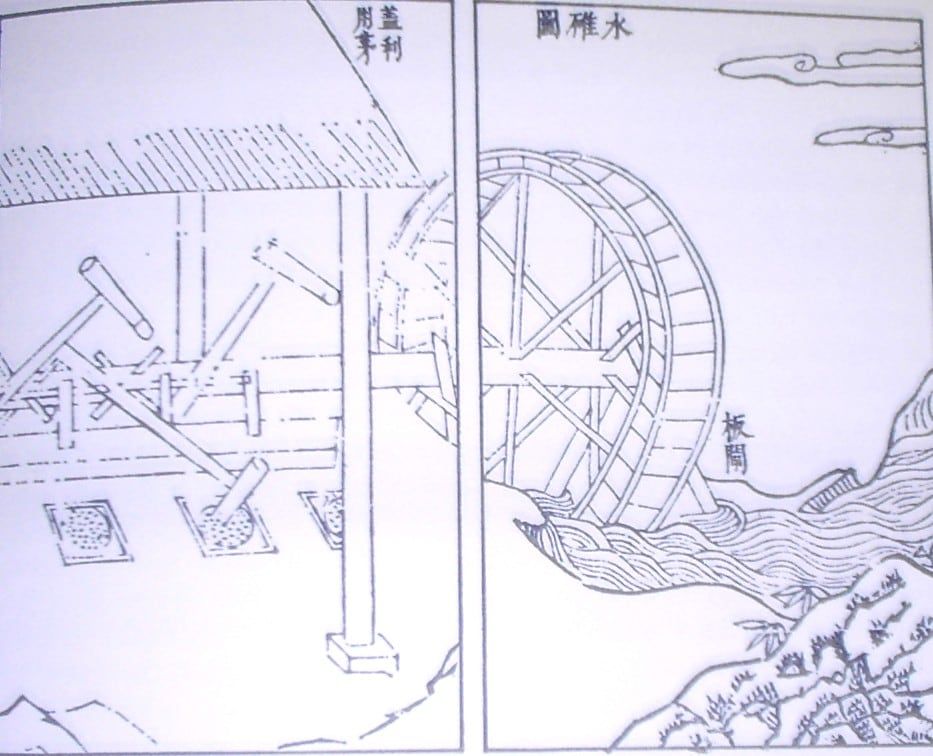
Chinese sword forging, step by step
Puddled steel was only the raw material. What turned it into a sword was a sequence of operations that changed remarkably little between the Han and the Ming. Scroll through the explainer below; the sections that follow unpack the steps that matter most.
- 01
冶炼Smelting
Chinese smiths had a head start: by the 5th century BCE, blast furnaces were producing cast iron — liquid iron poured into moulds — more than 1,500 years before blast furnaces spread across Europe.
- 02
炒钢Puddling
Cast iron is too brittle for a blade. From the Han dynasty, smiths “fried” it — stirring molten iron in open air to burn off carbon until it became workable steel.
- 03
百炼Hundred refinings
The steel is heated, hammered out, folded and welded back onto itself, again and again. Each fold squeezes out slag and evens the carbon — and doubles the layers.
- 04
夹钢Sandwiching
A hard, high-carbon steel edge is forged between (or wrapped by) softer iron. The edge holds sharpness; the body flexes instead of snapping.
- 05
淬火Quenching
Heated to a glowing cherry red, the blade is plunged into water or oil. The sudden chill locks the steel into a hard structure — the moment that makes or ruins a blade.
- 06
研磨Grinding & polishing
Days of grinding on progressively finer stones shape the geometry and raise the edge, revealing the grain of the folded steel.
- 07
装具Fittings
Guard, grip and scabbard turn steel into a weapon you can carry: lacquered wood, rayskin, bronze or iron fittings, sometimes jade.
What “hundred-refined” actually means
The character 炼 (in Han inscriptions also written 湅 or 練) means one cycle of heating and hammering. Puddled steel left the hearth full of slag and uneven in carbon, so smiths reheated it, drew it out, folded it back on itself and welded it again. Every cycle squeezed out more slag; every fold blended high- and low-carbon zones.
By the Eastern Han (25–220 CE), refining had become a boast engraved on the blade. A ring-pommel sword about 110 cm long, excavated from the Tōdaijiyama tomb mound in Tenri, Nara, carries a gold-inlaid inscription dated to the Zhongping era (184–189 CE) that calls it 百練清剛, “hundred-refined pure steel”. A Han blade that ended up in a Japanese grave, it is now a National Treasure in the Tokyo National Museum.
How many refinings make “a hundred”? Not a hundred folds. The best evidence comes from the polymath Shen Kuo, who watched smiths at the forges of Cizhou (in today’s Hebei) and recorded their test for real steel:
但取精铁,锻之百余火,每锻称之,一锻一轻,至累锻而斤两不减,则纯钢也,虽百炼不耗矣。
Take refined iron and forge it through a hundred-odd heats, weighing it after every forging. Each forging makes it lighter, until further forging no longer reduces its weight: then it is pure steel, and even a hundred more refinings will not wear it away.
So “hundred” counted heats, not folds, and the real endpoint was physical: you stopped when the bar stopped losing weight, because the slag was gone. In Chinese 百 also simply means “a great many”, as in 百姓, “the hundred surnames”, the common people. By the early 4th century the phrase was proverbial: the Western Jin poet Liu Kun asked how “hundred-refined steel” could turn “soft enough to wind around a finger” (何意百炼刚,化为绕指柔).
The layer arithmetic
Folding is exponential. Each fold doubles the layers, so n folds give 2ⁿ:
| Folds | Layers |
|---|---|
| 5 | 32 |
| 10 | 1,024 |
| 15 | 32,768 |
| 20 | 1,048,576 |
Fifteen folds, the number the explainer counts up to, already give 32,768 layers. A literal hundred folds would give 2¹⁰⁰, about 10³⁰ layers, each far thinner than an atom: proof that the word was a grade, not a recipe.
There is also a practical ceiling. After about ten folds, a billet a few centimetres thick holds layers only microns to a few tens of microns thick, thinner than the distance carbon diffuses during a single forging heat at around 1,100 °C. From then on the carbon evens out completely, and more folding mainly burns metal off as scale. Song Yingxing put a number on the waste: fresh wrought iron loses three parts in ten as scale and flakes when it is forged (十耗其三).
Co-fusion steel: the shortcut
Folding was slow and wasteful, so smiths looked for a faster route to the right carbon content. The answer was co-fusion steel : melt high-carbon cast iron into low-carbon wrought iron and let the two meet in the middle. The earliest description is in the biography of Qiwu Huaiwen (綦毋怀文), a 6th-century metallurgist and Daoist adept who served Gao Huan, patriarch of the Northern Qi ruling house:
又造宿铁刀,其法烧生铁精以重柔铤,数宿则成刚。以柔铁为刀脊,浴以五牲之溺,淬以五牲之脂,斩甲过三十札。
He also made “overnight-iron” sabres. He heated the finest cast iron with stacked bars of soft iron, and after several nights it became steel. He used soft iron for the back of the blade, bathed it in the urine of the five sacrificial animals and quenched it in their fat, and it cut through more than thirty plates of armour.
Not everyone approved. Shen Kuo called co-fusion steel 伪钢, “false steel”: in his view the cast iron only hardened the metal for a while, and after two or three refinings it reverted to soft iron. Yet by Song Yingxing’s day it was standard practice. His 1637 recipe: beat wrought iron into thin strips about a finger wide and one and a half cun (some 5 cm) long, bind them tightly, lay cast iron on top, cover the stack with old straw sandals caked in mud, and blow the furnace hard. The cast iron melts first and “seeps into the wrought iron, the two uniting”; then the smith hammers, refines and hammers again. He calls the result 团钢, “lumped steel”, or 灌钢.
Building the blade: wrap, sandwich, quench
Uniform hard steel makes a sharp but brittle sword; soft iron makes a tough but dull one. Chinese smiths solved this with composites, and Song Yingxing spells out the hierarchy:
刀剑绝美者以百炼钢包裹其外,其中仍用无钢铁为骨。若非钢表铁里,则劲力所施,即成折断。
The finest swords and sabres are wrapped on the outside in hundred-refined steel, with steel-less iron kept inside as the bone. Without a steel skin over an iron core, they would snap the moment force was applied.
Ordinary knives and axes, he adds, merely have steel inlaid along the cutting face, and even a costly blade that can chop nails will, after thousands of sharpenings, wear through its steel until the iron shows. Every good blade, wrapped or inlaid, was then quenched in water; its keenness came from the whetstone. Smiths use three main names for these builds:
- 包钢 (bāogāng, wrapped steel): a steel skin around a soft iron core, Song Yingxing’s 钢表铁里, “steel outside, iron inside”.
- 夹钢 (jiāgāng, sandwiched steel): a hard steel core between two softer cheeks, exposed only at the edge.
- 贴钢 / 嵌钢 (tiēgāng / qiàngāng, applied or inlaid steel): a steel strip forge-welded onto, or into, the edge of an iron body; the cheapest way to put steel where it cuts.
Song Yingxing was candid about one rival. Japanese sabres, he wrote, had backs under two fen (about 6 mm) yet balanced on a fingertip: “We do not know what hammering method they use; China has not received its transmission.”
Quenching: water, urine, fat and oil
Quenching, 淬火 (cuìhuǒ), is the moment a blade is made or ruined. Heated to a cherry-red glow (roughly 780–850 °C for a typical blade steel) and plunged into liquid, carbon steel turns hard. Song Yingxing’s instruction is plain: take the forged steel straight from the fire and plunge it into clean water, and only then is it 健钢, “strengthened steel”.
Older recipes were more exotic. Qiwu Huaiwen’s urine-then-fat treatment is often read by historians of technology as a two-stage quench: urine, salty like brine, cools fast; fat, like oil, cools more gently. That reading is an interpretation, but the physics holds: water and brine give maximum hardness and the most risk of cracking, oil less of both. Song Yingxing also reported that foreigners quenched swords in 地溲, “earth urine”, a petroleum-like oil not produced in China, and claimed the steel could cut jade, adding drily: “I have never seen it.”
Hundred-refined steel vs Japanese and Damascus steel
Chinese folded steel is constantly compared with the katana and with Damascus steel. All three solved the same problem, a hard edge on a tough body, with the iron their regions could make.
| Chinese hundred-refined steel | Japanese tamahagane (katana) | Wootz / historical Damascus | |
|---|---|---|---|
| Starting metal | Puddled steel made from cast iron; later co-fusion steel | Tamahagane, bloom steel smelted from iron sand in a tatara furnace | Crucible steel from India and Sri Lanka (from c. 300 BCE) |
| How carbon is set | Puddling, then folding; or cast iron melted into wrought iron | Smith sorts pieces by carbon, then folds | Melted in a sealed crucible; very high carbon (about 1.5%) |
| Folding | Many heats until the weight stops dropping | Typically around 10–15 folds | None |
| Blade build | Wrapped (包钢), inlaid (嵌钢) or sandwiched (夹钢) | Hard steel jacket over a softer core | Usually a single steel |
| Hardening | Whole blade quenched in water | Clay-coated differential quench that forms a hamon | Quenched and tempered |
| Visible pattern | Faint folding grain after polishing | Grain and hamon | Watered pattern from carbide bands |
None is simply “better”. Chinese smiths had cheap cast iron and the puddling and co-fusion processes it made possible; Japanese smiths made the most of a patchy bloomery steel; Indian crucible steel was so rich in carbon that it needed no folding at all. To see these metals in real weapons, read about the jian, the dao, the bronze Sword of Goujian that came before them, and the forges of Longquan that still fold steel today.
 《天工开物》 古法制造传习之旅 第一集 | CCTV
In Phantom Blade Zero
S-GAME’s fondness for iron goes beyond props. Besides the replica swords, its 2025 S-Party event in Beijing was staged at the Shougang industrial site beside the No. 3 blast furnace, and its location scouting took in “old steel factories in Beijing”. Kungfupunk is built from the same smoke and slag as Chinese swordsmithing, which suits a game whose arsenal draws on traditional Chinese weaponry: every jian and dao in it descends, at least in spirit, from a bar of steel that someone weighed after every heat.
Frequently asked
Q01What is hundred-refined steel?
Q02Was hundred-refined steel really folded 100 times?
Q03How were Chinese swords forged?
Q04Is Chinese folded steel the same as Damascus steel?
Q05How many layers does folded steel have?
Sources & further reading
- Mengxi Bitan (Dream Pool Essays), juan 3 — Shen Kuo, c. 1088 (Wikisource)
- Tiangong Kaiwu, “Iron” (Wujin chapter) — Song Yingxing, 1637 (Wikisource)
- Tiangong Kaiwu, “Axes and adzes” (Chuiduan chapter) — Song Yingxing, 1637 (Wikisource)
- Book of Northern Qi, juan 49: biography of Qiwu Huaiwen — Li Baiyao, 7th century (Wikisource)
- Science and Civilisation in China, Vol. 5 Part 11: Ferrous Metallurgy — Donald B. Wagner, Cambridge University Press, 2008
- Tōdaijiyama Kofun (東大寺山古墳) and its Zhongping-era inscribed sword — Wikipedia (Japanese)
- Phantom Blade Zero studio says every single piece of content is hand-crafted by real artists — GamingBolt, 10 April 2026 (quoting S-GAME's official X post)
Cite this page
Wuxiapunk Editors. (2026, October 27). Hundred-Refined Steel: How Chinese Smiths Folded Steel. Wuxiapunk. https://wuxiapunk.com/craft/hundred-refined-steel/
“Hundred-Refined Steel: How Chinese Smiths Folded Steel.” Wuxiapunk, 27 Oct. 2026, https://wuxiapunk.com/craft/hundred-refined-steel/.
Keep reading
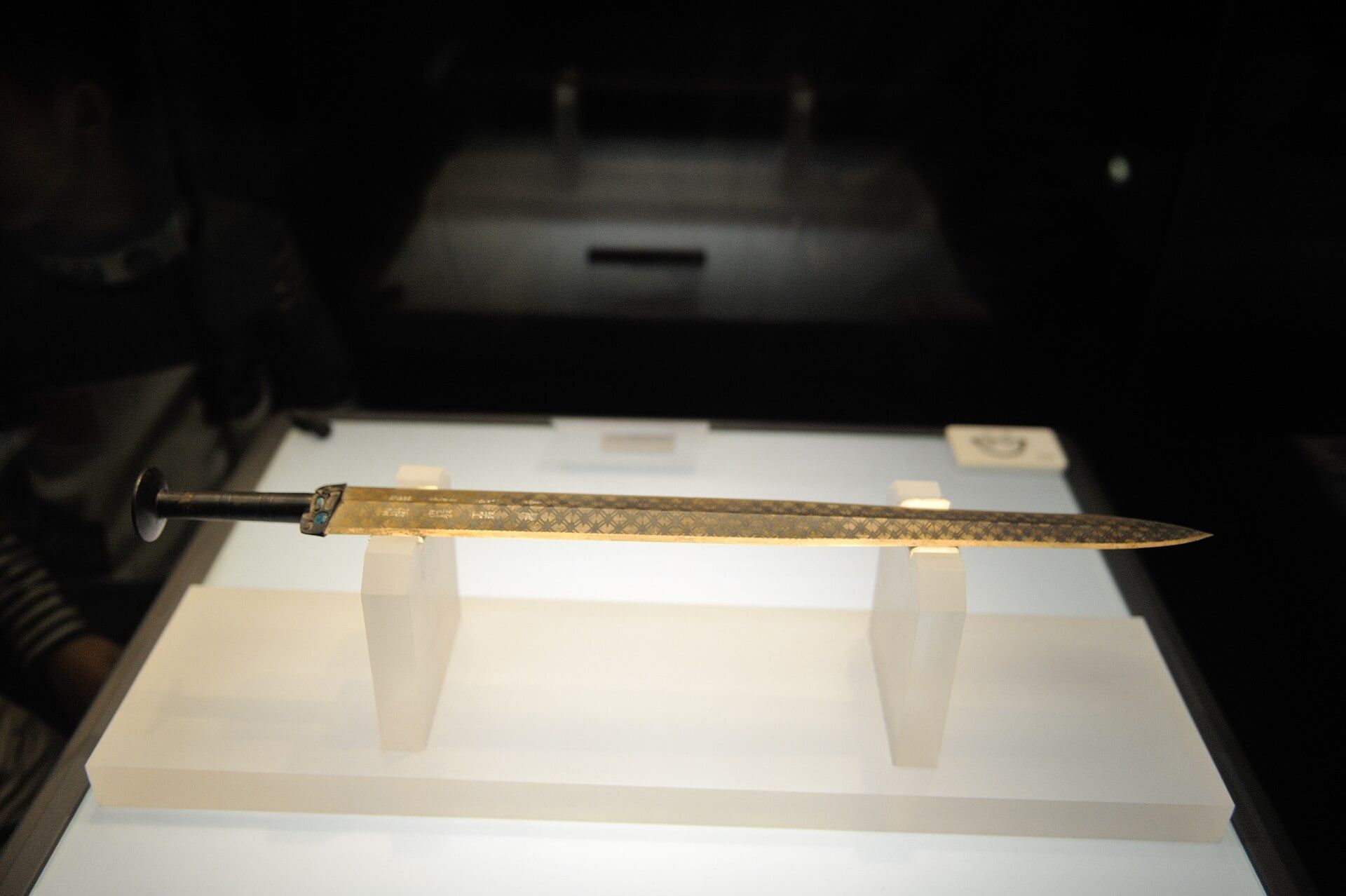
Sword of Goujian: The 2,500-Year-Old Blade Explained
The Sword of Goujian explained: its 1965 discovery in a Chu tomb, exact size, bird-worm inscription, bronze alloy, what really kept it from rusting, and its king.
How Longquan Swords Are Forged: 2,600 Years of Craft
How Longquan swords are forged in Zhejiang: the Ou Yezi legend, the 2006 national heritage listing, each forging step with Chinese terms, and how to spot décor blades.
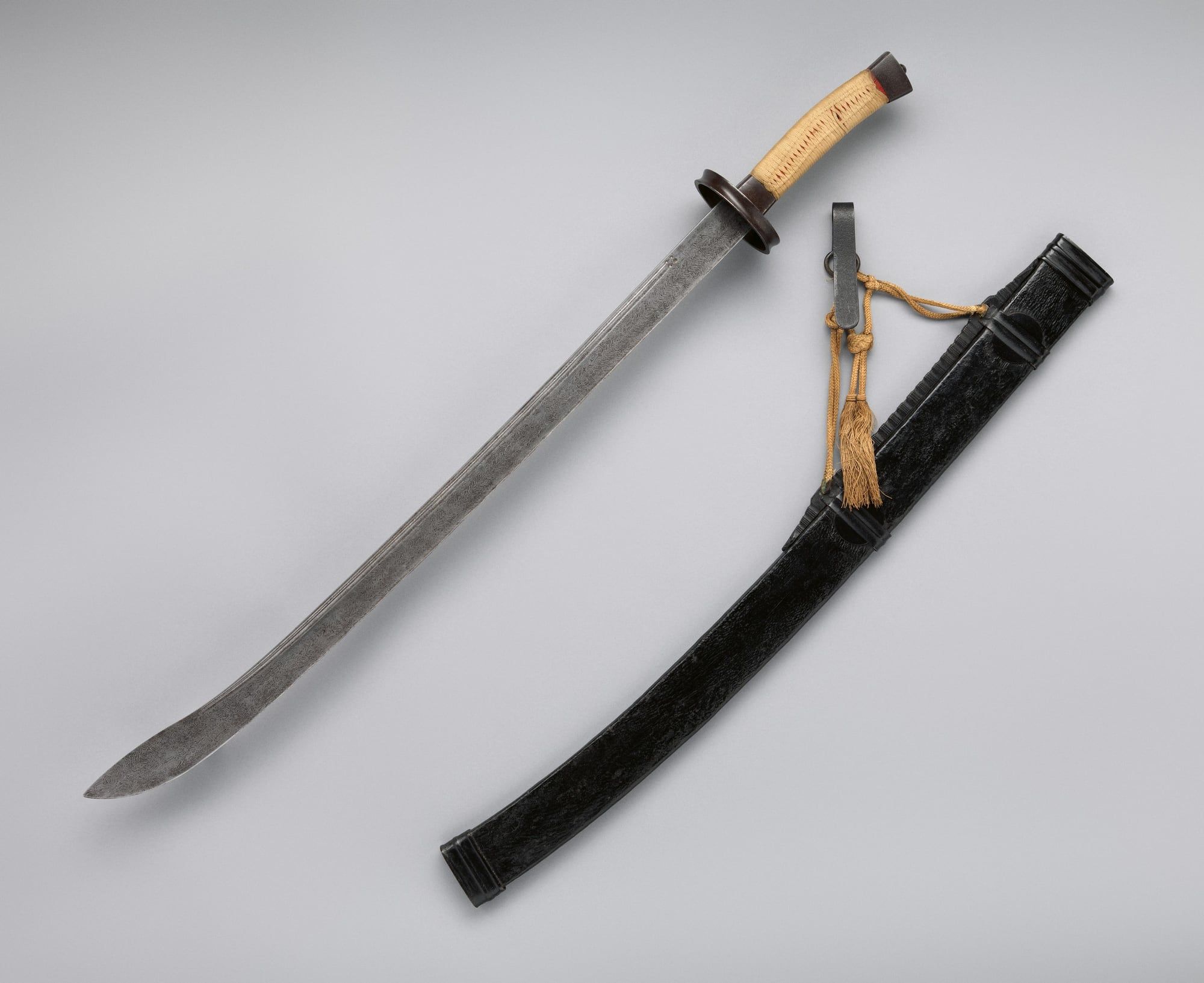
Dao: The Chinese Sabre, From Ring-Pommel to Oxtail
What a dao sword is, how the Chinese sabre evolved from the Han ring-pommel dao to Qing willow-leaf and oxtail sabres, why armies chose it, and how it is used.