Weapons hub · Phantom Blade Zero
Phantom Blade Zero Weapons & Their Real Chinese Origins
Every Phantom Blade Zero weapon named so far, from Sanguine to the Tiger Cannon, matched to its real Chinese counterpart: jian, dao, miao dao, guandao and more.
Key facts
- Soul carries two primary weapons and two Phantom Edges (影之武装): more than 30 primaries and, depending on the source, 20 to 25 Phantom Edges.
- S-GAME says its weapon prototypes are drawn from traditional Chinese weaponry, and that master swordsmiths sometimes forged real replicas to study weight and length.
- The primaries are mostly blades with clear real roots, the jian, dao, miao dao and guandao; the Phantom Edges add stranger kit such as a fire-spitting lion head and the Tiger Cannon.
- Every real-world counterpart on this page is our historical comparison, not a developer statement, and each pairing is explained below.
- Weapons rumoured online, such as a flying guillotine, Emei piercers or a Sword of Goujian, are not confirmed by official or press sources at launch.
- Loadout
- 2 primary weapons + 2 Phantom Edges
- Primary weapons
- Over 30 (Steam; PlayStation Blog)
- Phantom Edges
- 20+ (Steam) · 25 (PlayStation Blog) · about 20 (Liang)
- Chinese terms
- 主武器 · 影之武装 (official site) / 奇诡武装 (Steam)
- Weapon swap
- Fully restores Sha-Chi (杀气), on a cooldown
- Design basis
- “Traditional Chinese weaponry” (S-GAME, Apr 2026)
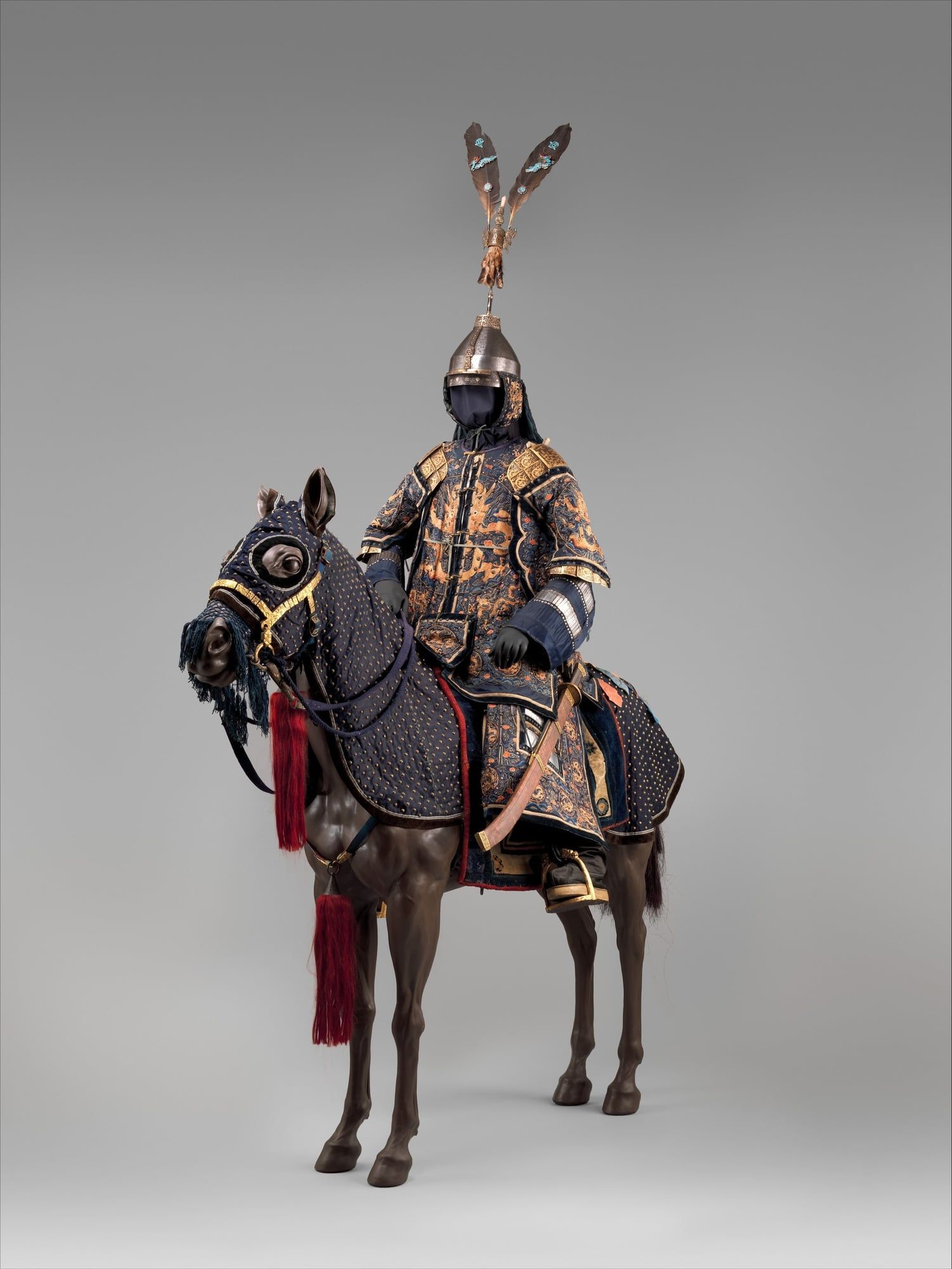
Phantom Blade Zero’s weapons come in two tiers: more than 30 primary blades and 20 to 25 Phantom Edges 影之武装 yǐng zhī wǔzhuāngSoul’s unconventional secondary weapons — axes, cannons, bows, chain sickles and more — carried alongside two primary weapons (Steam calls them 奇诡武装).Glossary →, the stranger secondary weapons. S-GAME says the prototypes are drawn from traditional Chinese weaponry, and it shows: the straight jian, the single-edged dao, the long miao dao and Guan Yu’s crescent guandao are all here, next to a chain sickle, a crouching-tiger cannon and a lion head that breathes fire. Below is the master list of every weapon named so far, the real Chinese weapon each one most resembles, and how solid each name is.
How the arsenal works: two blades, two Phantom Edges
Soul carries two primary weapons and two Phantom Edges at once. S-GAME’s own description: “Your main arsenal includes a wide variety of melee and ranged weapons… Phantom Edges are less conventional in approach.” The official Chinese site calls them 影之武装 (“phantom arms”); the Chinese Steam page says 奇诡武装 (“uncanny arms”). Soulframe Liang summed up the split for IGN in 2023: the primaries are “different kinds of blades, since you are a blade master,” the secondaries run “from canons to lances, from axes to big hammers that break shields,” and the pairing “means a combination of tradition and imagination.”
The count depends on who is talking. Steam promises “over 30 primary weapons and more than 20 unique Phantom Edges.” The PlayStation Blog’s State of Play recap (17 Aug 2026) says “more than 30 main weapons, plus 25 secondary weapons known as Phantom Edges.” Liang told 4Gamer about 20, and Shacknews’ review counted 20. Most are “wrested from the hands of fallen foes,” per Steam, and Liang has said there are as many bosses as weapons: “at least 50 of them.”
Everything runs on Sha-Chi 杀气 shāqìKilling intent. In the game, one Sha-Chi gauge works as both stamina and posture; empty an enemy’s and their guard breaks.Glossary →, one gauge that serves as both stamina and posture, for you and for every enemy. Sha-Chi attacks, guard stance and blocking spend it; empty a foe’s gauge and its guard breaks open (破防). Switching weapons fully restores your Sha-Chi, on a cooldown, so two primaries are a resource, not a fashion choice. A separate counted resource powers each weapon’s ultimate, and Phantom Edge charges refill when you rest at a bell. Liang’s tuning target: about 70% of a boss’s Sha-Chi loss should come from your offence and 30% from parries. More in What is Sha-Chi?
Phantom Edges also open the map: the Dread Axe cuts chains, a bow shoots down hanging objects and the Chain Sickle doubles as a grappling hook. Weapons carry over into New Game+.
“Drawn from traditional Chinese weaponry”: what S-GAME says
The studio’s clearest statement came in an April 2026 post on X, quoted by GamingBolt:
“The prototypes for our weapons are drawn from the vast arsenal of traditional Chinese weaponry. Sometimes, to better understand how a weapon’s weight and length impact movement, we have master swordsmiths forge real replicas.”
Art director Michael told Gamersky in August 2026 that every character, weapon and set is checked against classical texts, traditional architecture and “the real structure of ancient weapons” (古武器械的真实结构) before the mechanical, punk distortion goes on top. His motto is 考据为基、创新为魂: research as the foundation, invention as the soul. The care reaches the sound design: Liang owns a real soft sword whose sounds a kung fu master recorded for the game.
Note what the studio does not say. Its claim is general, “traditional Chinese weaponry”, not a weapon-by-weapon list. Every counterpart below is therefore our historical comparison, argued from each weapon’s shape and behaviour, never a statement from S-GAME.
The master table: Phantom Blade Zero weapons and their real Chinese counterparts
How to read it. Confidence rates the in-game name, not the history. Official means S-GAME, PlayStation, store pages or Liang. Press means a named outlet; “CN” marks Chinese-language outlets such as Gamersky and A9VG. Fan reading means a name fans read off menus in official footage, so treat it as provisional. “Likely” marks a Chinese name inferred from press coverage. This table will be updated as names are confirmed in the retail build.
| In-game name (EN) | Chinese | Slot | Real Chinese counterpart | Confidence |
|---|---|---|---|---|
| Sanguine (Soul’s starter) | 黑伤 | Primary, one-handed | jian 剑 jiàn shape, dao 刀 dāo weight | Press; 中文 fan reading |
| Sanguine Twin / Sanguine Reach | 黑伤双刃 / 长形黑伤 | Primary, twin / polearm form | paired swords 双剑 shuāngjiàn; long-handled sabre 朴刀 pōdāo | Fan reading |
| Long sword, twin dao, long dao | 长剑, 双刀, 长刀 | Primary (Chapter 1) | jian 剑 jiàn; paired sabres 双刀 shuāngdāo; long sabre 长刀 chángdāo | Press (CN) |
| English name TBC (“White Shadow”) | 白影 | Primary, late game | miao dao 苗刀 miáodāo | Official (Liang) |
| Drunken Sword / The Fanatic’s Broken Blade | 醉剑 / 痴者残剑 | Primary | drunken sword 醉剑 zuìjiàn | Press; alt. name fan reading |
| Jagged Steel (“Jagged Blade”) | 残钢刃 | Primary, one-handed | none (serrated); nearest is a heavy dao 刀 dāo | Press |
| Wooden sword | 木剑 | Primary (challenge run) | practice sword 木剑 mùjiàn | Official (Liang) |
| Guandao (EN name TBC) | 关刀 / 偃月刀 | Primary | crescent-moon blade 偃月刀 yǎnyuèdāo | Official (image; Liang) |
| Juggernaut | 荡寇凶刃 | Primary, polearm | great sabre 大刀 dàdāo; 朴刀 pōdāo | Press; 中文 fan reading |
| English name TBC | 红妆鬼斩 | Primary, heavy | great sabre 大刀 dàdāo | Press (CN) |
| Outlaw’s Warblade; Armybreaker | unknown | Primary, two-handed | possibly modao 陌刀 mòdāo or zhanmadao 斩马刀 zhǎnmǎdāo | Fan reading |
| Soft Snake Sword | 灵蛇软剑 | Primary | soft sword 软剑 ruǎnjiàn | Press |
| White Serpent & Crimson Viper | 白蟒赤练 | Primary, dual-wield | long-short pair with a rope-dart throw 绳镖 shéngbiāo | Official |
| Seamless Death | 玉双环 | Primary, dual-wield | bladed rings 乾坤圈 qiánkūnquān, 风火轮 fēnghuǒlún | Press; 中文 fan reading |
| Dread Axe | 巨凶斧 (likely) | Phantom Edge, destruction | battle-axe 大斧 dàfǔ; 钺 yuè | Press |
| Bashpole | 长柄金瓜 | Phantom Edge | golden-melon mace 金瓜 jīnguā | Fan reading |
| Heavy hammers | 巨锤 | Phantom Edge | war hammer 锤 chuí | Press (CN) |
| Iron Gauntlets | 拳套 / 铁拳 | Phantom Edge, martial | none; compare iron palm 铁砂掌 tiěshāzhǎng | Official (type); EN name fan reading |
| Man-Cutter | unknown | Phantom Edge | halberd 戟 jǐ | Fan reading |
| Thunder Spear | unknown | Phantom Edge | spear 枪 qiāng | Press |
| Chain Sickle | 追命锁镰 (likely) | Phantom Edge | chain sickle 锁镰 suǒlián | Press |
| Hook blades | 双钩 | Phantom Edge | hook swords 护手钩 hùshǒugōu | Press; 中文 fan label |
| Tiger Cannon | 虎炮 | Phantom Edge, ranged | crouching tiger cannon 虎蹲炮 hǔdūnpào | Press |
| Flaming Mane | 烈焰狮头 | Phantom Edge | lion head 醒狮 xǐngshī + flamethrower 猛火油柜 měnghuǒ yóuguì | Official |
| Night Owl | 羽弓 | Phantom Edge, ranged | bow 弓 gōng | Fan reading |
| Flying Daggers | unknown | Phantom Edge, ranged | flying knives 飞刀 fēidāo | Fan reading |
| Heartrend Pipa | unknown | Phantom Edge, artifice | none; the pipa 琵琶 pípa is a lute | Fan reading |
| Ink Cut | unknown | Phantom Edge | unclear; perhaps a judge’s pen 判官笔 pànguānbǐ | Fan reading |
| Water cannon | 高压水炮 (fan label) | Phantom Edge | none | Press |
Rumoured, not confirmed. Some AI answers and fan wikis list a Sword of Goujian (越王剑), Emei piercers (峨嵋刺), deer-horn knives (子午鸳鸯钺) and a flying guillotine (血滴子), and a Chinese fan list adds a hand cannon (火铳) and a trident (三叉戟). None of these is confirmed by official or press sources in launch week. No source at all mentions a meteor hammer, rope dart, war fan, umbrella or crossbow.
Swords and sabres: jian, dao and miao dao
- Sanguine (黑伤): a jian’s body, a dao’s blow. Soul’s starting weapon is one-handed and, in its menu text as fans read it, “shaped like a sword, yet wielded with the force of a heavy blade.” In Chinese terms that is a jian silhouette with a dao’s cutting mass, the two families martial artists contrast as 刀走黑,剑走青: the dao fights hard and direct, the jian light and evasive.
- Long sword, twin dao, long dao (长剑, 双刀, 长刀). Gamersky’s hands-on lists these among Chapter 1’s six primaries. They map straight onto the jian, paired sabres and the long two-handed sabre.
- 白影 (“White Shadow”; English name unconfirmed). Liang calls this late-game blade “a slender miao dao” (苗刀). The name miao dao, “sprout sabre”, only appears in the Republican era after 1912, but its ancestor is the Ming long sabre (长刀) that general Qi Jiguang adopted after meeting Japanese long swords in the 16th-century pirate wars. See the miao dao dossier and our guide to types of Chinese swords.
- Drunken Sword (醉剑). Hua Qianxiao’s blade makes Soul drink to restore Sha-Chi and stagger through “Tipsy” and “Drunk” states. Drunken sword is a genuine routine in the drunken family of Chinese martial arts, built on feigned stumbles; the attacks that turn into thrown flying swords are pure wuxia.
- Jagged Steel (残钢刃). A serrated bleed blade dropped by the boss Cán Gāng. Serrated edges were never standard on Chinese military dao, so this one sits on the kungfupunk side of the ledger.
- Sanguine Twin and Sanguine Reach (黑伤双刃, 长形黑伤; fan readings). Twin short-sword and polearm forms of Sanguine made by the smith Forge. Compare paired swords (双剑), a classic martial-arts set, and the long-handled pudao (朴刀).
- Wooden sword (木剑). Liang dared players to try a run “with the weakest wooden sword”, the training weapon of Chinese sword arts.
Polearms, axes and hammers
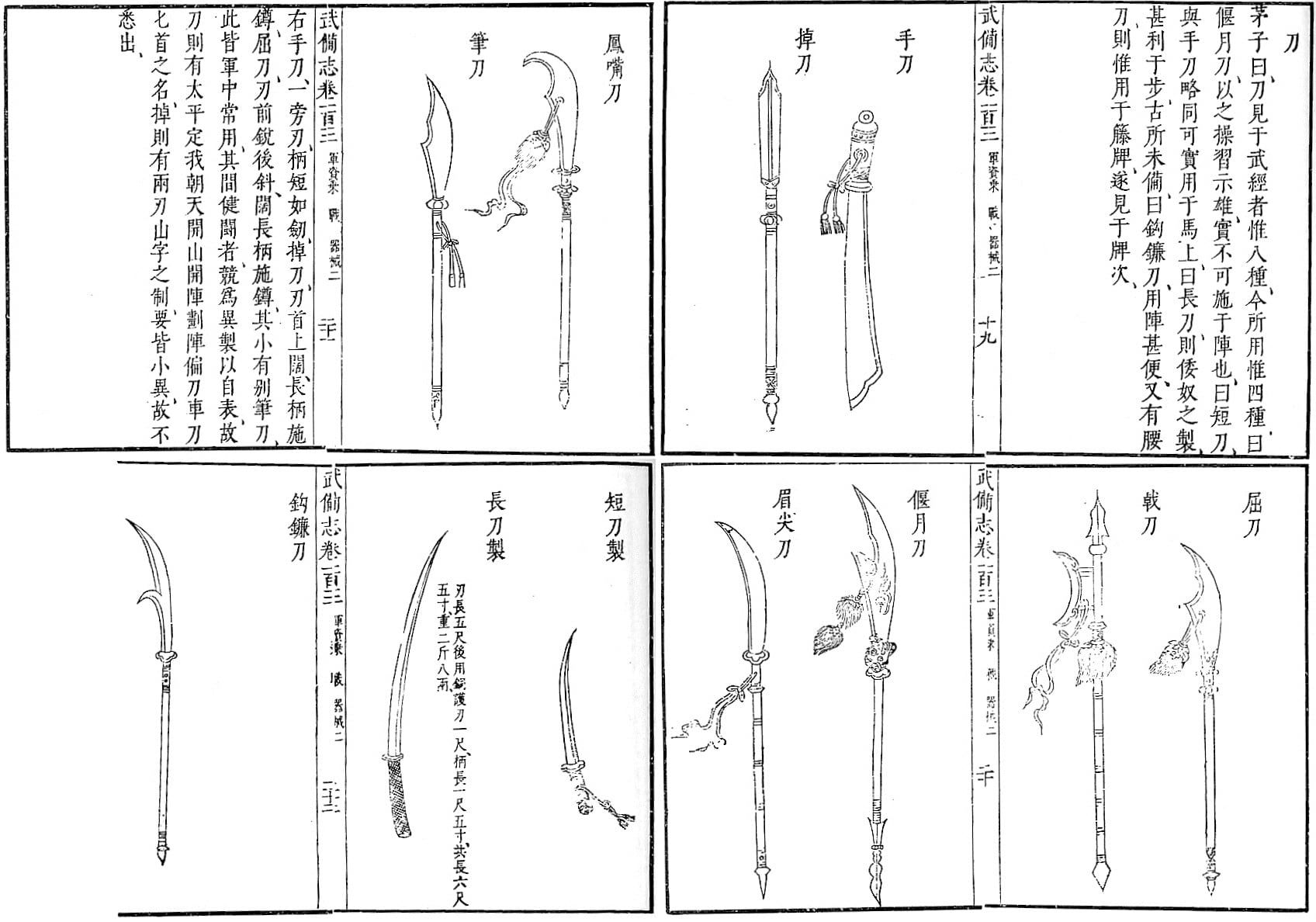
- Guandao (关刀 / 偃月刀; English name unconfirmed). S-GAME released a guandao image on 17 Sep 2026, and Liang named the 偃月刀 among the new weapons. The form is real: the Song military encyclopedia Wujing Zongyao (1044) lists a 掩月刀 among its eight kinds of dao. Its link to the 3rd-century general Guan Yu comes from the 14th-century novel Romance of the Three Kingdoms; the official history says he stabbed his most famous victim, Yan Liang. Full story in the guandao dossier.
- Juggernaut (荡寇凶刃). PC Gamer describes “a polearm with a massive blade on the end that charges up every time you parry.” Long-hafted heavy blades such as the 大刀 and the 朴刀 (pōdāo) fit, and the Chinese name’s 荡寇, “sweep away the bandits”, also titles a 19th-century Qing novel, Dangkou zhi.
- 红妆鬼斩 (English name unconfirmed). A heavy, shield-breaking blade that plants red flowers to stop enemy Sha-Chi recovery; Shacknews’ greatsword that “cast[s] red spider lilies” is probably the same weapon. The flower would be the 彼岸花, the red spider lily of Buddhist underworld lore.
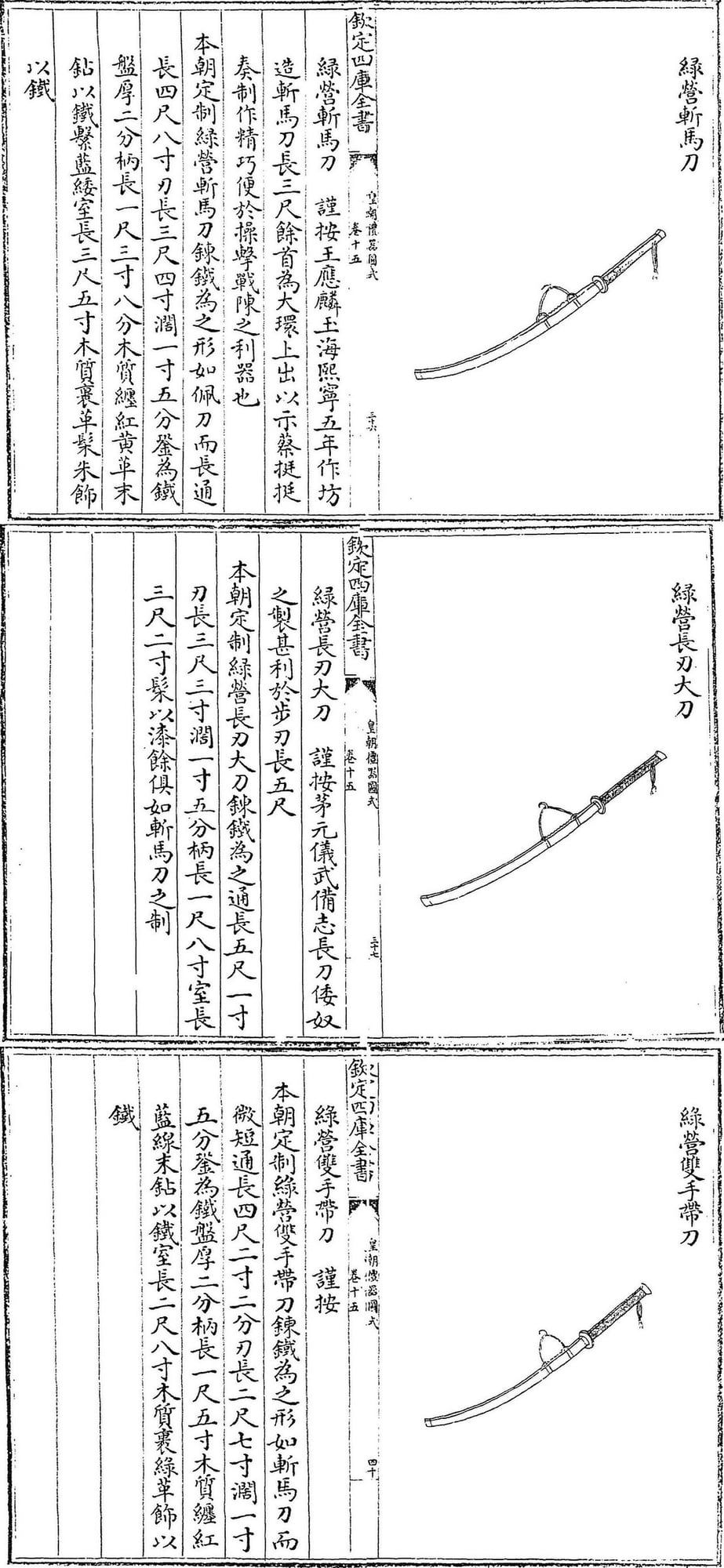
- Outlaw’s Warblade and Armybreaker (fan readings). Two-handed names seen on the State of Play menu. If they are as big as they sound, think of the Tang modao (陌刀) and the zhanmadao (斩马刀, “horse-cutting sabre”), long blades for infantry facing cavalry.
- Man-Cutter (fan reading). “An enormous halberd” from the 2025 demo. The Chinese ji (戟) fused a spear point with a dagger-axe blade; it was a front-line weapon from the Zhou to the Han before it turned ceremonial, and fiction handed the warlord Lü Bu his famous 方天画戟.
- Thunder Spear. A spear hurled into the fight. The spear (枪) is the “king of weapons”, 百兵之王; see the qiang dossier.
- Dread Axe (巨凶斧, likely). The axe of Chapter 1 boss Peng Meng and Soul’s first Phantom Edge: multi-stage charges, shield breaks, chain cutting. Axes are among China’s oldest weapons, and Bronze Age kings used the broad yue (钺) as a symbol of the power to punish.
- Bashpole (长柄金瓜, fan reading). A long-handled “golden melon”. Melon-headed maces descend from the gūduo (骨朵) and were carried by palace honour guards from the Song onward, hence the popular name 金瓜.
- Heavy hammers (巨锤) and Iron Gauntlets (拳套). Shield-breakers. The hammer (锤) is one of the “eighteen weapons” of martial lore. The gauntlets, which Liang named among the new weapons, have no single ancestor but echo hard-hand training such as iron palm (铁砂掌).
Flexible, chain and hook weapons
- Soft Snake Sword (灵蛇软剑). It “coils around an opponent’s guard,” cuts thrown weapons and has its own parry. Flexible “belt swords” (腰带剑) are best known from wuxia fiction and modern demonstration routines; reliable early evidence is scarce. More in the soft sword dossier.
- White Serpent & Crimson Viper (白蟒赤练). The twin snake blades of the Year of the Snake trailer: the long White Serpent flings the shorter Crimson Viper outward. That throw-and-retrieve idea recalls the rope dart (绳镖), one of China’s chain weapons. The names echo the Legend of the White Snake (白蛇传) and the red-banded snake (赤链蛇).
- Chain Sickle (追命锁镰, likely). The weapon of The Hunt, Soul’s former comrade: long-reach attacks, and a grappling hook in exploration. The chain-and-sickle pairing is best documented in Japan as the kusarigama (锁镰 is the same word read in Chinese); China’s own chain family is the rope dart and the meteor hammer.
- Hook blades (双钩). They pull enemies in, or pull Soul to them. Chinese hook swords (护手钩) are a civilian martial-arts weapon; the solid evidence is late Qing, from 19th-century photographs and surviving pieces, and they do not appear in military manuals.
- Seamless Death (玉双环). Two circular blades thrown in a whirl. Thrown rings are mythic: the boy-god Nezha hurls his Universe Ring (乾坤圈) in the Ming novel Investiture of the Gods, and today’s hand-held bladed rings are sold as “wind-and-fire wheels” (风火轮), after his flying wheels.
 Phantom Blade Zero - Year of the Snake Gameplay Trailer 2025
Cannons, fire and the uncanny
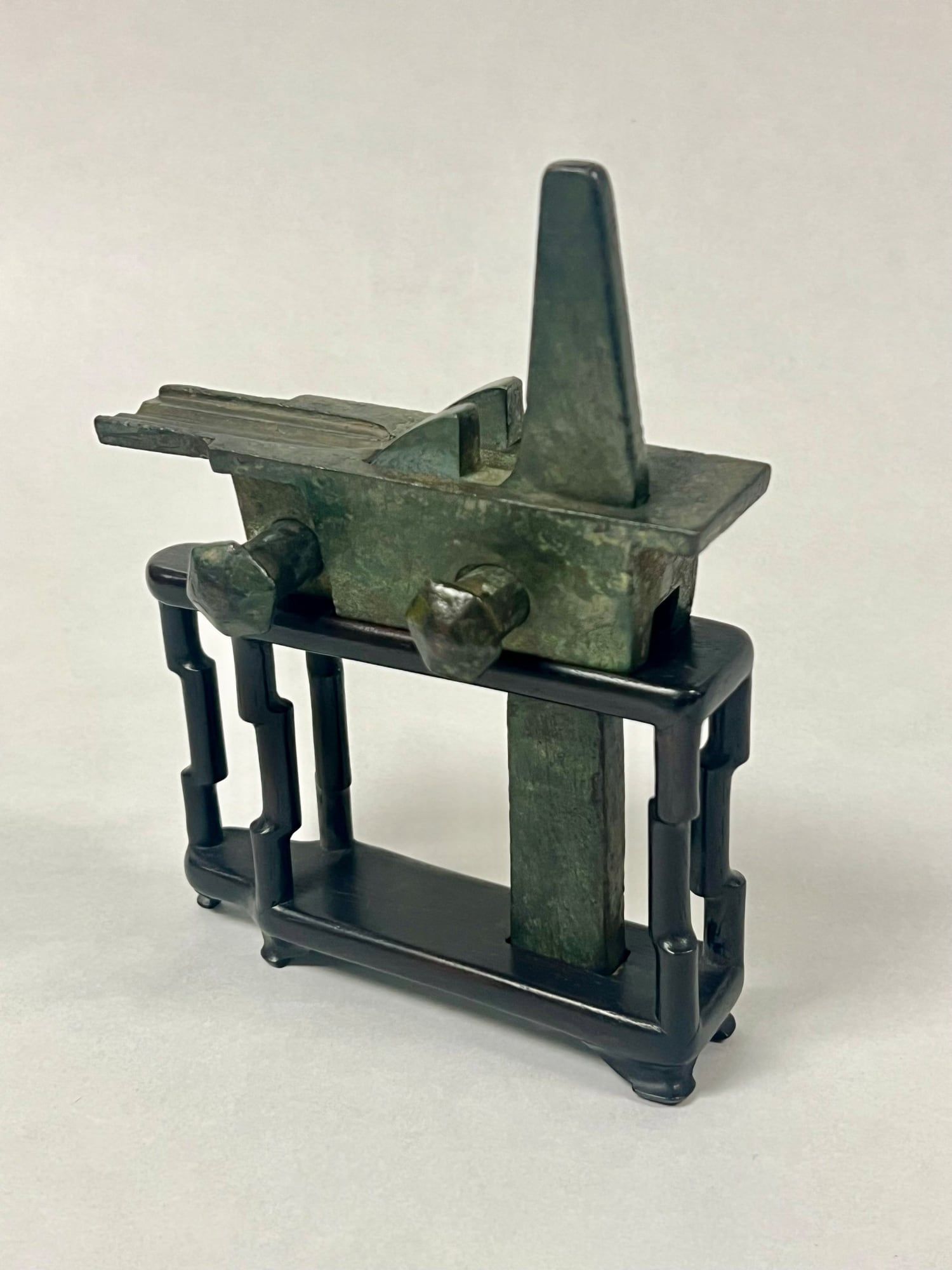
- Tiger Cannon (虎炮). A ranged Phantom Edge that breaks distant formations and detonates explosive enemies. Its obvious ancestor is the Ming crouching tiger cannon (虎蹲炮, hǔdūnpào): a light gun about two chi (roughly 64 cm) long and 36 jin (about 21 kg), staked to the ground against recoil, which squatted on its front supports like a crouching tiger. Qi Jiguang described it in his military manuals. See the Tiger Cannon dossier.
- Flaming Mane (烈焰狮头). It shoots fire “out of a giant mask.” Picture a southern lion-dance head (醒狮) married to the Song “fierce-fire oil cabinet” (猛火油柜), a double-piston petroleum flamethrower illustrated in the Wujing Zongyao. The game’s lion-dance boss comes from the same tradition; see lion dance.
- Night Owl (羽弓, fan reading). A teak longbow with owl-feather fletching. Real Chinese war bows were mostly composite bows of horn, wood and sinew.
- Flying Daggers (fan reading). Thrown knives (飞刀) belong to the hidden weapons family, immortalised by Gu Long’s hero Li Xunhuan, “Little Li Flying Dagger” (小李飞刀).
- Heartrend Pipa (fan reading). The pipa (琵琶) is a lute, not a weapon, but murderous music is a wuxia staple; Liang has cited the sonic attacks of the Six-Fingered Qin Demon (六指琴魔) as an example of weapons as emotional expression.
- Water cannon. IGN found it near a fire boss. No historical weapon stands behind it.
- Ink Cut (fan reading). Deals bonus damage to the Kunlun renegade Huangxing. A brush-shaped “judge’s pen” (判官笔) is one guess; nothing is confirmed.
The pattern is deliberate. The primaries stay close to real Chinese steel because Soul is, in Liang’s words, “a blade master”; the Phantom Edges are where imagination takes over. Where a counterpart exists, the linked dossier tells the real story. Where none does, you are looking at pure kungfupunk.
Names in this article · Codex
Frequently asked
Q01How many weapons are in Phantom Blade Zero?
Q02Are the weapons in Phantom Blade Zero based on real Chinese weapons?
Q03What is a Phantom Edge in Phantom Blade Zero?
Q04What is Soul's starting sword in Phantom Blade Zero?
Q05Is there a guandao in Phantom Blade Zero?
Sources & further reading
- S-GAME statement on X, quoted in “Phantom Blade Zero studio says every single piece of content is hand-crafted by real artists” — GamingBolt, 10 Apr 2026
- Phantom Blade Zero State of Play dives deep into combat and the Wulin world — PlayStation Blog, 17 Aug 2026
- Phantom Blade Zero store page (English and Simplified Chinese text) — Steam / S-GAME
- Exclusive Developer Interview ft. Phantom Blade Zero — IGN, 2023
- 梁其伟公布《影之刃零》新情报!现代武侠、战斗设计等 (pre-order screening Q&A) — Gamersky 游民星空, 12 Aug 2026
- Old or New? The Miaodao and Invention in Chinese Martial Arts — chinesemartialstudies.com, 2021
- Wujing Zongyao (Complete Essentials from the Military Classics) — Song court, 1044
Cite this page
Wuxiapunk Editors. (2026, October 27). Phantom Blade Zero Weapons & Their Real Chinese Origins. Wuxiapunk. https://wuxiapunk.com/weapons/phantom-blade-zero-weapons/
“Phantom Blade Zero Weapons & Their Real Chinese Origins.” Wuxiapunk, 27 Oct. 2026, https://wuxiapunk.com/weapons/phantom-blade-zero-weapons/.
Keep reading
Types of Chinese Swords: Jian, Dao, Miao Dao & More
Every major type of Chinese sword, era by era: bronze jian, Han ring-pommel dao, Tang modao, Ming changdao, Qing willow-leaf and oxtail sabres, miao dao and more.
Miao Dao vs Katana: History of China's Long Sabre
Miao dao history, sourced: Qi Jiguang's Ming changdao, Cheng Zongyou's 1621 manual, the 1920s name, measured lengths of 1.4–2 m, and how it compares with the katana.
Guandao: Guan Yu's Crescent Blade, Myth vs History
What a guandao is: Guan Yu's legendary Green Dragon Crescent Blade, the 82-jin myth, its Song-dynasty origins, Qing exam blades and its place in Phantom Blade Zero.