Weapon dossier · Polearms
Qiang: The Chinese Spear, King of Weapons
枪 / 槍qiāng
What the qiang is, why the Chinese spear is called the king of weapons, what the red tassel is for, the real Yang family spear, Ming manuals and lan-na-zha technique.
Key facts
- A qiang (枪, qiāng) is the Chinese spear: a leaf-shaped steel head, usually dressed with a red horsehair tassel, on a springy wooden shaft.
- Chinese martial culture calls it 百兵之王, “the king of the hundred weapons” — the jian is the gentleman and the dao the courage.
- Spears were the backbone of Chinese infantry from the Bronze Age (as the 矛, máo) into the 19th century; Song military sources list nine standard types.
- The famous Yang family spear of Ming manuals traces to Yang Miaozhen (杨妙真), a 13th-century woman rebel commander — not to the Yang family generals of opera.
- Spearplay is built on the thrust zha (扎) and two circling deflections, lan (拦) and na (拿); a saying holds that the staff takes a month, the dao a year and the spear a lifetime.
- Type
- Spear — thrusting polearm
- Chinese
- 枪 (槍) · qiāng; older 矛 máo, cavalry lance 槊 shuò
- Period
- Shang bronze spearheads – 19th-century armies; still core in wushu
- Length
- Battlefield spears c. 2.5–6 m; wushu spears shorter and lighter
- Signature
- Red tassel (红缨, hóngyīng) below the head
- Core techniques
- 拦 lán · 拿 ná · 扎 zhā
- Nickname
- 百兵之王 — king of weapons
A qiang 枪 qiāngThe spear, “king of the hundred weapons”; its red horsehair tassel hides the shaft and blocks blood.Glossary → is the Chinese spear: a leaf-shaped steel head with a red horsehair tassel lashed beneath it, set on a long, slightly springy wooden shaft. For most of Chinese history it was the weapon that actually won battles, and martial culture still gives it the highest title of all — the king of the hundred weapons . Where the jian is the gentleman and the dao the courage, the spear is the king.
Why the spear is the king of weapons
The case is practical. A spear outreaches every sword and sabre, costs little more than a shaped piece of steel and a length of wood, and a recruit can be made useful with it in weeks. Massed spears were the backbone of Chinese infantry from the Bronze Age to the age of muskets.
The martial arts kept the title for subtler reasons. Spear training builds the rooted stance, waist power and straight-line force that many empty-hand styles depend on; Xingyiquan and Bajiquan both credit the spear as a foundation. Two sayings capture its place:
- 棍打一大片,枪扎一条线 — “the staff strikes a whole area, the spear stabs a single line.”
- 月棍,年刀,一辈子枪 — “a month for the staff, a year for the dao, a lifetime for the spear.”
From bronze mao to the Ming long spear
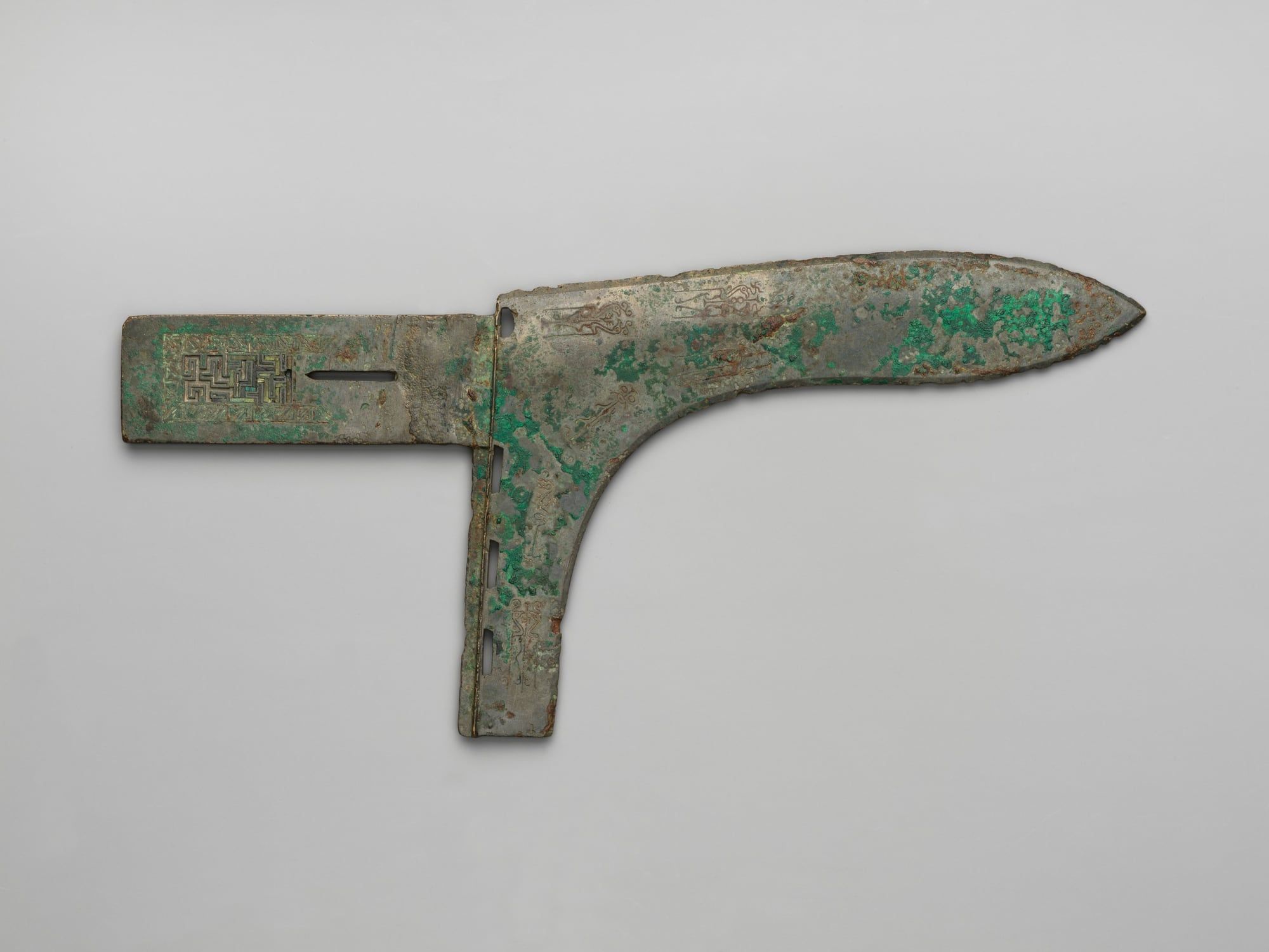
China’s earliest spears were bronze-headed mao of the Shang dynasty. Cavalry later carried a long lance, the shuo , which the Eastern Han dictionary Shiming defines as a spear of one zhang eight chi carried on horseback — the same “eighteen-chi” length the novel Romance of the Three Kingdoms gives Zhang Fei’s steel-tipped spear. From the Sui and Tang onward the qiang was the infantryman’s standard weapon, and after the Song and Yuan the word 枪 became the usual name for the whole family.
Song military sources list nine standard spears (枪九色). Cavalry used versions with one or two barbed hooks or a ring on the shaft; infantry carried the plain wooden-shafted spear and the “crow-neck” spear; the south contributed a throwing spear; and a version with a wooden head was used for drill. The Song also strapped gunpowder tubes to spear shafts to make fire lances (火枪) — which is why 枪 later came to mean “gun” in modern Chinese, while the Ming still called firearms 铳.
In the 16th century, General Qi Jiguang built his famous anti-pirate “mandarin duck” squad (鸳鸯阵) around the spear: of its twelve men, four were long-spearmen, working behind shields and the bushy bamboo “wolf brush” (狼筅). Qing Banner and Green Standard troops kept spearmen in the line until modern firearms replaced them in the mid-19th century.
The Yang family spear: history vs opera
Opera and popular novels credit the best spearplay to the Yang family generals (杨家将) of the Northern Song. Ming writers told a different story. Qi Jiguang’s Jixiao xinshu opens its discussion of the long spear by saying that the method “began with the Yang, is called Pear Blossom, and all under heaven esteem it” (长枪之法,始于杨氏,谓之曰梨花,天下咸尚之).
The Yang in question was Yang Miaozhen , a woman from Yidu in Shandong who led the Red Coat Army (红袄军) against the Jin in the 1210s after her brother’s death, married the rebel leader Li Quan, and later fought for and against the Southern Song. After Li Quan’s death, when their cause was collapsing, the official History of Song records her words to her officers:
二十年梨花枪,天下无敌手。今事势已去,撑拄不行。
Twenty years of pear-blossom spear, and no match for me under heaven. Now the situation is lost; I cannot hold out.
Her “pear blossom” (梨花) name survived her by three centuries in Ming army training. Not everyone admired it. Wu Shu (1610–1694), whose Shoubi lu (compiled around 1678) became a landmark of spear literature, learned from the master Shi Dian and from a manual of Emei spear by Cheng Zhenru. He complained that the Yang method had been tailored to rough men in the ranks — longer shafts, bigger circles, easy for the strong to learn — and that the spread of big sweeping blocks and chops had ruined it.
How the spear is used: lan, na, zha
Chinese spearplay rests on one thrust and two deflections:
- 扎 zhā — the thrust. The rear hand drives the butt while the front hand guides the shaft, which slides through it so the point shoots out and snaps back.
- 拦 lán — the outer block, a small circle of the spear tip that turns the opponent’s weapon aside to the outside.
- 拿 ná — the inner press, the matching circle to the inside that pins the opponent’s weapon down.
Lan and na are not blocks in the sword sense; they are tiny spirals that clear a line for the thrust, so defence and attack become one motion. The Ming author Cheng Zongyou called this circle of the spear (枪圈) the “mother” from which every other technique is born. Every lineage — the Yang, Luo and Yue family spears among them — adds its own repertoire of methods, but all are built on this core. Modern wushu competition spears are shorter and lighter than military ones, made from flexible wax wood so the head whips and shivers; in Chinese they are nicknamed 花枪, “flower spears”.
Approximate overall lengths of typical examples; real pieces vary by period, region and maker.
Spear vs staff vs halberd
| Spear 枪 qiāng | Staff 棍 gùn | Halberd 戟 jǐ | |
|---|---|---|---|
| Business end | Leaf-shaped point, red tassel | None — the whole shaft is the weapon | Spear point plus side blade(s) |
| Main action | Thrust along a line (扎) | Strike and sweep an area (劈, 扫) | Thrust, hook and cut |
| Training saying | “A lifetime” | “A month” | — |
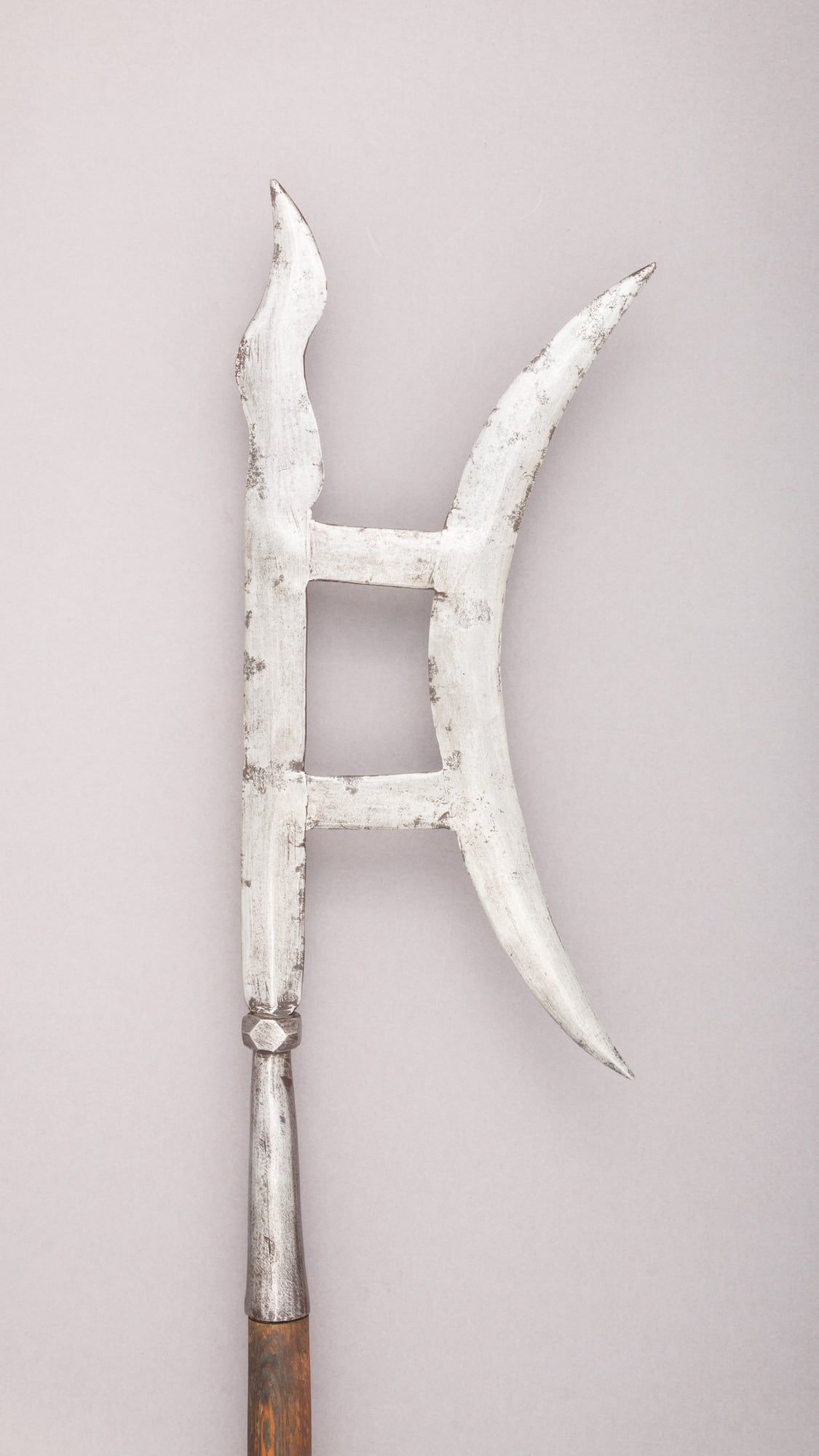
| History | Shang bronze 矛 to 19th-century armies | Universal; famed in Shaolin tradition | Dagger-axe + spear from the Shang; crescent-bladed 方天戟 from the Song |
| Iconic fictional wielder | Zhao Yun, Zhang Fei | Sun Wukong | Lü Bu and his 方天画戟 |
The halberd packs several weapons into one head; the staff is the spear’s teacher; the spear itself stayed in the battle line for three thousand years.
 Shaolin spear | 少林长枪:迅捷精准,枪出如龙
The spear in Phantom Blade Zero
In Phantom Blade Zero the spear belongs mostly to the enemy ranks, which suits the history: it was always the common soldier’s weapon. TheSixthAxis’s review describes a Thunder Spear among Soul’s Phantom Edges, a spear hurled into the battlefield. Back in 2023, Soulframe Liang described the game’s secondary weapons to IGN as ranging from cannons to lances. The full spear roster will only be clear once the game is out.
Whatever form it takes on screen, the qiang is the honest heart of Chinese weaponry: less glamorous than the jian, less mythic than Guan Yu’s guandao, and more decisive than either.
Names in this article · Codex
Frequently asked
Q01Why is the spear called the king of weapons?
Q02What is the red tassel on a Chinese spear for?
Q03What is the difference between a spear and a staff in Chinese martial arts?
Q04Was the Yang family spear real?
Q05Is there a spear in Phantom Blade Zero?
Sources & further reading
- History of Song, chapter 477 (Biography of Li Quan, with Yang Miaozhen's words) — Songshi · Wikisource
- Jixiao xinshu (New Treatise on Military Efficiency), “General Discussion of the Long Spear” — Qi Jiguang, 16th c.
- Shoubi lu (Records of Hand and Arm) — Wu Shu, compiled c. 1678
- 楊家槍法:被戚繼光譽為合天下槍法大成 — HK01 · 武備志
- Qiang (spear) — Wikipedia
- Phantom Blade Zero review — TheSixthAxis, 26 Oct 2026
Cite this page
Wuxiapunk Editors. (2026, October 27). Qiang: The Chinese Spear, King of Weapons. Wuxiapunk. https://wuxiapunk.com/weapons/qiang-spear/
“Qiang: The Chinese Spear, King of Weapons.” Wuxiapunk, 27 Oct. 2026, https://wuxiapunk.com/weapons/qiang-spear/.
Keep reading
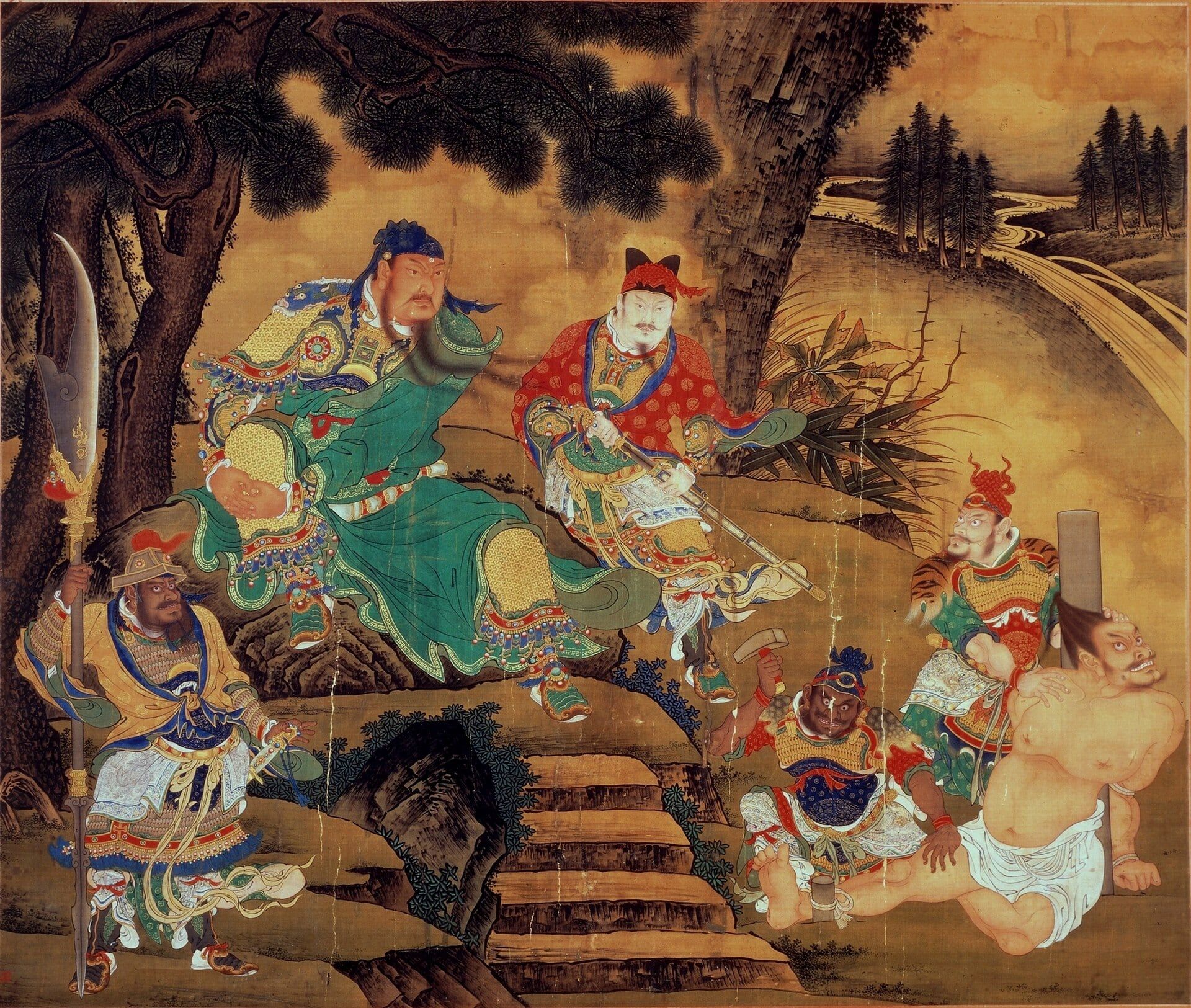
Guandao: Guan Yu's Crescent Blade, Myth vs History
What a guandao is: Guan Yu's legendary Green Dragon Crescent Blade, the 82-jin myth, its Song-dynasty origins, Qing exam blades and its place in Phantom Blade Zero.
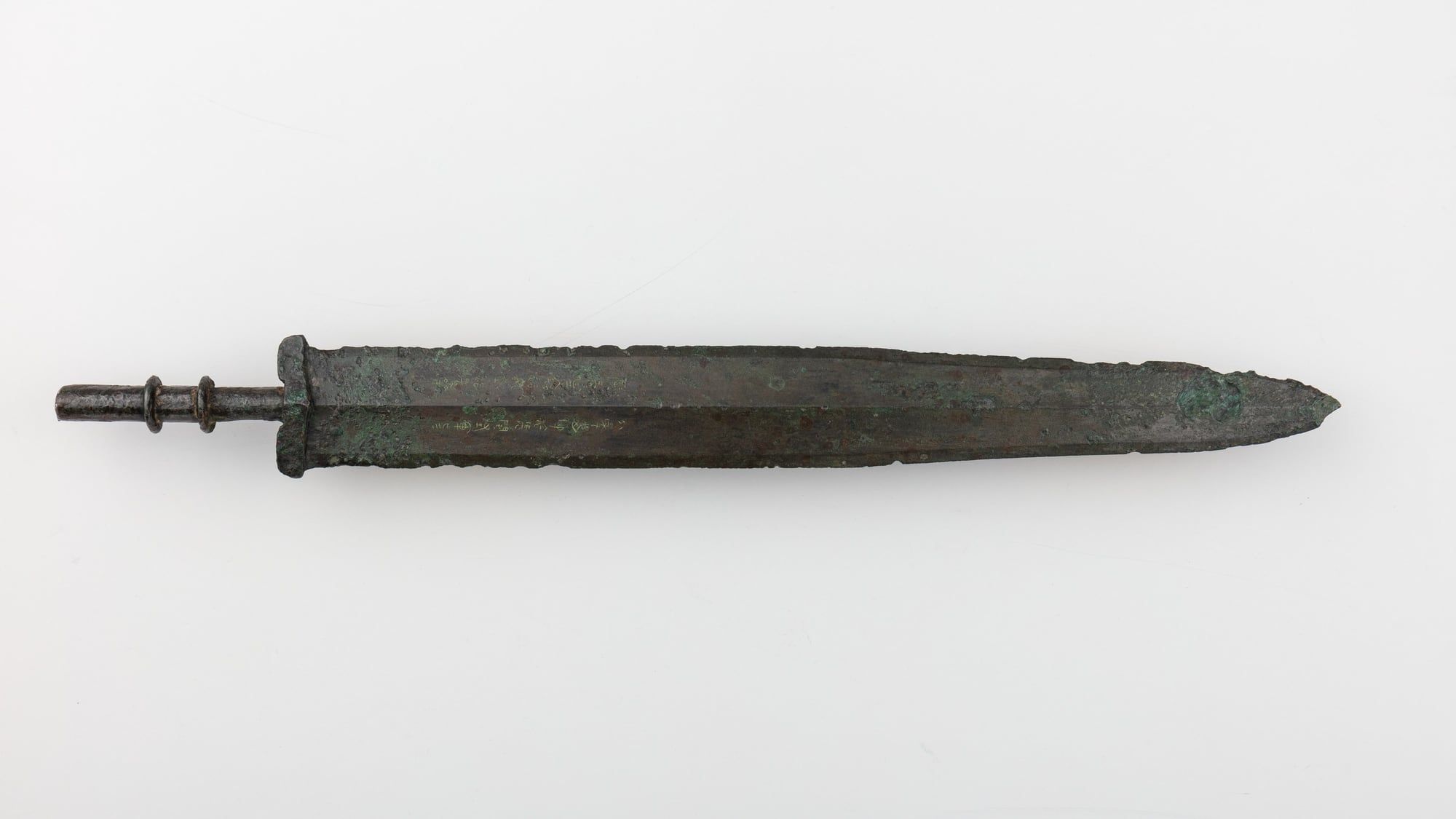
Jian: The Chinese Straight Sword, Explained
What a jian is, how the double-edged Chinese sword evolved from bronze to steel, its anatomy, how it was used, and why it is called the gentleman of weapons.
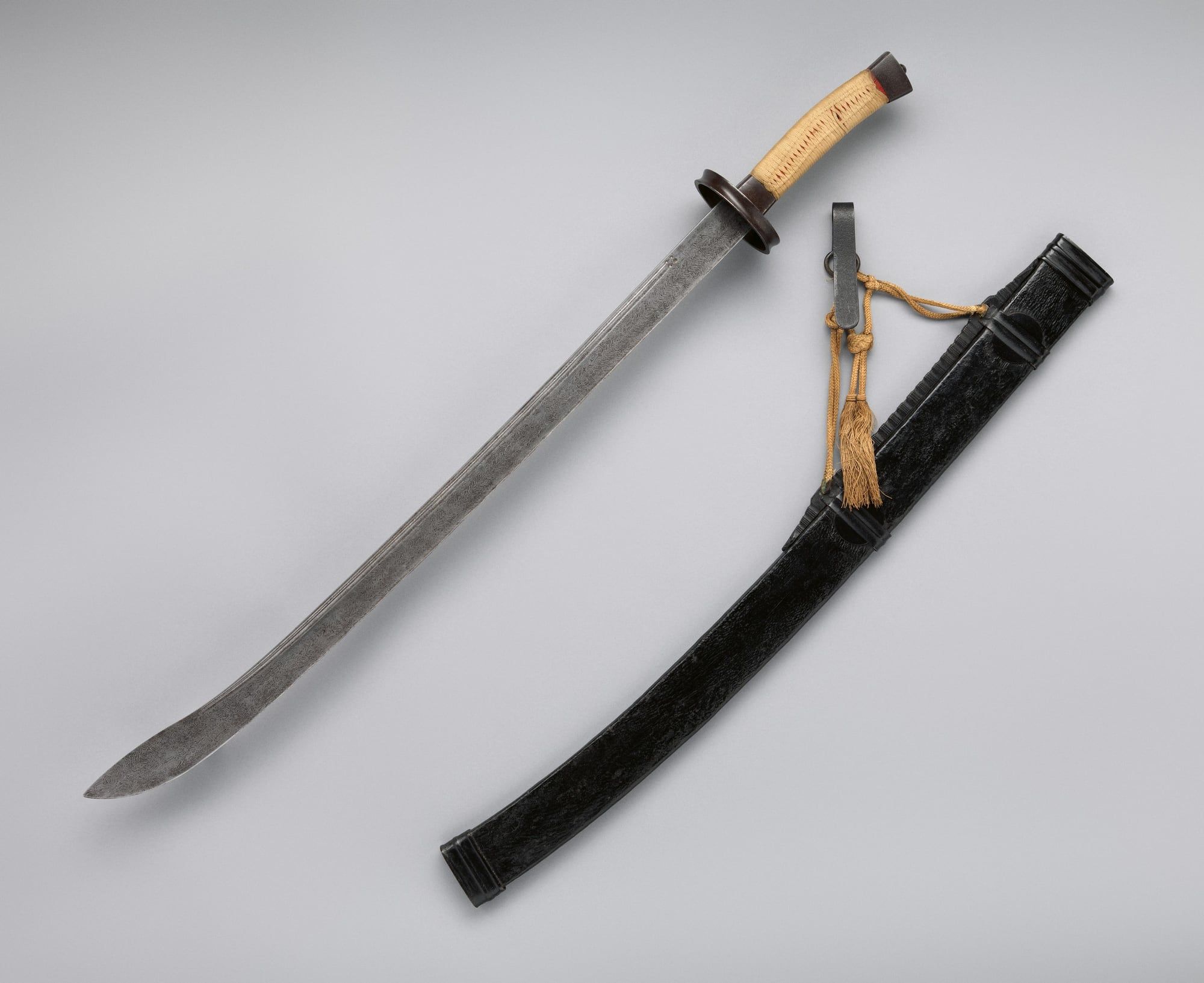
Dao: The Chinese Sabre, From Ring-Pommel to Oxtail
What a dao sword is, how the Chinese sabre evolved from the Han ring-pommel dao to Qing willow-leaf and oxtail sabres, why armies chose it, and how it is used.