Craft dossier · Living tradition
How Longquan Swords Are Forged: 2,600 Years of Craft
龙泉宝剑Lóngquán bǎojiàn
How Longquan swords are forged in Zhejiang: the Ou Yezi legend, the 2006 national heritage listing, each forging step with Chinese terms, and how to spot décor blades.
Key facts
- Longquan swords (龙泉宝剑) are blades forged in Longquan, a mountain city in southwestern Zhejiang that tradition links to the legendary smith Ou Yezi; the “2,600 years” is counted from that legend.
- The name began as Longyuan (龙渊, “Dragon Abyss”), after a sword in the Yuejue shu, and became Longquan (“Dragon Spring”) in the Tang dynasty to avoid the character 渊 in Emperor Gaozu's name, Li Yuan.
- The Longquan sword forging technique (龙泉宝剑锻制技艺) was inscribed on China's first national list of intangible cultural heritage in 2006 (traditional craftsmanship, Ⅷ-37).
- A traditionally forged sword passes through forging and folding, a composite build, shaping, quenching, days of grinding and polishing, and fitting: the chain Song Yingxing described in 1637.
- Longquan makes everything from wall-hangers to cutting blades; to tell them apart, check the tang, steel, heat treatment and edge, not the word “Longquan”.
- Chinese
- 龙泉宝剑 · Lóngquán bǎojiàn
- Place
- Longquan, Lishui, southwestern Zhejiang
- Legendary founder
- Ou Yezi (欧冶子), Spring and Autumn period
- Old name
- Longyuan (龙渊), changed in the Tang dynasty
- Heritage status
- National intangible cultural heritage, first batch (2006), Ⅷ-37
- Core steps
- 锻打 · 折叠 · 夹钢/包钢 · 成型 · 淬火 · 研磨 · 装具
Longquan swords 龙泉宝剑 Lóngquán bǎojiànSwords from Longquan, Zhejiang, a forging centre since antiquity; the craft is national intangible cultural heritage.Glossary → are blades forged in Longquan, a mountain city in southwestern Zhejiang that Chinese tradition names as the place where the legendary smith Ou Yezi made his swords. The “2,600 years” in every brochure is counted from that legend, not from a dated excavation, but the craft itself is real, alive and, since 2006, protected as national intangible cultural heritage. Here is what the legend says, what the listing covers, how a traditional blade is forged, and how to tell a working sword from a wall decoration.
The legend: Ou Yezi and the Dragon Abyss
The oldest written source is the Yuejue shu, a Han-era compilation of the lore of the southern states of Wu and Yue. It credits Ou Yezi with five bronze swords owned by King Goujian of Yue, among them Zhanlu and Chunjun, then has the King of Chu commission iron swords from him and the Wu smith Ganjiang:
欧冶子、干将凿茨山,泄其溪,取铁英,作为铁剑三枚:一曰龙渊,二曰泰阿,三曰工布。
Ou Yezi and Ganjiang cut open Mount Ci, drained its stream and took the essence of iron, making three iron swords: the first called Longyuan, the second Tai’a, the third Gongbu.
Longquan claims that story as its own. Local legend says the smiths led spring water into seven pools laid out like the Big Dipper (北斗七星) to quench their blades, which gave the sword its full name, 七星龙渊, “Seven Stars Dragon Abyss”. A Southern Song gazetteer of Longquan County already records a Sword Pool Lake (剑池湖) where Ou Yezi was said to have forged.
The name changed in the Tang dynasty. Because 渊 (yuān) was part of the personal name of the dynasty’s founder, Emperor Gaozu, Li Yuan, it had to be avoided, and Longyuan became Longquan , “Dragon Spring”. The town and its swords have shared the name ever since.
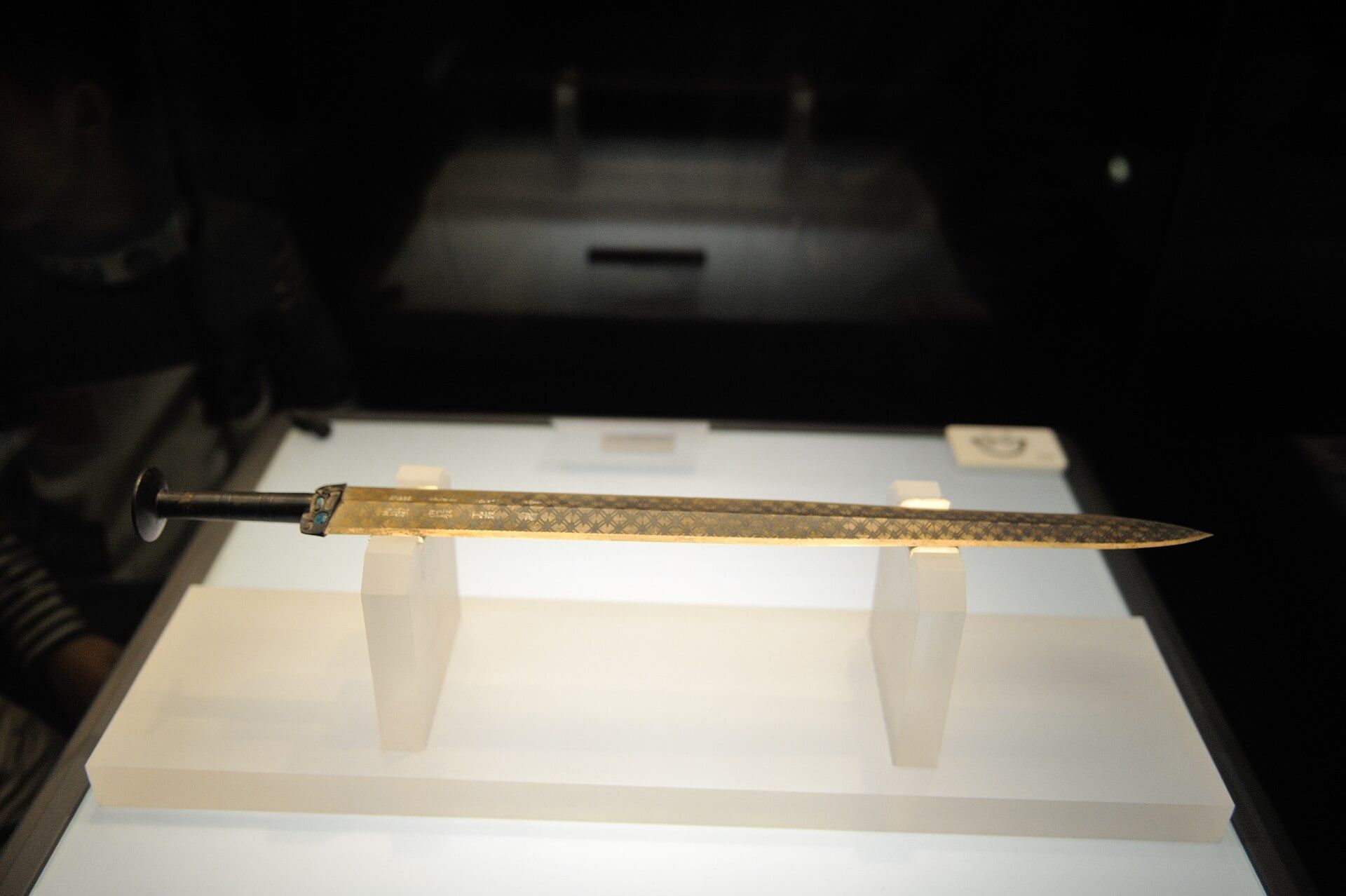
How literal is any of this? Ou Yezi belongs to the Spring and Autumn period, hence the 2,600-year figure, but he is known only from texts written centuries after his time. Treat the date as tradition and the craft as history. For the bronze swords of his era, see the Sword of Goujian.
A national intangible heritage craft
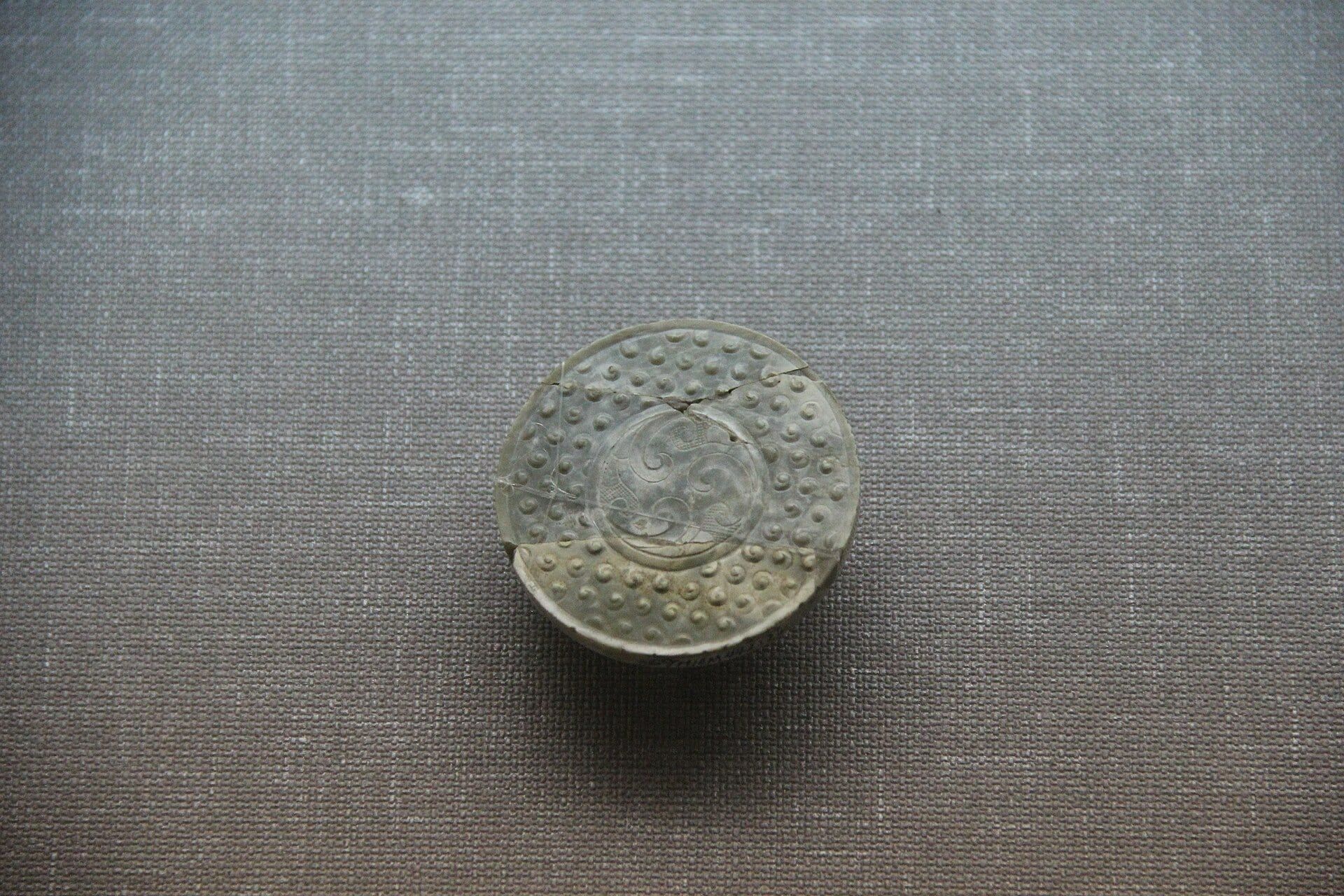
In 2006 China’s State Council placed the Longquan sword forging technique on the first batch of the national list of intangible cultural heritage, in the traditional craftsmanship category (item 387, code Ⅷ-37), on a nomination from Longquan City.
The listing protects knowledge and its transmission, the techniques and the chain from master to apprentice, not any particular product or brand. A sword stamped “Longquan” is a statement of origin, not a certificate of quality. That distinction matters, because the same town supplies collectors, martial artists and souvenir shops alike.
How a Longquan sword is forged, step by step
Workshops differ, and modern ones use power hammers and grinders alongside hand tools, but a traditionally forged sword still passes through the chain of operations recorded in Chinese technical writing for centuries. These are the Chinese terms smiths use:
| Step | Chinese | What happens |
|---|---|---|
| 1. Selecting steel | 选料 xuǎnliào | High-carbon steel for the edge; often a softer steel or iron for the body |
| 2. Forging and folding | 锻打 · 折叠锻打 duàndǎ | The bar is heated to orange-yellow, hammered out, folded and forge-welded; folded “pattern steel” (花纹钢) shows its layers after polishing |
| 3. Composite build | 夹钢 · 包钢 jiāgāng · bāogāng | Hard steel is sandwiched into, or wrapped around, a tougher core |
| 4. Shaping | 成型 · 锉削 chéngxíng · cuòxiāo | The blank is forged to shape, then filed to set the central ridge (剑脊) and the bevels (剑从) |
| 5. Quenching | 淬火 cuìhuǒ | Heated to cherry red (roughly 780–850 °C) and plunged into water or oil to harden, then usually tempered (回火) to restore toughness |
| 6. Grinding and polishing | 研磨 · 开刃 yánmó · kāirèn | Days on progressively finer stones refine the geometry, raise the edge and reveal the grain |
| 7. Fittings | 装具 · 装配 zhuāngjù | Guard (剑格), grip (剑柄) and pommel (剑首) are fitted to the tang; the scabbard (剑鞘) is wood, lacquered or covered, with metal mounts |
| 8. Testing | 试剑 shìjiàn | Working blades are flexed and test-cut before they leave the shop |
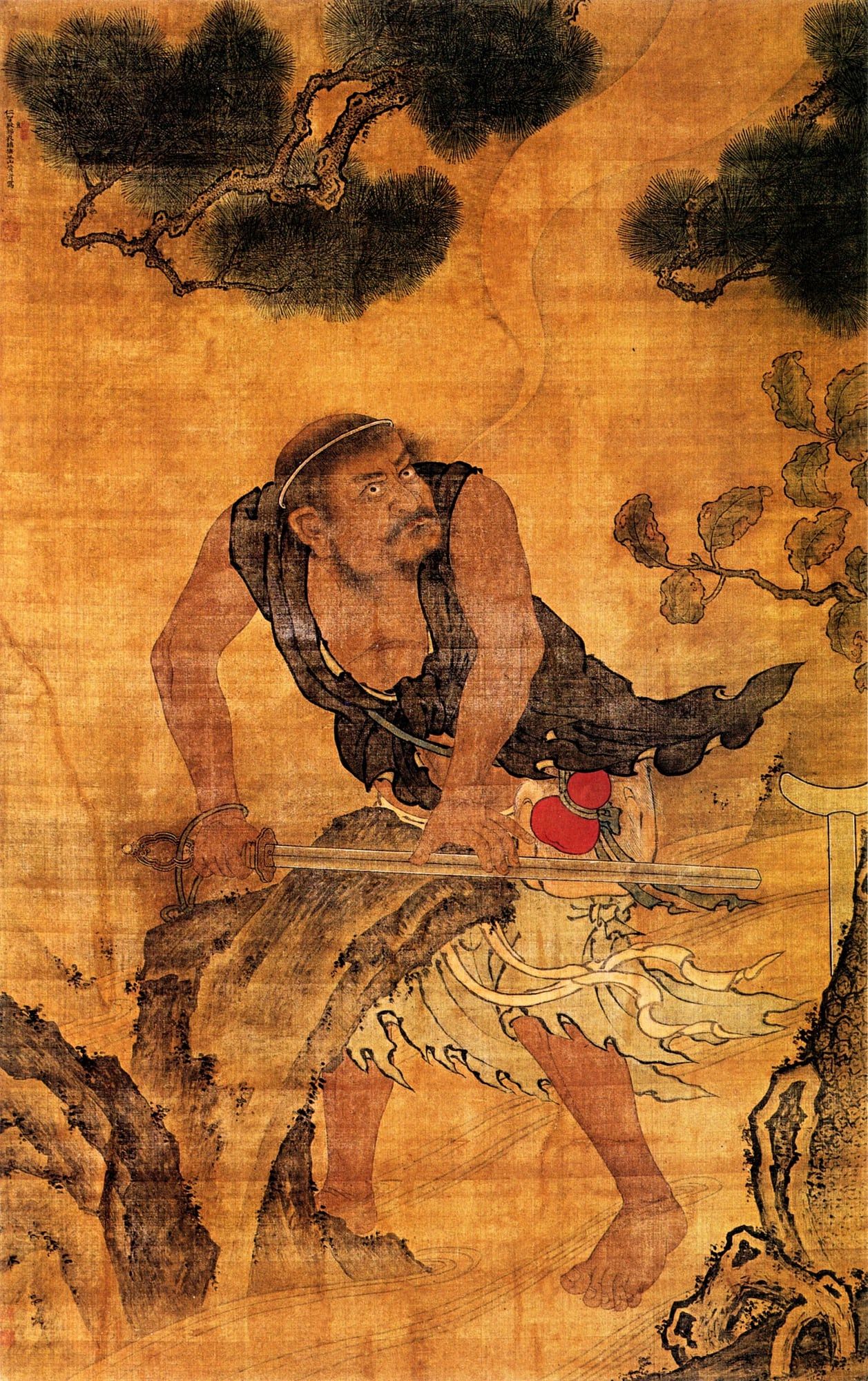
Folding does two jobs: it drives slag out of the steel and evens out its carbon. Each fold doubles the layers, so ten folds give 1,024 and fifteen give 32,768; the full arithmetic, and why “hundred-refined” never meant a hundred folds, is in our guide to hundred-refined steel.
The composite build is the heart of the Chinese tradition. A blade of uniform hard steel is sharp but brittle; soft iron is tough but dull. Song Yingxing’s Tiangong Kaiwu (1637) describes the solution in one line:
凡健刀斧,皆嵌钢、包钢,整齐而后入水淬之。其快利则又在砺石成功也。
All strong blades have steel inlaid or wrapped on; once they are trued, they are quenched in water. Their keenness, however, is won on the whetstone.
The last sentence still holds. Grinding is the slowest stage in any traditional workshop, and it is where a sword’s geometry, and therefore its cutting ability, is decided.
Longquan vs Japanese forging vs mass-produced replicas
“Longquan” is often set against the Japanese katana, and both are confused with factory replicas. The real differences are in steel, build and heat treatment:
| Hand-forged Longquan-style sword | Traditional Japanese sword | Mass-produced replica | |
|---|---|---|---|
| Typical form | Straight, double-edged jian; also dao | Curved, single-edged katana | Any shape, often film or game designs |
| Steel | Named carbon steel or folded pattern steel | Tamahagane from a tatara furnace, folded | Unspecified stainless steel or cast alloy |
| Build | Composite (夹钢, 包钢) or a single steel | Hard steel jacket over a softer core | A single piece, sometimes cast |
| Hardening | Quenched and tempered | Clay-coated differential quench that forms a hamon | Often minimal or none |
| Tang | Full tang through the grip | Full tang held by a bamboo peg (mekugi) | Often a thin threaded rod |
| Edge | Sharpened or blunt, to order | Sharpened | Usually blunt |
| Time to make | Days to weeks | Weeks or longer | Hours |
Neither hand tradition is “better”. Japanese smiths refined a curved, single-edged slashing sword around a patchy bloomery steel; Chinese smiths built straight, double-edged blades from steel made out of cast iron. Both produce superb swords in good hands, and both are imitated by replicas that share only their silhouette.
Decorative or functional? How to tell
You do not need a lab to tell a working blade from a decoration. Check these, in this order:
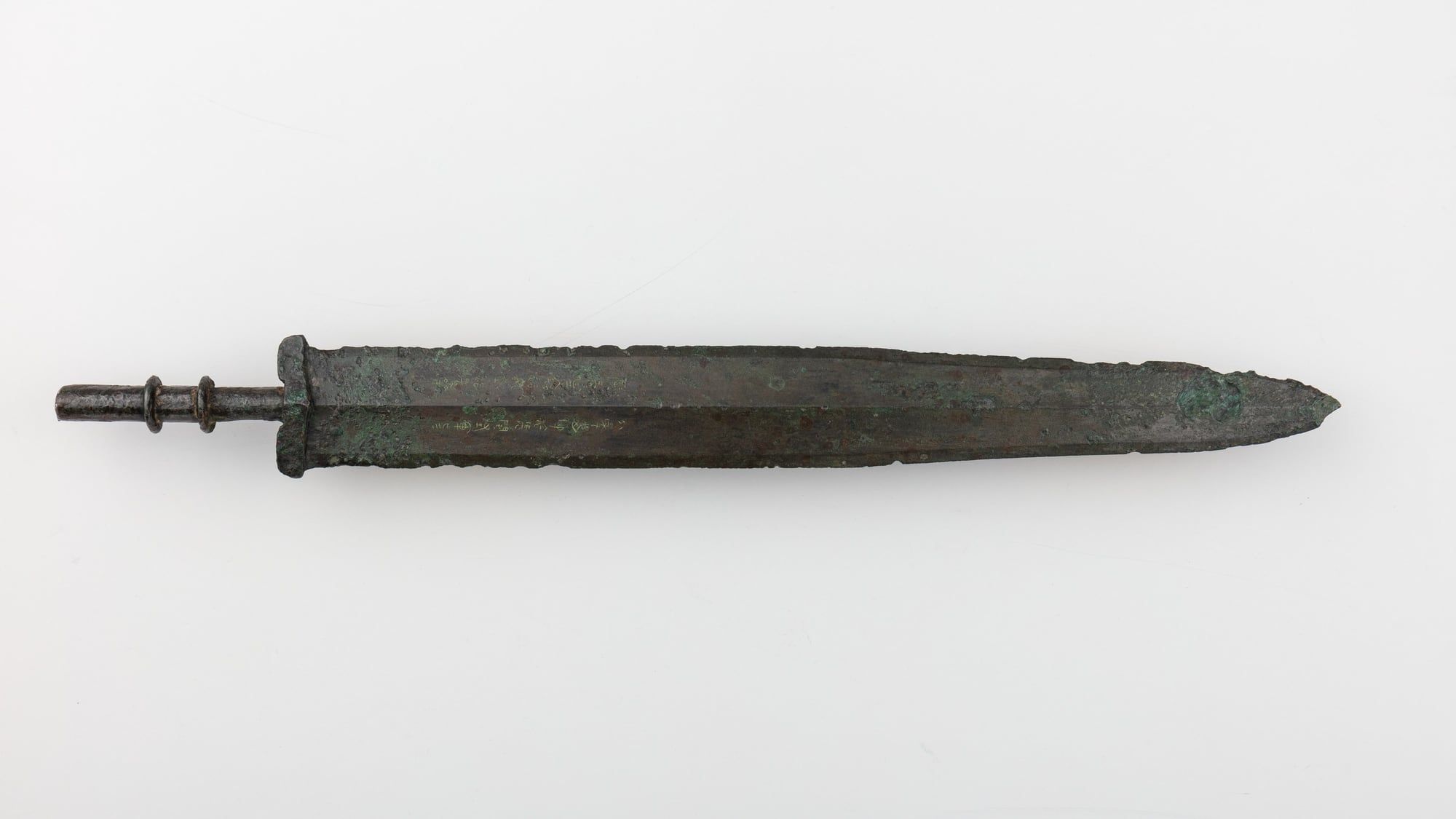
- The tang (剑茎). A functional blade continues as a full-width tang through the grip and is secured at the pommel. A thin threaded rod welded to the blade is the classic breaking point of decorative swords.
- The steel (钢材). A maker of working swords names the steel, a plain high-carbon or spring steel or a folded pattern steel, and how it was heat-treated. Unspecified “stainless” is a common sign of a display piece.
- The heat treatment (热处理). Ask whether the blade was quenched and tempered and how hard the edge is; a working jian has a hard edge and a springy body that returns true after flexing.
- The pattern (花纹). Real folded steel shows its layers through the metal when polished or etched; a pattern that is only printed or laser-marked on the surface wears off.
- Weight and balance. A functional jian usually weighs about 0.7–1.1 kg with the balance close to the guard; very heavy “bricks” and feather-light toys are both decorative.
- Fittings. Guard, grip and pommel should not rattle, and the scabbard should hold the blade firmly.
- Edge and law. Rules on owning, carrying and shipping sharp blades vary by country and region; check them before you buy or travel.
 《中华百工》— 龙泉宝剑 | CCTV
Zhejiang and Phantom Blade Zero
S-GAME has not said that it visited Longquan, and we will not claim it did. What the studio has said, in an official X post in April 2026, is that its location scouting took in “ancestral halls in Fujian” and “ancient towns in Zhejiang”, and that it sometimes had master swordsmiths forge real replicas “to better understand how a weapon’s weight and length impact movement”. Director Soulframe Liang has also named Zhejiang puppet theatre among the folk traditions the game recasts in kungfupunk form (Jiefang Daily, 2025).
Phantom Blade Zero’s weapons are fiction; the craft they borrow from is not. Longquan is where that craft is still practised in the open, which makes it the best place to understand what the jian and the other types of Chinese swords in the game were, before they were drawn in rain and red thread.
Names in this article · Codex
Frequently asked
Q01Are Longquan swords real swords or decorations?
Q02Why are Longquan swords famous?
Q03How is a Longquan sword made?
Q04What is the difference between a Longquan sword and a katana?
Q05What does “Longquan” mean?
Sources & further reading
- Yuejue shu, juan 11: Records of Precious Swords — Han-dynasty compilation (Wikisource)
- 龍泉寶劍 (Longquan sword), incl. national heritage listing Ⅷ-37 — Wikipedia (Chinese)
- Notice on the first batch of national intangible cultural heritage (2006) — State Council of the People's Republic of China
- Tiangong Kaiwu, “Axes and adzes” (Chuiduan chapter) — Song Yingxing, 1637 (Wikisource)
- Phantom Blade Zero studio says every single piece of content is hand-crafted by real artists — GamingBolt, 10 April 2026 (quoting S-GAME's official X post)
Cite this page
Wuxiapunk Editors. (2026, October 27). How Longquan Swords Are Forged: 2,600 Years of Craft. Wuxiapunk. https://wuxiapunk.com/craft/longquan-swords/
“How Longquan Swords Are Forged: 2,600 Years of Craft.” Wuxiapunk, 27 Oct. 2026, https://wuxiapunk.com/craft/longquan-swords/.
Keep reading
Hundred-Refined Steel: How Chinese Smiths Folded Steel
Chinese sword forging explained: cast iron, puddled steel, hundred-refined folding, co-fusion steel and composite blades, with original texts, dates and layer maths.
Sword of Goujian: The 2,500-Year-Old Blade Explained
The Sword of Goujian explained: its 1965 discovery in a Chu tomb, exact size, bird-worm inscription, bronze alloy, what really kept it from rusting, and its king.
Jian: The Chinese Straight Sword, Explained
What a jian is, how the double-edged Chinese sword evolved from bronze to steel, its anatomy, how it was used, and why it is called the gentleman of weapons.