Concept dossier · Society
Jianghu Meaning: The Martial World of Phantom Blade Zero
江湖jiānghú
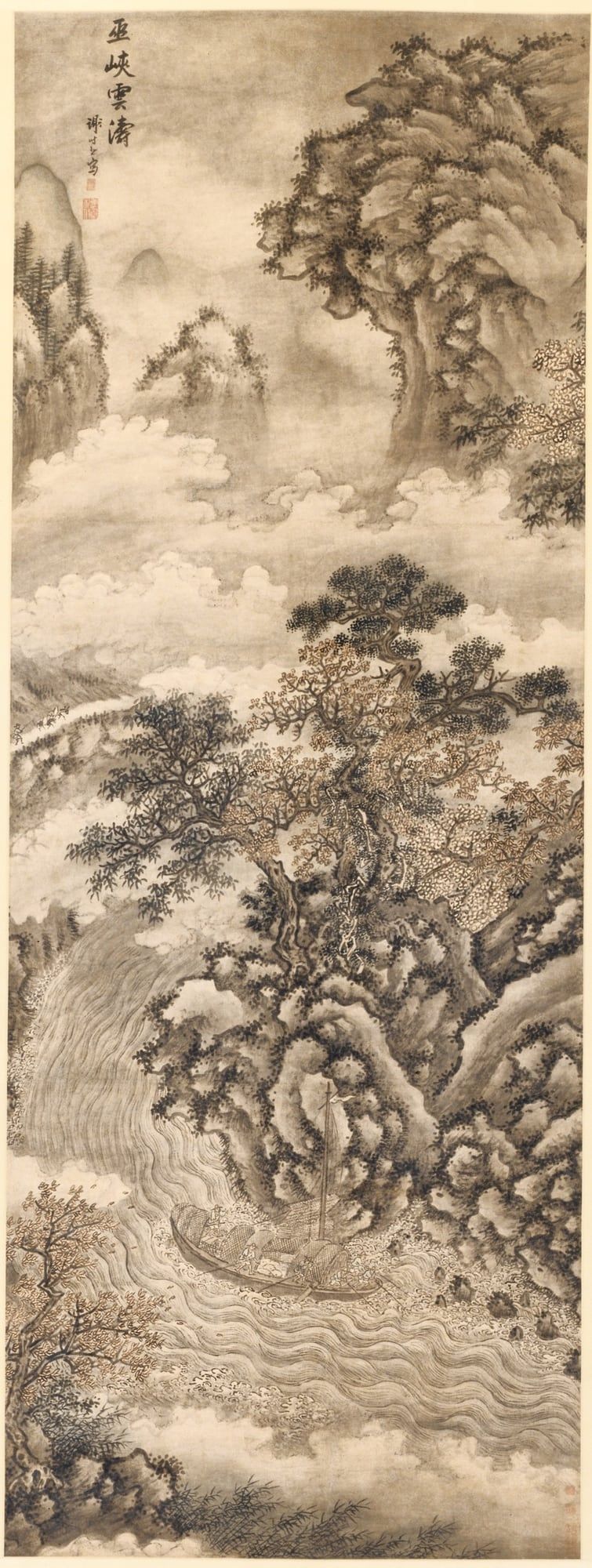
Jianghu (江湖) literally means “rivers and lakes”. How a Zhuangzi image became wuxia's martial world, how it differs from wulin and murim, and Phantom Blade Zero's Wulin.
Key facts
- Jianghu (江湖, jiānghú) literally means “rivers and lakes”; in wuxia it is the world of wanderers, sects and outlaws that lives beyond the reach of the court.
- The word comes from the Zhuangzi (4th–3rd c. BCE): stranded fish would do better to “forget one another in the rivers and lakes”.
- For centuries it meant retreat from office — in 1046 Fan Zhongyan set “the distant rivers and lakes” against the court — before it came to mean itinerant trades, outlaws and finally the martial underworld.
- Wulin (武林, “martial forest”) is narrower: only the martial-arts community inside the jianghu. Korean murim (무림) is simply 武林 read in Korean.
- Phantom Blade Zero's official English uses the Wulin — Soul “roams the Wulin” — and its store page lists “the Wulin and the Discordance” (表里武林).
- Chinese
- 江湖 · jiānghú
- Literal meaning
- 江 rivers + 湖 lakes
- Say it
- “jyahng-hoo” — first tone + second tone
- First used
- Zhuangzi, “The Great and Venerable Teacher”
- Narrower term
- wulin 武林, the martial-arts community
- In Korean
- gangho 강호 (江湖) · murim 무림 (武林)
- Famous saying
- 人在江湖,身不由己 — in the jianghu, you are not your own master
Jianghu 江湖 jiānghú“Rivers and lakes”: the shadow society of martial artists, wanderers, sects and outlaws that exists alongside, and often outside, the law of the court.Glossary → literally means “rivers and lakes”. In Chinese fiction it names the world beyond the court and the law — roads and inns, sects and escort convoys, beggar gangs and outlaw camps — where people settle their affairs by their own code instead of the magistrate’s. It is the stage of every wuxia story, and the world Soul is hunted through in Phantom Blade Zero. Say it 江湖jiānghú, roughly “jyahng-hoo”.
From Zhuangzi’s fish to Fan Zhongyan’s exile
The word begins as a Daoist image. In the Zhuangzi, fish stranded by a dried-up spring keep each other alive with breath and spittle — a picture of desperate dependence — and the text concludes they would be better off apart, free in open water:
泉涸,鱼相与处于陆,相呴以湿,相濡以沫,不如相忘于江湖。
When the springs dry up, the fish huddle together on the land, wetting each other with their breath and moistening each other with spittle. Better that they forget one another in the rivers and lakes.
Two ironies followed. The phrase 相濡以沫 (“moistening each other with spittle”) now appears on wedding cards to praise a devoted couple, the opposite of Zhuangzi’s point. And “forgetting one another in the jianghu” became the dream of every retiring swordsman.
For the next 1,500 years, jianghu meant distance from power. Sima Qian writes that after helping the state of Yue take its revenge, the minister Fan Li “took a small boat and drifted on the rivers and lakes” (乘扁舟浮于江湖), changed his name and became a merchant. In 1046 the statesman Fan Zhongyan made the opposition explicit:
居庙堂之高,则忧其民;处江湖之远,则忧其君。
High in the halls of court, one worries for the people; far away among the rivers and lakes, one worries for the ruler.
The court and temple (庙堂) on one side, the jianghu on the other: wuxia still uses that map.
How “rivers and lakes” became an underworld
Over the centuries the word drifted down the social ladder. Poets used it for exile — Bai Juyi describes a musician “drifting among the rivers and lakes” — and a circle of Southern Song poets became known as the Jianghu poets. In everyday speech, zou jianghu (走江湖, “walking the jianghu”) meant making a living on the road: fortune-tellers, acrobats, storytellers and medicine peddlers. A jianghu langzhong (江湖郎中, “jianghu doctor”) is still a quack. Chan Buddhists had their own version: monks “walked the jianghu” between the great monasteries of Jiangxi (江西) and Hunan (湖南).
The jianghu then absorbed bandits and gangs. The 14th-century novel Water Margin (水浒传) gave its outlaws a moral code and a name, the “heroes of the greenwood” (绿林好汉, lùlín hǎohàn). In the 1920s Pingjiang Buxiaosheng put the word into the title of the novel that kicked off the modern wuxia craze, The Peculiar Knights-Errant of the Jianghu (江湖奇侠传), and the martial-world meaning was fixed. Today Chinese triads call their own world the jianghu; a retiring boss “leaves the jianghu” (退出江湖) or, in wuxia ceremony, “washes his hands in a golden basin” (金盆洗手), and a comeback is “re-entering the jianghu” (重出江湖).
A map of the jianghu
| Who | Chinese | Role in the jianghu | Real or fiction? |
|---|---|---|---|
| Sects and schools | 门派 ménpài — Shaolin 少林, Wudang 武当, Emei 峨眉 | Train disciples, guard secret manuals, feud and ally | Real temples and martial lineages; their politics is fiction |
| Escort agencies | 镖局 biāojú | Armed couriers guarding silver, goods and travellers, flags flying over the carts | Real: documented from the Ming and widespread in the Qing |
| Beggars’ Sect | 丐帮 gàibāng | A nationwide network of beggars with its own chief and law | Real beggar guilds had chiefs; Jin Yong’s novels turned the 丐帮 into a martial army |
| Inns | 客栈 kèzhàn | Neutral ground, rumour mill, ambush site | Real; King Hu’s Dragon Inn (1967) made the inn wuxia’s favourite stage |
| Greenwood outlaws | 绿林 lùlín | Bandits who claim a code | Rooted in Water Margin |
| Alliance leader | 武林盟主 wǔlín méngzhǔ | Elected arbiter of the “righteous” sects, often murdered or corrupt | Fiction |
| The court | 庙堂 / 官府 | Officials the jianghu keeps at arm’s length | Real — the distance is the point |
The unwritten rules follow from this map: keep your word, repay favours, avenge wrongs yourself, settle disputes by mediation or duel, and never hand a fellow jianghu member over to the magistrate. Hence the genre’s most quoted saying, popularized by wuxia novels and Hong Kong film: 人在江湖,身不由己 — “in the jianghu, you are not your own master.” Debts, loyalties and feuds decide for you.
Jianghu vs wulin (and murim)
The two words overlap but are not synonyms. Jianghu is everyone outside the court, including people who cannot fight: merchants, performers, thieves, hermits. Wulin (武林wǔlín, “martial forest”) is only the community of martial artists inside it, with its sects, rankings and feuds. Every wulin figure lives in the jianghu; not everyone in the jianghu belongs to the wulin. The two fused in 20th-century fiction, which is why translations swap them freely.
A footnote for history buffs: before it meant the martial world, Wulin was a literary name for Hangzhou. Zhou Mi’s Old Affairs of Wulin (武林旧事, completed before 1290) describes life in the Southern Song capital — and contains no sword fights.
For manhwa readers: murim is wulin
Murim (무림) is the Korean pronunciation of 武林, and gangho (강호) is the Korean reading of 江湖. The murim genre — Korean web novels and webtoons such as Return of the Blossoming Blade (화산귀환, serialized from 2019), about a swordsman of the Mount Hua sect — is wulin fiction transplanted to Korea, complete with Chinese sects and secret manuals. If you know murim, you already know Phantom Blade Zero’s world.
The jianghu of Phantom Blade Zero
Phantom Blade Zero’s official English uses the narrower word. Soul, framed for his master’s murder, “roams the Wulin, determined to unravel a conspiracy that has ensnared the martial world”, and the Steam page lists “the Wulin and the Discordance” — in Chinese 表里武林, literally the “outer and inner Wulin”. Fans reading the menus take the Discordance to be the hidden inner Wulin; S-GAME has not spelled it out. The Chinese tagline goes darker still, describing a Wulin “of lost order and the Dharma’s end” (失序末法的武林).
The developers use the jianghu as a design language:
- Bonds. Liang has told Chinese press that the story builds three layers of ties — with villains, with jianghu friends and with ordinary people — as Soul widens his concern from saving himself to protecting commoners.
- Masks. Art director Michael told Gamersky that masks stand for the jianghu’s disguise, confinement and repression: almost every fallen villain wears one, while the unmasked are the xiake who stay true to themselves.
- Red threads. The crimson threads binding characters stand, he says, for the jianghu’s entanglements of love, hate and fate (爱恨纠葛、命运羁绊).
- Sound. Composer Bo Caisheng told ChuApp that to him the erhu is “very jianghu, even wild” (非常江湖,甚至草莽).
- Death. In the Sixty-Six Days mode, running out of days triggers a short ending titled 饮恨江湖 — roughly “dying with a grudge in the jianghu”.
 Enter the Wulin: Gameplay & Story Deep Dive of Phantom Blade Zero
The organization that hunts Soul is the jianghu at its most sinister — see The Order and real Chinese secret societies.
Zhuangzi wanted his fish to forget each other in the rivers and lakes. Two thousand years of storytellers did the opposite, filling the jianghu with debts, vows and vendettas that no one can forget. That is the water Soul swims in: a world beyond the law where, as the saying goes, once you are in, you are no longer your own.
Names in this article · Codex
Frequently asked
Q01What is the meaning of jianghu?
Q02How do you pronounce jianghu?
Q03What is the difference between jianghu and wulin?
Q04Are murim and jianghu the same?
Q05What does 人在江湖,身不由己 mean?
Sources & further reading
- Zhuangzi, “The Great and Venerable Teacher” (大宗师) — Zhuangzi, 4th–3rd c. BCE
- Shiji, ch. 129 “Biographies of the Money-Makers” (货殖列传), on Fan Li — Sima Qian, c. 94 BCE
- Record of Yueyang Tower (岳阳楼记) — Fan Zhongyan, 1046 (Wikisource)
- The Chinese Knight-Errant — James J. Y. Liu, University of Chicago Press, 1967
- Jianghu — Wikipedia
- Phantom Blade Zero — official store page — S-GAME / Steam
Cite this page
Wuxiapunk Editors. (2026, October 27). Jianghu Meaning: The Martial World of Phantom Blade Zero. Wuxiapunk. https://wuxiapunk.com/history/what-is-jianghu/
“Jianghu Meaning: The Martial World of Phantom Blade Zero.” Wuxiapunk, 27 Oct. 2026, https://wuxiapunk.com/history/what-is-jianghu/.
Keep reading
What Is Wuxia? Meaning, Pronunciation & Phantom Blade Zero
Wuxia (武侠, wǔxiá) means “martial chivalry”: Chinese tales of wandering sword-heroes. Its meaning, pronunciation, 2,000-year history and place in Phantom Blade Zero.
Wuxia vs Xianxia: Where Does Phantom Blade Zero Fit?
Wuxia vs xianxia: martial heroes bound by human limits vs cultivators chasing immortality. A side-by-side table, plus shenmo, murim and where Phantom Blade Zero fits.
The Order & Real Chinese Secret Societies, Explained
Is Phantom Blade Zero's Order real? No — but Ming China had secret police (Jinyiwei), banned sects (White Lotus) and sworn brotherhoods that became triads.