Guide · Style & genre
What Is Kungfupunk? Phantom Blade Zero's Style Explained
功夫朋克 / 武侠朋克gōngfu péngkè
Kungfupunk is S-GAME's name for Phantom Blade Zero's look: wuxia cinema fused with steampunk machines, prosthetics, occult horror and rock, in the devs' own words.
Key facts
- Kungfupunk (功夫朋克, gōngfu péngkè; also 武侠朋克, “wuxia punk”) is S-GAME's name for Phantom Blade Zero's art direction: wuxia and kung fu cinema with a heavy dose of punk.
- Creator Soulframe Liang introduced it to international players on the PlayStation Blog on 24 May 2023: “We call this overall art direction ‘Kungfupunk’.”
- Steam lists the ingredients: martial arts, cold steel, mechanical prosthetics, crumbling industrial ruins, traditional Chinese aesthetics and modern rock music.
- Liang calls real Chinese history “Level One”, 20th-century wuxia fiction and film “Level Two”, and kungfupunk a “Level Three” built on wuxia (IGN, 2023).
- Kungfupunk is an aesthetic, not a gameplay genre: the studio calls the game a kung fu action game, “neither a Soulslike game nor a traditional action game”.
Kungfupunk 功夫朋克 gōngfu péngkèThe style label S-GAME uses for the Phantom Blade series: wuxia martial arts and Chinese mysticism mixed with punk attitude and industrial, steam-age machinery.Glossary → is the name S-GAME gives to Phantom Blade Zero’s style: the heroes, swordplay and moral code of wuxia, dragged into a world of steam-driven machines, mechanical prosthetics, occult horror and electric guitar. Think Hong Kong kung fu cinema with a punk soundtrack and grease under its fingernails. In Chinese the studio also says wuxia punk , and the label explains why a lion dancer in this game swings a chainsaw.
Kungfupunk in the developers’ own words
S-GAME has defined the term several times since the 2023 reveal, and the definitions line up.
- PlayStation Blog, 24 May 2023. In the reveal post, creator Soulframe Liang traces kung fu in pop culture “from Louis Cha’s Wuxia stories to Bruce Lee’s movies” to Michelle Yeoh and Donnie Yen, then adds: “With Phantom Blade Zero, we are adding a new twist to the formula, a heavy dose of punk spirit, alongside with stylish visuals. We call this overall art direction ‘Kungfupunk’.” The same post describes the Phantom World as a place where “Chinese Kungfu, intricate machines reminiscent of steampunk, arts of the occult” converge.
- IGN interview, 2023. Liang’s clearest explanation is a three-storey model: “Let’s say real Chinese culture and Chinese history is on ‘Level One.’ And on Level One, there were a bunch of novelists and filmmakers back in the 20th century that built a whole new paradigm of fantasy,” which is wuxia, Level Two. “What we’re trying to do is to build ‘Level Three’ based on Level Two. We keep the core idea of [wuxia], but we blend it in the elements that inspired us, and expanding the borders.” His goal: “Like Bruce Lee has introduced Kung-Fu to the rest of the world, we would love to introduce the idea of Kung-Fu Punk to our audiences.”
- Steam store page. “The golden age of wuxia cinema collides with punk fantasy… Martial arts, cold steel, mechanical prosthetics, crumbling industrial ruins, traditional Chinese aesthetics, and modern rock music. Together, they create the dark, unmistakable aesthetic of kungfupunk.” The Chinese version opens its list with 武侠秘籍, martial-arts manuals, a very wuxia detail the English drops.
- Year of the Snake trailer, January 2025. The studio promised a kungfupunk experience “rooted in tradition, expressed through something eerie yet novel” (基于传统,但表现得诡谲、新奇).
- Gamersky Q&A, August 2026. Liang explained the motive in Chinese: traditional wuxia’s storytelling and audiovisual language had drifted from today’s tastes, so the team “decided to break out of the fixed frame of traditional wuxia” (跳出传统武侠的固有框架) with a phantasmagoric, old-meets-new style rooted in classic chivalric fiction, new-school wuxia literature and Hong Kong wuxia film.
 How Phantom Blade Zero Is Bringing Kung Fu-Punk to PlayStation 5 and PC
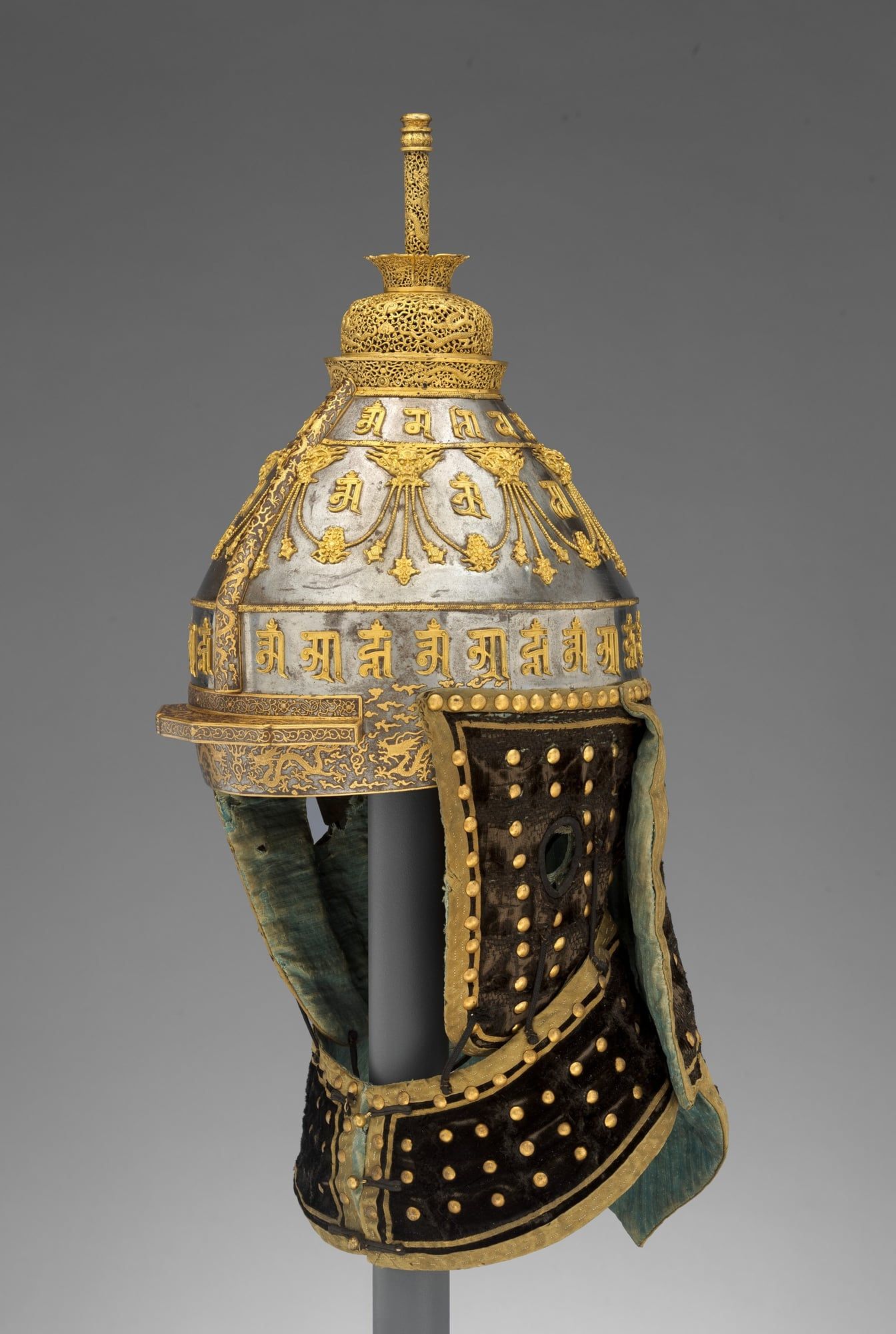
The ingredients of kungfupunk
Take the style apart and you find seven layers.
- Wuxia cinema. The foundation. Liang cites Hong Kong Golden Age kung fu films, in-house action director Yang Liu cites Crouching Tiger, Hidden Dragon, and Donnie Yen serves as creative consultant and plays Mó Yuan. Motion capture is performed at real speed on wire rigs.
- Steampunk machinery. The State of Play showed “a steam-powered iron tower built for some kind of dark experiment,” and Chinese coverage describes a cloud-piercing Sha-Chi Tower where pavilions are bolted to steel frames, chimneys and boilers.
- Prosthetics and body modification. Steam lists mechanical prosthetics outright, and the lore’s Transcension (杀气改造) amplifies a fighter’s Sha-Chi artificially, at the cost of sanity. Jiefang Daily summed up the mix as 机械飞升 (mechanical ascension), 生体改造 (bio-modification) and 克系恐怖 (Lovecraftian horror).
- The occult. “Arts of the occult” sit in the 2023 definition, and the Chinese store tagline borrows the Buddhist idea of 末法, the Dharma-ending age, for a martial world falling apart.
- Masks and red threads. Art director Michael told Gamersky that masks stand for the jianghu’s disguise, confinement and repression: almost every fallen villain wears one, while the unmasked are xia who keep their hearts. Red threads literally hang and bind characters, such as the Chief Disciple of the Seven Stars fighting like a marionette on crimson strings, and figuratively stand for 爱恨纠葛、命运羁绊, the entanglements of love, hate and fate.
- Ink-wash maps. The eight guiding maps were painted by hand with brushes on Xuan paper (宣纸) by young artists from the Chinese Painting department of the Central Academy of Fine Arts, and left deliberately vague in complex regions.
- Chinese instruments versus electric guitar. Composer Bo Caisheng pits the erhu, “very jianghu, even wild” in his words (非常江湖,甚至草莽), against electric guitar, layers suona and pipa over vintage synths and uses no Western brass or woodwinds. The lion-dance boss’s first phase was recorded with a real troupe; its second switches to hard electronic music with 808 drums.
Michael’s formula for holding it together is 考据为基、创新为魂, “research as the foundation, invention as the soul”: every character, weapon and set is checked against classical texts, traditional architecture and real weapon construction before the mechanical mutation goes on top.
Kungfupunk vs steampunk, cyberpunk and silkpunk
Kungfupunk is easiest to understand next to its cousins.
| Kungfupunk | Steampunk | Cyberpunk | Silkpunk | |
|---|---|---|---|---|
| Named by | S-GAME, for Phantom Blade Zero (public since 2023) | K. W. Jeter, letter to Locus, April 1987 | Bruce Bethke’s story “Cyberpunk” (1983) | Ken Liu, for his Dandelion Dynasty novels (from 2015) |
| Cultural root | Wuxia fiction, Hong Kong kung fu cinema, Chinese folk culture | Victorian Britain and 19th-century industry | Late-20th-century computing and corporations | Classical East Asia and the Pacific |
| Signature tech | Steam towers, prosthetics, Sha-Chi body modification, cannons | Steam engines, brass, clockwork, airships | Cybernetic implants, networks, AI | Bamboo, silk, paper, sinew, feathers; biomimicry |
| The hero | The xia (侠), a commoner swordsman | Inventors and adventurers | Hackers and outlaws | Varies by story |
| Defining example | Phantom Blade Zero (2026) | Jeter’s Infernal Devices (1987) | William Gibson’s Neuromancer (1984) | Ken Liu’s The Grace of Kings (2015) |
Kungfupunk shares hardware with steampunk, boilers and iron towers included, but not its soul. Steampunk looks back fondly at an industrial age that never quite happened; kungfupunk keeps wuxia’s moral world and lets machines corrupt it. Silkpunk is the closer cultural cousin, but Ken Liu defines it as a technology vocabulary built from “materials of historical importance to the people of East Asia and the Pacific islands,” an alternative tech tree rather than a corruption story. Kungfupunk happily bolts steel onto pavilions.
How kungfupunk differs from plain wuxia
Wuxia (武侠, “martial chivalry”) is Level Two in Liang’s model: the 20th-century genre of Jin Yong, Gu Long and Hong Kong film, about xia heroes in the jianghu. Kungfupunk keeps that core. Soul is a classic xiake (侠客), “cold on the outside, but warm and hot inside,” as Liang told Inverse. What changes is the world around him.
- The fighters stay human. Yang Liu draws the line explicitly: “Wuxia is different from another Chinese genre called Xianxia — the key difference lies in the boundaries: how far can a hero go, how high can they leap?… they must still stay within the limits of human ability.” The strangeness comes mostly from machines, masks and Sha-Chi experiments rather than from flying immortals. See wuxia vs xianxia.
- The hero is a commoner. Liang stresses that the Chinese xia comes from ordinary people, unlike the European knight or the samurai.
- The tone is dark. The Chinese store copy calls the look 暗黑美学, a “dark aesthetic”, and the tagline sets Soul in a Wulin of 失序末法: disorder at the end of the Dharma.
Is kungfupunk a genre?
Not in the gameplay sense. S-GAME called it an “art direction” from the start, and describes the game itself as a kung fu action game. In a June 2025 letter Liang wrote: “‘Genre’ is a label based on stereotypes… However, Phantom Blade Zero is neither a Soulslike game nor a traditional action game.” Critics have started treating the style as worth naming anyway; GamesRadar+‘s reviewer wrote that “Kungfupunk might be my next favorite genre.”
The idea is older than the game. Liang told Jiefang Daily he was already mixing wuxia, steampunk and parallel universes when he wrote Rainblood as a student, and he told IGN that Phantom Blade Zero is “a complete version of the style I wish I could’ve done in Rain Blood.” Kungfupunk, in other words, is wuxia that finally got the budget to look the way its creator always imagined.
Names in this article · Codex
Frequently asked
Q01What does kungfupunk mean?
Q02Where does the word kungfupunk come from?
Q03Is kungfupunk the same as steampunk?
Q04What is kungfupunk in Chinese?
Q05Is Phantom Blade Zero wuxia or kungfupunk?
Sources & further reading
- Phantom Blade Zero: a new beginning in a long journey — Soulframe Liang, PlayStation Blog, 24 May 2023
- Exclusive Developer Interview ft. Phantom Blade Zero — IGN, 2023
- Phantom Blade Zero store page (English and Simplified Chinese text) — Steam / S-GAME
- 梁其伟公布《影之刃零》新情报!现代武侠、战斗设计等 (pre-order screening Q&A) — Gamersky 游民星空, 12 Aug 2026
- 在《影之刃零》里寻找传统民乐器的灵魂 (composer Bo Caisheng) — ChuApp 触乐, 12 Dec 2025
- Behind The Scenes With ‘Phantom Blade Zero’s Kung Fu Master — Inverse
- What is “Silkpunk”? — Ken Liu
Cite this page
Wuxiapunk Editors. (2026, October 27). What Is Kungfupunk? Phantom Blade Zero's Style Explained. Wuxiapunk. https://wuxiapunk.com/guides/what-is-kungfupunk/
“What Is Kungfupunk? Phantom Blade Zero's Style Explained.” Wuxiapunk, 27 Oct. 2026, https://wuxiapunk.com/guides/what-is-kungfupunk/.
Keep reading
What Is Wuxia? Meaning, Pronunciation & Phantom Blade Zero
Wuxia (武侠, wǔxiá) means “martial chivalry”: Chinese tales of wandering sword-heroes. Its meaning, pronunciation, 2,000-year history and place in Phantom Blade Zero.
Wuxia vs Xianxia: Where Does Phantom Blade Zero Fit?
Wuxia vs xianxia: martial heroes bound by human limits vs cultivators chasing immortality. A side-by-side table, plus shenmo, murim and where Phantom Blade Zero fits.
Phantom Blade Zero Weapons & Their Real Chinese Origins
Every Phantom Blade Zero weapon named so far, from Sanguine to the Tiger Cannon, matched to its real Chinese counterpart: jian, dao, miao dao, guandao and more.