Concept dossier · Genre
What Is Wuxia? Meaning, Pronunciation & Phantom Blade Zero
武侠wǔxiá
Wuxia (武侠, wǔxiá) means “martial chivalry”: Chinese tales of wandering sword-heroes. Its meaning, pronunciation, 2,000-year history and place in Phantom Blade Zero.
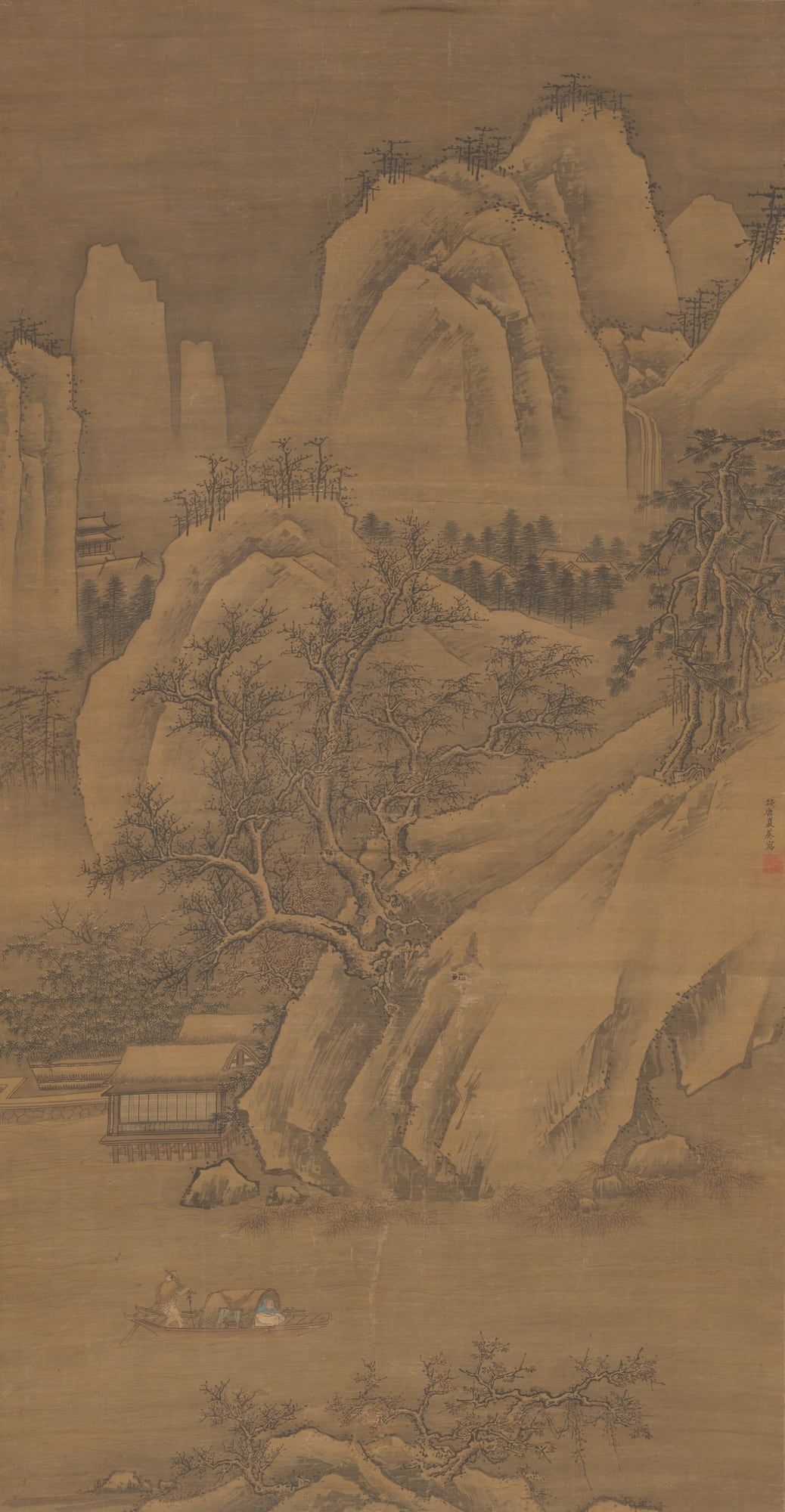
Key facts
- Wuxia (武侠, wǔxiá) means “martial chivalry”: stories of the xia, a wandering hero who follows a personal code and uses martial skill to right wrongs the law ignores.
- It is pronounced roughly “woo-shyah”: a low, dipping tone on wǔ, then a rising tone on xiá.
- The hero is ancient — Han Fei attacked the xia in the 3rd century BCE and Sima Qian profiled them around 94 BCE — but the genre label wuxia only arrived in the early 1900s, borrowed from Japanese bukyō.
- The modern canon came from the novelists Jin Yong, Liang Yusheng and Gu Long (1950s–80s) and the filmmakers King Hu, Chang Cheh, Tsui Hark and Ang Lee.
- Phantom Blade Zero is wuxia at heart — S-GAME promises “a deep and authentic interpretation of Xia” — wrapped in a darker, machine-age style it calls kungfupunk.
- Chinese
- 武侠 (武俠) · wǔxiá
- Literal meaning
- 武 martial + 侠 chivalrous hero
- Say it
- “woo-shyah” — third tone + second tone
- The hero
- xiake 侠客 · youxia 游侠 (wandering xia) · nüxia 女侠
- Earliest sources
- Han Feizi (3rd c. BCE); Shiji chs. 86 and 124 (c. 94 BCE)
- Genre label
- Early 1900s, a loan from Japanese bukyō
- Setting
- The jianghu 江湖, the world outside court and law
Wuxia 武侠 wǔxiáThe Chinese genre of martial heroes — knights-errant who live by a code of righteousness and settle wrongs with their own skill.Glossary → means “martial chivalry”: the Chinese tradition of stories about the xia, a wandering hero who lives by a personal code and uses martial skill to right wrongs that the law will not touch. The figure is more than 2,000 years old. The genre built around him runs from Sima Qian’s histories through Jin Yong’s novels and Crouching Tiger, Hidden Dragon to games like Phantom Blade Zero, whose makers call the xia “the heart of Chinese heroism”.
What wuxia means: 武 + 侠
The word has two halves. 武wǔ means martial, military, armed — the 武 of 武术, wushu or martial arts. 侠xiá is harder. “Knight-errant” is the usual English, but a xia is defined by conduct, not rank: he — or she, a nüxia (女侠) — steps in for the weak, keeps every promise and settles scores personally. A practitioner is a xiake ; one who roams is a youxia .
The first writer to put the two characters side by side meant it as an insult. The Legalist philosopher Han Fei, who wanted every subject obedient to the law, listed the xia among the “five vermin” gnawing at the state:
儒以文乱法,侠以武犯禁。
Scholars use their letters to confuse the law; knights-errant use force to break its prohibitions.
That tension never went away. European knights and Japanese samurai were defined by service to a lord; the xia serves only justice as he sees it, which makes him a hero to commoners and a problem for every government. Soulframe Liang, director of Phantom Blade Zero, has stressed exactly this in interviews: the Chinese xia is a commoner hero, unlike the knight or the samurai.
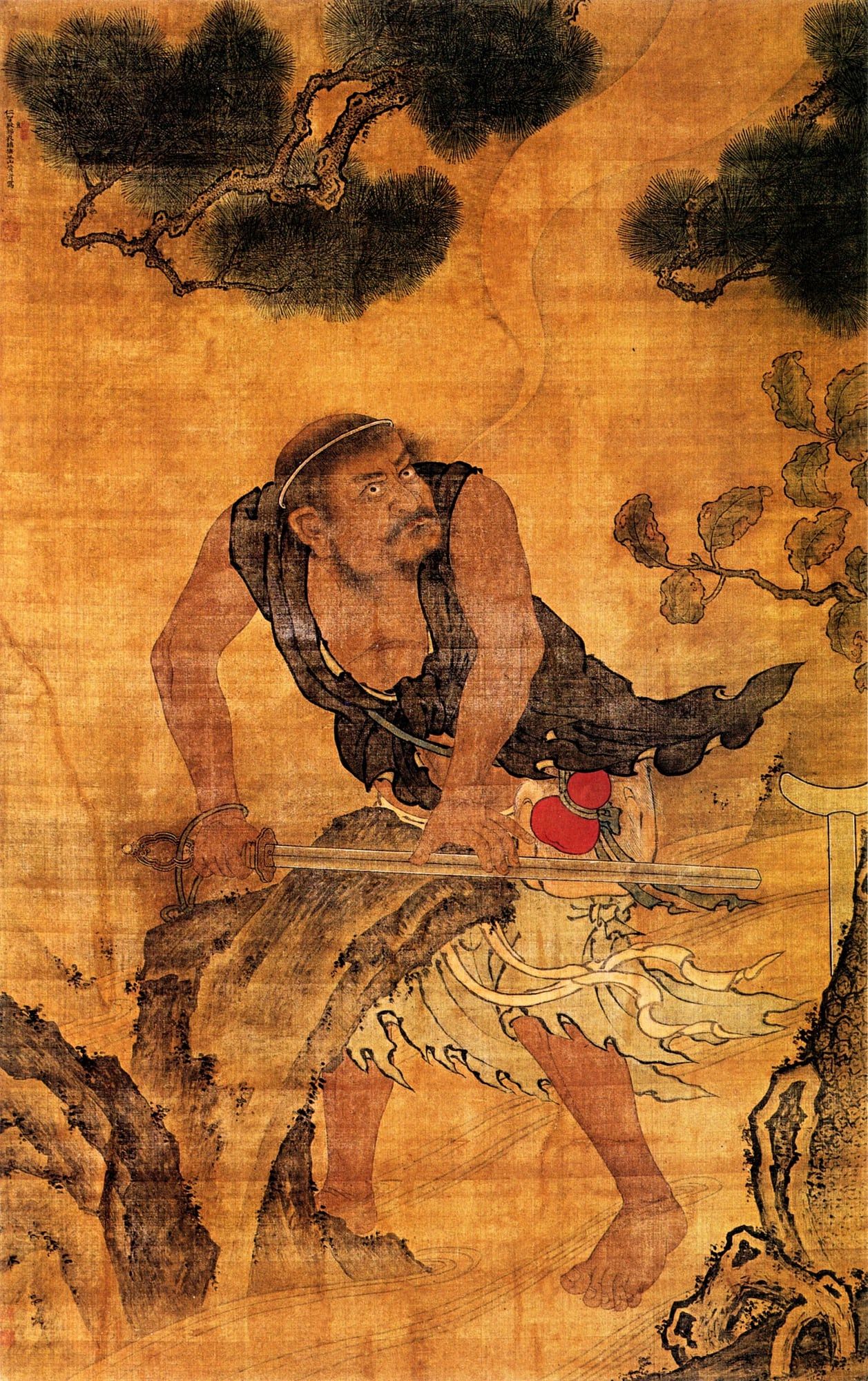
How to pronounce wuxia
Say 武侠wǔxiá as “woo-shyah”.
- wǔ — like “woo”, with Mandarin’s third tone: start low, dip, and lift slightly at the end.
- xiá — the x is a soft “sh” made with the tongue tip behind the lower front teeth, gliding straight into “yah”, with a rising second tone, as if asking a question.
- Avoid “wook-see-ah” and “woo-zee-ah”: Mandarin x is never “ks” or “z”.
You will meet three close relatives on this site: 侠客xiákè (xiake, the hero), 江湖jiānghú (jianghu, the world he roams) and 武林wǔlín (wulin, the martial-arts community). Our pronunciation guide covers every name in the game.
The code of the xia
The best early portrait of the xia comes from Sima Qian, who devoted chapter 124 of his Records of the Grand Historian (Shiji, c. 94 BCE) to the wandering knights of his day. He admitted they broke the law — and admired them anyway:
其言必信,其行必果,已诺必诚,不爱其躯,赴士之阨困。
Their word can always be trusted, their deeds are always carried through, and what they promise they truly deliver. Careless of their own lives, they rush to the aid of others in distress.
Later fiction hardened that portrait into a code:
- 义 (yì), righteousness — doing what is right even when it is illegal or fatal.
- 信 (xìn), keeping your word — an oath binds harder than any law.
- 报恩 (bào’ēn), repaying kindness — a debt of gratitude can be paid with your life.
- 报仇 (bàochóu), vengeance — wrongs are avenged personally, though Buddhist-minded stories often question the cycle.
- Loyalty to the master (师父, shīfu) and to the school.
The Tang poet Jia Dao (779–843) caught the whole attitude in four lines: “Ten years grinding one sword, its frost-white edge never tested. Today I hold it out to you — who here has suffered an injustice?” (十年磨一剑,霜刃未曾试。今日把示君,谁有不平事?)
A 2,000-year lineage
| Era | Milestone | Why it matters |
|---|---|---|
| 3rd c. BCE | Han Fei condemns the xia | First pairing of 武 and 侠 |
| c. 94 BCE | Sima Qian’s Shiji: assassins (ch. 86), wandering knights (ch. 124) | Real xia, recorded with admiration — see Chinese assassins |
| 9th–10th c. | Tang chuanqi tales: Nie Yinniang (聂隐娘), The Curly-Bearded Guest (虬髯客传), Red Thread (红线) | Swordswomen, secret training, superhuman feats |
| 14th c. | Water Margin (水浒传) | 108 outlaws with a code; often called the first proto-wuxia novel |
| 19th c. | The Three Heroes and Five Gallants (三侠五义), A Tale of Heroic Sons and Daughters (儿女英雄传) | Xia team up with upright judges; the hero’s journey takes shape |
| 1920s–40s | Pingjiang Buxiaosheng’s The Peculiar Knights-Errant of the Jianghu (江湖奇侠传), filmed as The Burning of the Red Lotus Temple (1928–31); Huanzhulouzhu; Wang Dulu’s Crouching Tiger, Hidden Dragon (1941–42) | The first mass wuxia boom — and the first bans |
| 1954–1980s | The “new school”: Liang Yusheng (from 1954), Jin Yong (15 novels, 1955–72), Gu Long in Taiwan | The modern canon, serialized in newspapers |
| 1960s–2000s | King Hu (Come Drink with Me, 1966; Dragon Inn, 1967; A Touch of Zen, 1970–71), Chang Cheh (One-Armed Swordsman, 1967), Tsui Hark (The Blade, 1995), Ang Lee (Crouching Tiger, Hidden Dragon, 2000) | Wire-work and world audiences; Ang Lee’s film won four Oscars |
| 1990s–today | Heroes of Jin Yong (1996), Jade Empire (2005), Where Winds Meet (2025), Phantom Blade Zero (2026) | The playable jianghu |
The label itself is young. Wuxia entered Chinese at the end of the Qing dynasty as a borrowing of the Japanese bukyō, written with the same characters, promoted by reformers such as Liang Qichao who wanted China to rediscover martial virtue. The word stuck in China and faded in Japan.
Wuxia vs xianxia vs kung fu film vs samurai film
| Wuxia 武侠 | Xianxia 仙侠 | Kung fu film 功夫片 | Samurai film / chanbara | |
|---|---|---|---|---|
| Hero | Wandering xia, often a commoner, loyal to a code | Cultivator seeking immortality | Martial artist or folk hero, often a real figure such as Wong Fei-hung | Samurai or masterless rōnin |
| Powers | Real martial arts pushed past realism: light-body leaps, inner force, pressure points | Open magic: flying swords, elixirs, many realms | Grounded unarmed combat | Grounded swordplay |
| World | The jianghu of a loosely historical China | Heavens, the mortal world and underworlds | Late Qing and Republican-era towns | Feudal Japan |
| Core values | Righteousness, promises, gratitude, revenge | Ascension, fate, power | Honour of self, school and community | Duty to a lord — or its loss |
| Classics | Jin Yong’s novels; A Touch of Zen; Crouching Tiger, Hidden Dragon | Legend of the Swordsmen of the Mountains of Shu (1932–); Zu Warriors from the Magic Mountain (1983) | Fist of Fury (1972); Once Upon a Time in China (1991) | Seven Samurai (1954); Yojimbo (1961) |
The borders leak — Chang Cheh made both swordplay and kung fu films, and many imported “wuxia” TV dramas were really xianxia — but the simplest test is the one Phantom Blade Zero’s own action director uses: does the hero stay human? More in wuxia vs xianxia and the kung fu films behind the game.
Dark wuxia and Phantom Blade Zero
“Dark wuxia” is an informal label, not a formal genre: wuxia that keeps the code of the xia but pushes its price into the foreground — compromised heroes, corrupt sects, real gore, the supernatural tipping into horror. It has a long pedigree. Chang Cheh’s One-Armed Swordsman (1967) launched a wave of bloodier, more masculine (yanggang, 阳刚) swordplay films; Tsui Hark’s The Blade (1995) remade that classic as something deliberately raw and gory; Gu Long’s heroes are cold loners with burning hearts.
Phantom Blade Zero plants itself in that lineage. Its official store copy says “the golden age of wuxia cinema collides with punk fantasy” to create “the dark, unmistakable aesthetic of kungfupunk”, and its Chinese tagline drops the hero into a Wulin “of lost order and the Dharma’s end” (失序末法的武林). In Chinese interviews Liang says the style is deeply rooted in “traditional Chinese chivalric fiction, new-school wuxia literature and Hong Kong wuxia film” (our translation); to IGN he described it as a third layer built on classic wuxia:
“Let’s say real Chinese culture and Chinese history is on ‘Level One.’ And on Level One, there were a bunch of novelists and filmmakers back in the 20th century that built a whole new paradigm of fantasy that we call [wuxia] today… What we’re trying to do is to build ‘Level Three’ based on Level Two.” — Soulframe Liang to IGN, 2023
The hero fits the classic mould. Describing the type to Inverse, Liang called him “a very typical Eastern hero… Cold on the outside, but warm and hot inside… We call this ‘Xiake (侠客)’, which means the Chinese version, the Kung Fu version, of heroes.” He has also told Gamersky that he loves the “inner madness, outer coldness” of Gu Long’s characters, which shaped the Seven Stars’ Chief Disciple.
In April 2026 the studio published Liang’s own breakdown of the word:
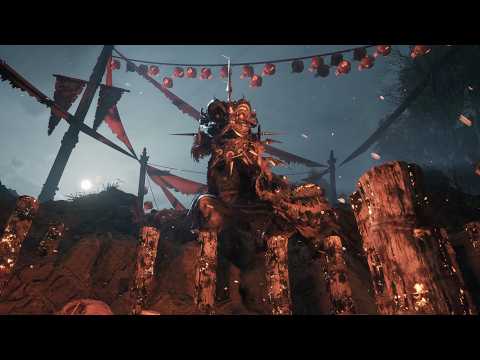 What exactly is Wuxia? Phantom Blade Zero Director Soulframe Breaks It Down
Two thousand years after Han Fei called him vermin, the xia is still the same troublemaker: a person with a sword, a promise and a code no government wrote. Phantom Blade Zero dresses him in steel and rock music, but when Soul walks into the Wulin he is walking the road Sima Qian first mapped — the road of the jianghu.
Names in this article · Codex
Frequently asked
Q01What does wuxia mean?
Q02How do you pronounce wuxia?
Q03Which is better, wuxia or xianxia?
Q04Is Phantom Blade Zero a wuxia game?
Q05Why was wuxia banned?
Sources & further reading
- Shiji (Records of the Grand Historian), ch. 124 “Biographies of the Wandering Knights” (游侠列传) — Sima Qian, c. 94 BCE
- Han Feizi, “The Five Vermin” (五蠹) — Han Fei, 3rd c. BCE
- The Chinese Knight-Errant — James J. Y. Liu, University of Chicago Press, 1967
- Paper Swordsmen: Jin Yong and the Modern Chinese Martial Arts Novel — John Christopher Hamm, University of Hawai‘i Press, 2005
- What exactly is Wuxia? Phantom Blade Zero Director Soulframe Breaks It Down — Phantom Blade Zero (official YouTube channel), April 2026
- Phantom Blade Zero announcement post by Soulframe Liang — PlayStation Blog, 24 May 2023
- Wuxia — Wikipedia
Cite this page
Wuxiapunk Editors. (2026, October 27). What Is Wuxia? Meaning, Pronunciation & Phantom Blade Zero. Wuxiapunk. https://wuxiapunk.com/history/what-is-wuxia/
“What Is Wuxia? Meaning, Pronunciation & Phantom Blade Zero.” Wuxiapunk, 27 Oct. 2026, https://wuxiapunk.com/history/what-is-wuxia/.
Keep reading
Jianghu Meaning: The Martial World of Phantom Blade Zero
Jianghu (江湖) literally means “rivers and lakes”. How a Zhuangzi image became wuxia's martial world, how it differs from wulin and murim, and Phantom Blade Zero's Wulin.
Wuxia vs Xianxia: Where Does Phantom Blade Zero Fit?
Wuxia vs xianxia: martial heroes bound by human limits vs cultivators chasing immortality. A side-by-side table, plus shenmo, murim and where Phantom Blade Zero fits.
What Is Kungfupunk? Phantom Blade Zero's Style Explained
Kungfupunk is S-GAME's name for Phantom Blade Zero's look: wuxia cinema fused with steampunk machines, prosthetics, occult horror and rock, in the devs' own words.