History · Setting
Is Phantom Blade Zero Based on Real Chinese History?
No: Phantom Blade Zero is original fiction in a fantasy China its director places “more or less” in the Ming era. What is real, what is invented, and why it matters.
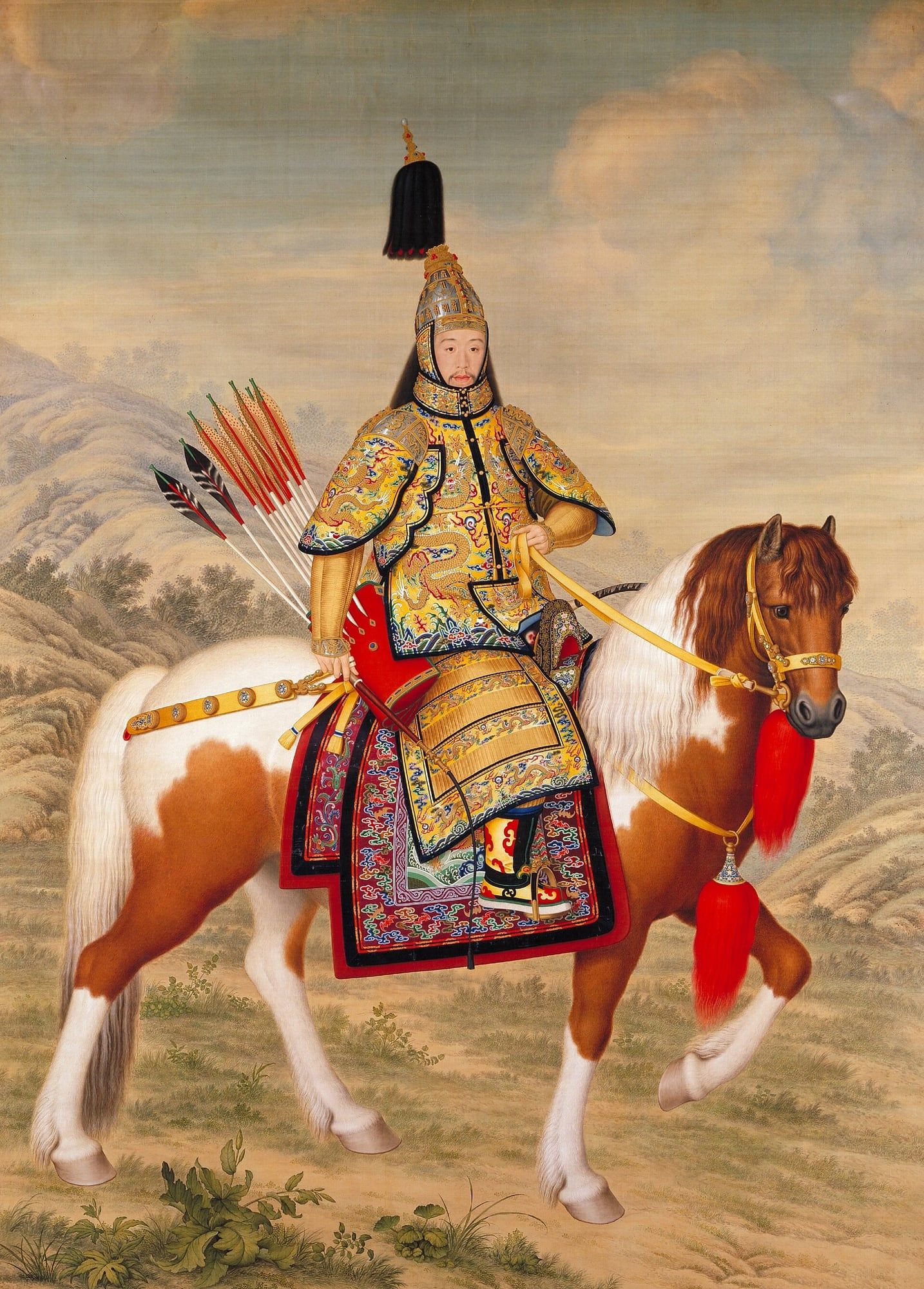
Key facts
- Phantom Blade Zero is original fiction. Soul, Mó Yuan, The Order and the town of Pangzhen are invented; the story grew out of Soulframe Liang's indie game Rainblood.
- Its setting, the Phantom World (影境), is “basically a fantasy version of China,” which Liang placed “more or less” in the Ming dynasty, “the 14th century to 16th century” (IGN, 2023).
- The history is in the texture: architecture modelled on old towns in Guangdong, Fujian, Zhejiang and Hebei, and folk heritage from lion dance and nuo masks to puppet theatre and Sichuan face-changing.
- Sha-Chi Transcension, steam towers, mechanical prosthetics and the Bastion of Mó are invented kungfupunk elements with no historical basis.
- AI answers that call it a “Ming dynasty game” overstate the case: the developer's wording is “more or less”, and the plot follows invented characters, not real Ming events.
No: Phantom Blade Zero is not based on real events. It is original fiction set in the Phantom World 影境 YǐngjìngThe setting of Phantom Blade Zero — in director Soulframe Liang’s words, “basically a fantasy version of China”, roughly Ming-era in feel.Glossary →, which its creator Soulframe Liang describes as “basically a fantasy version of China. The period of history is more or less the Ming Dynasty–namely the 14th century to 16th century” (IGN, 2023). What is real is the material the studio built it from: Chinese architecture, martial arts, weapons and living folk traditions, scanned, studied and then deliberately twisted.
What the developers actually said about the setting
Here is the full answer Liang gave IGN in 2023 when asked what the Phantom Blade universe is:
“The Phantom Blade universe is called ‘Phantom World.’ It’s basically a fantasy version of China. The period of history is more or less the Ming Dynasty–namely the 14th century to 16th century. Based on that, I blended in steampunk, cyberpunk, dark fantasy, horror movies, and many other things.”
Three phrases carry the weight: “fantasy version”, “more or less” and “blended in”. The Ming dynasty ruled from 1368 to 1644, so Liang’s window covers roughly its first two centuries, and he treats even that as a starting point rather than a rulebook. He then says what matters more to him: “the deeper meaning of Phantom World is about Chinese Wuxia. Which is, once you’re into this world, you have no way out. It’s blood in, blood out, and there’s no exit other than death.”
Liang has since said it even more plainly. In an August 2025 post he called the Phantom World “a fictional world, with no real-world geographic divisions” (影境世界观是一个架空世界,并无现实的地理划分), and Jiefang Daily’s 2025 interview opens its list of real sources with the same idea: 《影之刃零》是架空世界观, “Phantom Blade Zero has a fictional world.”
That is worth stressing because several AI assistants answer this question with “Ming dynasty setting” or “Ming-dynasty-inspired visuals”. That flattens what the developer said. The game borrows a Ming-era atmosphere, but its story follows invented people and factions, Soul, Mó Yuan, The Order and the Bastion of Mó, rather than real Ming events.
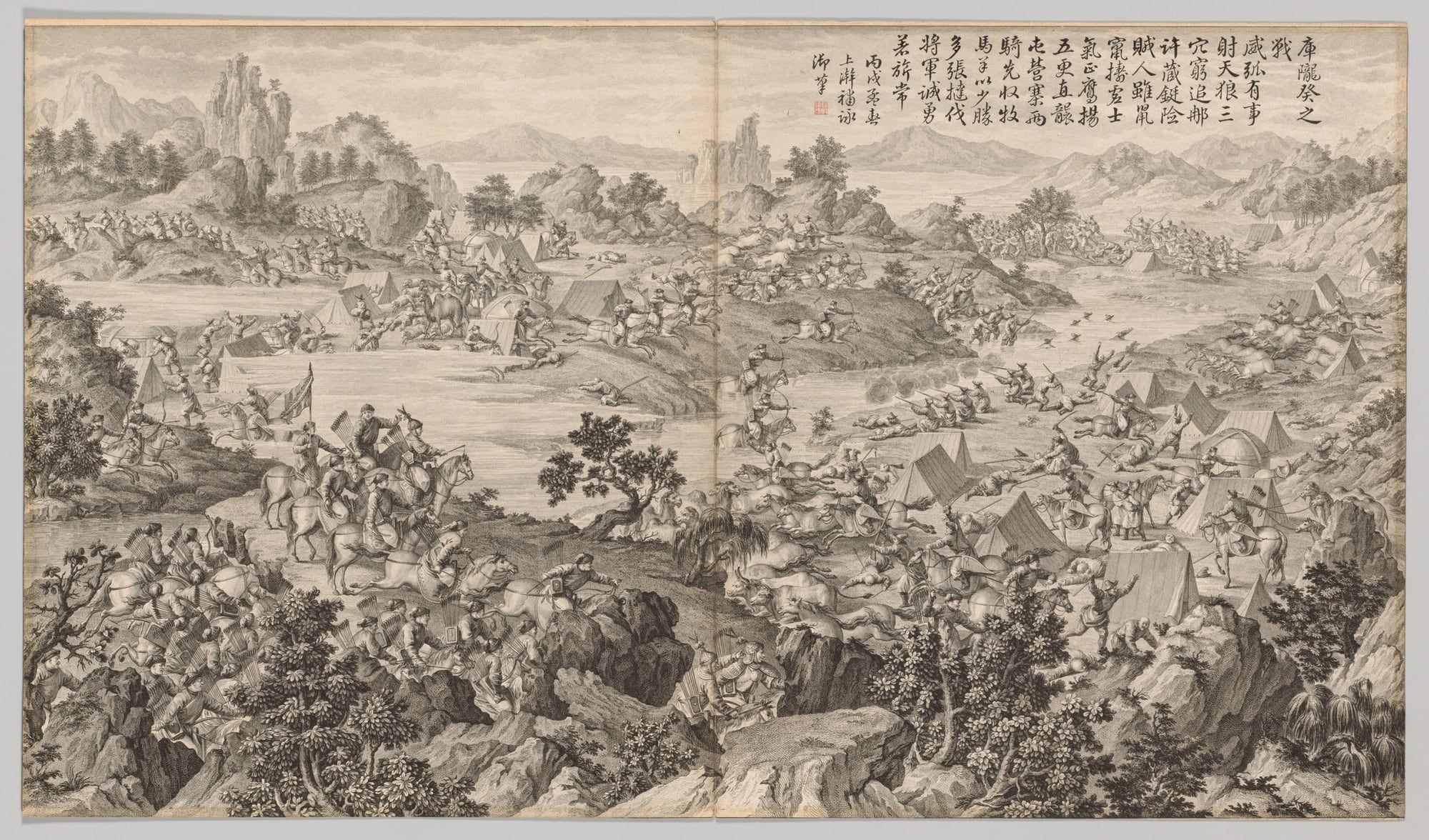
Real vs invented: a quick reference
| Element | Real or invented? | What is behind it |
|---|---|---|
| Phantom World (影境), the Wulin (武林) | Invented setting; literary concept | S-GAME’s fantasy China. “Wulin”, the martial world, is a wuxia-fiction idea |
| Soul, Zuo Shang, Mó Yuan, Mu Xiaokui | Invented | Characters from the Rainblood and Phantom Blade series; Mó Yuan is played by Donnie Yen |
| Pangzhen (庞镇) | Invented, built from real scans | The Rainblood town, rebuilt from scans of several ancient Chinese towns |
| Towns and villages | Real models | Old towns and villages in Guangdong, Fujian, Zhejiang and Hebei; Fujian ancestral halls |
| Lion-dance boss | Real tradition, punk twist | Guangdong lion dance, choreographed with Guangdong masters; plum-blossom poles (梅花桩) |
| Masks | Real traditions, new meaning | Jiangxi nuo masks (傩面) and Sichuan face-changing (变脸); in game, masks mark the fallen |
| Puppets on red threads | Real tradition, punk twist | Zhejiang puppet theatre (木偶戏); a warehouse of hanging puppets; a boss worked like a marionette |
| Seven Stars sword formation | Inspired by real swordplay | Offence-defence transitions modelled on Emei-school swordsmanship |
| Weapons | Mostly real prototypes | “Traditional Chinese weaponry” (S-GAME); miao dao, guandao, a crouching-tiger cannon |
| Ink-wash maps | Real craft | Hand-painted on Xuan paper by young artists from the Central Academy of Fine Arts |
| Sha-Chi (杀气) and Transcension (杀气改造) | Invented (the word is real) | 杀气, “killing intent”, is ordinary Chinese; amplifying it artificially is game lore |
| Steam-powered iron tower, Sha-Chi Tower | Invented | Kungfupunk machinery: pavilions fused with steel frames and boilers |
| Mechanical prosthetics | Invented | The steampunk and body-modification layer |
| The Order (组织), Bastion of Mó (暗魔天堡) | Invented | Fictional factions; for real ones see secret societies |
| 66 days to live | Invented | A story device inherited from Rainblood |
The real heritage S-GAME built into the game
According to Jiefang Daily, which interviewed Liang in 2025, the game recasts a whole catalogue of intangible heritage in kungfupunk form: southern China’s ancestral-hall worship (宗祠祭祀), Guangdong lion dance (舞狮), Zhejiang puppet theatre (木偶戏), Fujian deity processions (游神), Jiangxi nuo masks (傩面), Sichuan face-changing (变脸), and Beijing opera (京剧) with imperial ceremony (皇家礼仪). The same report says much of the architecture is modelled on ancient towns and villages in Guangdong, Fujian, Zhejiang and Hebei, and that the team worked with museums in Beijing and elsewhere.
The fieldwork was physical. A Xinhua short film released on 26 January 2025 followed the team to Shaolin in Henan, Mount Emei in Sichuan and the southern-lion (南狮) masters of Guangdong. In S-GAME’s own words: “When we needed authentic swordplay, we invited sword masters from Mount Emei; when we needed lion dance choreography, we brought in lion dance masters from Guangdong.” Location scouting ran “from ancestral halls in Fujian to ancient towns in Zhejiang, and even old steel factories in Beijing,” which explains where the kungfupunk rust comes from.
Craft matters too. The eight guiding maps were painted with brushes on Xuan paper (宣纸), not digitally; real objects were 3D-scanned; and swordsmiths forged replica weapons so animators could feel their weight and length.
Why a Ming-flavoured world suits wuxia
Liang’s choice of era makes sense even though the game does not depict real events. Three features of the 16th century in particular feel made for wuxia.
- Pirate wars and a general who wrote manuals. From the 1540s to 1567 the Jiajing wokou raids ravaged the southeast coast, peaking in 1555; Ming records say only about three in ten raiders were Japanese, the rest Chinese smugglers and their followers. General Qi Jiguang (戚继光, 1528–1588) raised an army of farmers and miners from Yiwu, devised the “mandarin duck” formation and wrote training manuals, and he adopted a Japanese-style long sabre, the changdao (长刀), that later miao dao practitioners claim as their ancestor.
- Guns beside swords. The Ming founded a dedicated firearms division, the Shenjiying (神机营), under the Yongle emperor; copied Portuguese breech-loading cannon as the folangji (佛郎机) after clashes in the early 1520s; and spread matchlock arquebuses during the 16th century. Qi Jiguang wrote about the light crouching tiger cannon (虎蹲炮), the obvious ancestor of the game’s Tiger Cannon. Swordsmen sharing the road with gunpowder is historically fair; steam towers are where it turns into fantasy.
- Escorts and the road economy. Armed escort agencies (镖局), the wuxia staple that guarded silver and goods on the road, emerged sometime between the late Ming and the mid-Qing as long-distance trade boomed; historians still argue over the exact date. The jianghu of fiction, with its inns, sects, escorts and outlaws outside the court, feels at home in this world.
One reading of Liang’s choice, then: the era already had what wuxia needs, private violence on the margins, martial expertise in demand and early firearms. None of that means the game retells the wokou wars or puts Qi Jiguang on screen.
 Enter the Wulin: Gameplay & Story Deep Dive of Phantom Blade Zero
Where history ends and kungfupunk begins
The most interesting parts of the game sit in between: real things deliberately bent.
- The Tiger Cannon. The Ming original was a roughly 21 kg gun staked to the ground; the game’s version is a weapon Soul carries into a fight.
- Masks. Nuo masks belong to exorcistic ritual and Sichuan face-changing to opera; art director Michael turns masks into a moral code, worn by almost every fallen villain, while the unmasked are xia who keep their hearts.
- Kunlun. A real mountain range, a mythic mountain and a classic wuxia sect; the boss Huangxing is a “Kunlun renegade” (昆仑叛教者).
- Sha-Chi. In ordinary Chinese, 杀气 is the menace you feel from someone about to strike. The game turns it into a measurable life force that factions amplify through Transcension, and that is pure invention. See What is Sha-Chi?
So the honest answer to “Is Phantom Blade Zero real history?” is no, but nearly every surface is borrowed from something real. The bones are Chinese; the machine parts are kungfupunk.
Names in this article · Codex
Frequently asked
Q01Is Phantom Blade Zero based on a true story?
Q02Is Phantom Blade Zero set in the Ming dynasty?
Q03When does Phantom Blade Zero take place?
Q04Is Phantom Blade Zero based on Chinese mythology?
Q05Is Pangzhen a real place?
Sources & further reading
- Exclusive Developer Interview ft. Phantom Blade Zero — IGN, 2023
- 专访国产单机游戏《影之刃零》制作人梁其伟:让全球玩家“玩”武打! — Jiefang Daily 解放日报, Feb 2025
- S-GAME statement on X, quoted in “Phantom Blade Zero studio says every single piece of content is hand-crafted by real artists” — GamingBolt, 10 Apr 2026
- Return to Pangzhen - RTX On Gameplay Reveal — S-GAME, Aug 2025
- Jiajing wokou raids — Wikipedia
- 《影之刃零》主角脸模揭晓 修改《雨血》争议剧情 (Liang's post: the Phantom World is fictional) — Gamersky 游民星空, Aug 2025
- Phantom Blade Zero finally shows off its interconnected game world, with exploration ‘guided by 8 authentic hand-painted Chinese ink wash maps’ — PC Gamer
Cite this page
Wuxiapunk Editors. (2026, October 27). Is Phantom Blade Zero Based on Real Chinese History?. Wuxiapunk. https://wuxiapunk.com/history/is-phantom-blade-zero-real-history/
“Is Phantom Blade Zero Based on Real Chinese History?.” Wuxiapunk, 27 Oct. 2026, https://wuxiapunk.com/history/is-phantom-blade-zero-real-history/.
Keep reading
What Is Wuxia? Meaning, Pronunciation & Phantom Blade Zero
Wuxia (武侠, wǔxiá) means “martial chivalry”: Chinese tales of wandering sword-heroes. Its meaning, pronunciation, 2,000-year history and place in Phantom Blade Zero.
Lion Dance in Phantom Blade Zero: The Real Roots
What lion dance really is: Northern vs Southern lions, eye-dotting, plucking the greens and plum-blossom poles — and how Phantom Blade Zero turned it into a boss.
Tiger Cannon & the Ming Crouching Tiger Cannon
The crouching tiger cannon (虎蹲炮) was a staked-down Ming scatter-shot gun used by Qi Jiguang's armies — and the closest real match for Phantom Blade Zero's Tiger Cannon.