History · Music
Chinese Instruments in Phantom Blade Zero: Pipa, Erhu, Xun, Suona
琵琶 · 二胡 · 埙 · 唢呐pípa · èrhú · xūn · suǒnà
The Chinese instruments in Phantom Blade Zero's score: pipa, erhu, xun, suona, guqin and drums, their real battlefield history, and what each one means in the game.
Key facts
- Phantom Blade Zero's score is built on Chinese instruments, which composer Caisheng Bo calls its bones: the pipa (plucked lute), erhu (two-string fiddle), xun (clay vessel flute) and suona (double-reed horn), with guqin, shakuhachi, sanxian, drums and gongs, mixed with rock, metal and electronic music.
- The soundtrack's official notes give each lead instrument a meaning: the screaming erhu is the red threads and “hero versus manipulation”, the xun is “authority” and “weeping”, the pipa is “ambush” and “tranquility”.
- The Han dictionary Shiming (c. 200 CE) says the pipa came from the northern “Hu” peoples, was played on horseback, and is named after its two strokes: push forward, pi; pull back, pa.
- Chinese armies were run by sound: the Zuozhuan says the first drum rouses courage, and Qi Jiguang's 1560 drill manual used the suona to summon officers, the drum to charge and one stroke of the gong to stop.
- In the game the pipa is also a weapon: the Heartrend Pipa, won from the musician puppet Yuzan in the Village of Lu, and the Chord's restored Illusory Pipa, both firing Sonic Blades.
- Plucked
- Pipa (琵琶), four-string pear-shaped lute; guqin (古琴), seven-string zither; sanxian (三弦)
- Bowed
- Erhu (二胡), two strings, no fingerboard; older names xiqin (奚琴), huqin (胡琴)
- Wind
- Suona (唢呐), double-reed horn; xun (埙), clay vessel flute; shakuhachi (尺八)
- Percussion
- War drums (鼓) and gongs (锣, “metal”, 金)
- Key texts
- Shiming; Bai Juyi, “Pipa Xing”; Chen Yang, Book of Music; Qi Jiguang, Jixiao xinshu
- Game composer
- Caisheng Bo (薄彩生), music director of the series since the Rainblood games of 2008
- Album
- 81 tracks, 4 h 38 min; China 2 Nov 2026, worldwide (Milan Records) 6 Nov 2026
The pipa , the erhu , the xun and the suona carry Phantom Blade Zero’s music: a plucked lute, a two-string fiddle, a clay flute that sounds like breath in a cave, and a double-reed horn loud enough to stop a parade, backed by war drums and gongs. Most of them had military or ritual jobs long before they had a video game, and that history explains why the score sounds the way it does.
Since launch the score has split its listeners. Western critics loved it: TheGamer’s review praises “a phenomenal soundtrack that fuses Chinese sounds with contemporary genres”. Part of the Chinese audience called it 太燥、不够中式, too restless and not Chinese enough, and composer Caisheng Bo answered with a long essay on 5 November. So here is the band, instrument by instrument. Tap one below to hear a seven-beat phrase, synthesised live in your browser.
Five instruments · seven beats
Tap an instrument and hear how it cuts
Iron cavalry in four strings
Liu Xi’s Han-era dictionary says the pipa came from the northern “Hu” peoples and was played on horseback, and that its name copies the two strokes: push forward, pi; pull back, pa. In 816 Bai Juyi heard one on a river at night, and its climax sounded to him like a silver jar bursting and armoured horsemen charging out.
銀瓶乍破水漿迸,鐵騎突出刀槍鳴。Bai Juyi, “Pipa Xing” (816)
In the game Bo Caisheng uses the pipa for the menace of “Ambush from Ten Sides”, layered over vintage synths.
The fiddle that walked the jianghu
Chen Yang’s Book of Music (c. 1100) calls the xiqin a foreign instrument loved by the Xi people, with two strings rubbed by a strip of bamboo, “still used among the common people”. Shen Kuo’s soldiers sang of a horsetail huqin riding with the army carts. Two strings, no frets: the finger slides anywhere.
馬尾胡琴隨漢車,曲聲猶自怨單于。Shen Kuo, Mengxi bitan, ch. 5 (c. 1088)
In the game Bo: “the erhu is very jianghu, even wild.” He sets it against electric guitar, and stacked ten erhu takes for one boss fight.
Small tune, huge voice
The double-reed suona was loud enough to command a battlefield. Qi Jiguang’s drill manual of 1560 tells his recruits that the signal pipe means the suona, sounded to call officers in for orders. A Ming song by Wang Pan mocks the suona blaring from officials’ boats: a small tune with a huge voice.
喇叭,嗩呐,曲兒小腔兒大。Wang Pan, “Chao tianzi: On the Trumpet” (Ming)
In the game In the retail score the suona breaks in on the lion-dance fight: phase two adds Shanxi gongs and drums, electric guitar and suona (China Daily, 5 Nov 2026).
The first drum rouses
At Changshao in 684 BCE, Cao Gui of Lu made his duke wait until the Qi army had drummed three times, then attacked and won. Battle is courage, he explained: the first drum rouses it, the second drains it, the third spends it. Two thousand years later Qi Jiguang still used the drum roll as the order to charge.
一鼓作氣,再而衰,三而竭。Zuozhuan, Duke Zhuang year 10
In the game The lion-dance boss’s first phase is built on the authentic southern big drum; the second adds Shanxi gongs and drums, electric guitar and suona (China Daily, 5 Nov 2026).
One stroke of the gong: stop
Drum to advance, metal to fall back. Qi Jiguang told his men their ears should hear only gong and drum: at one stroke of the gong, stand still; at another, withdraw. Even with a mountain of gold and silver in front of them, if the gong kept sounding they were to turn back.
但聞鳴金一聲,即便立止。Qi Jiguang, Jixiao xinshu, ch. 2 (c. 1560)
In the game Bo wrote the music for the return to Pangzhen in seven beats, 4 + 3 then 3 + 4, so the ground never feels solid. Every phrase here uses that meter.
Sounds are synthesised live in your browser as a sketch, not the game’s soundtrack. Sound on.
The pipa: a horseback lute that learned to fight
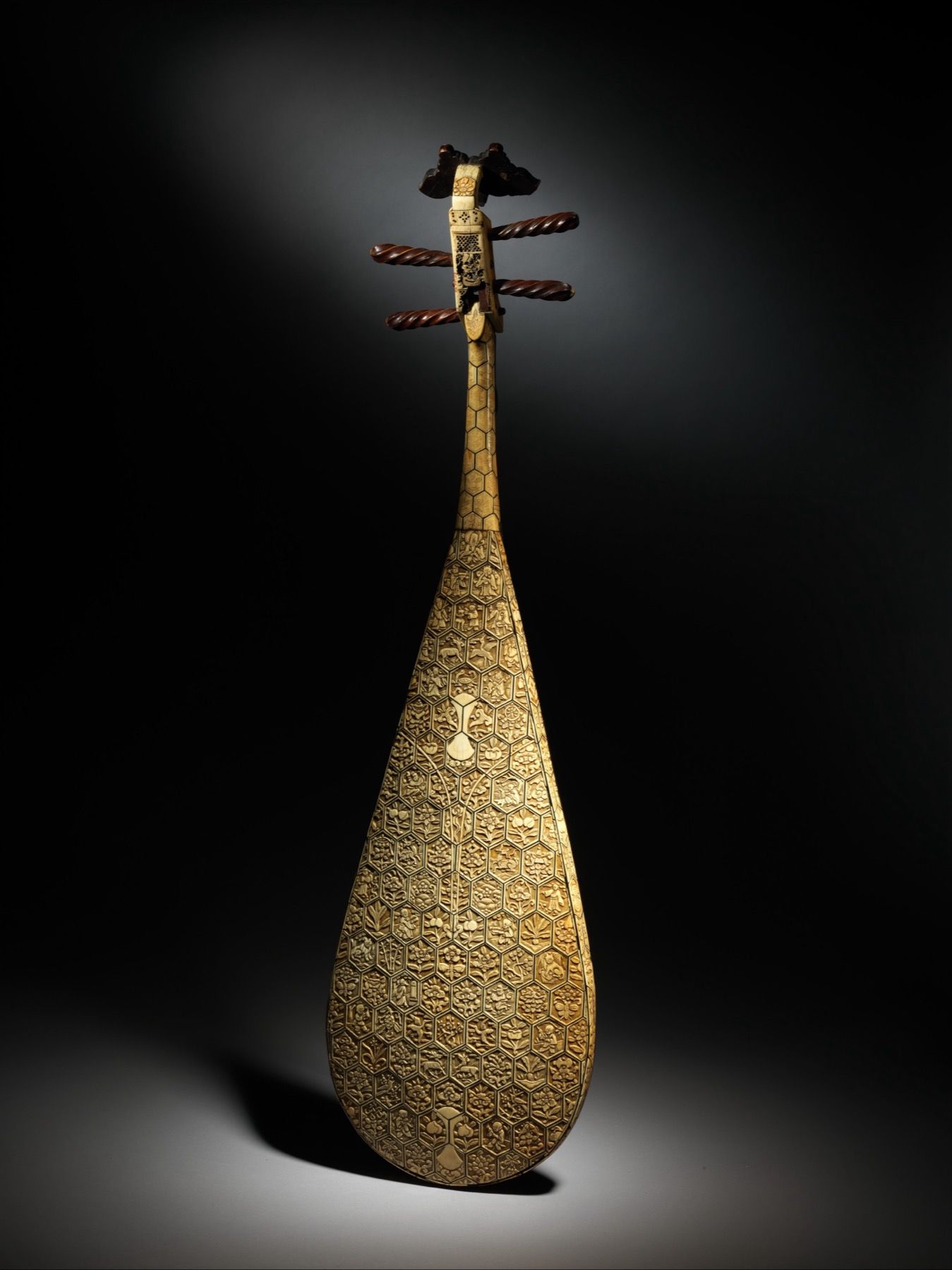
The pipa was not born in China. The Eastern Han dictionary Shiming, compiled by Liu Xi around 200 CE, says it came from the northern “Hu” peoples and was played on horseback, and that its name copies the hand. Push the fingers forward across the strings, and that is pi; pull them back, and that is pa.
枇杷本出于胡中,马上所鼓也。推手前曰枇,引手却曰杷,象其鼓时,因以为名也。
The pipa came from the Hu peoples and was played on horseback. Pushing the hand forward is called pi, pulling it back is called pa; it is named after the way it is played.
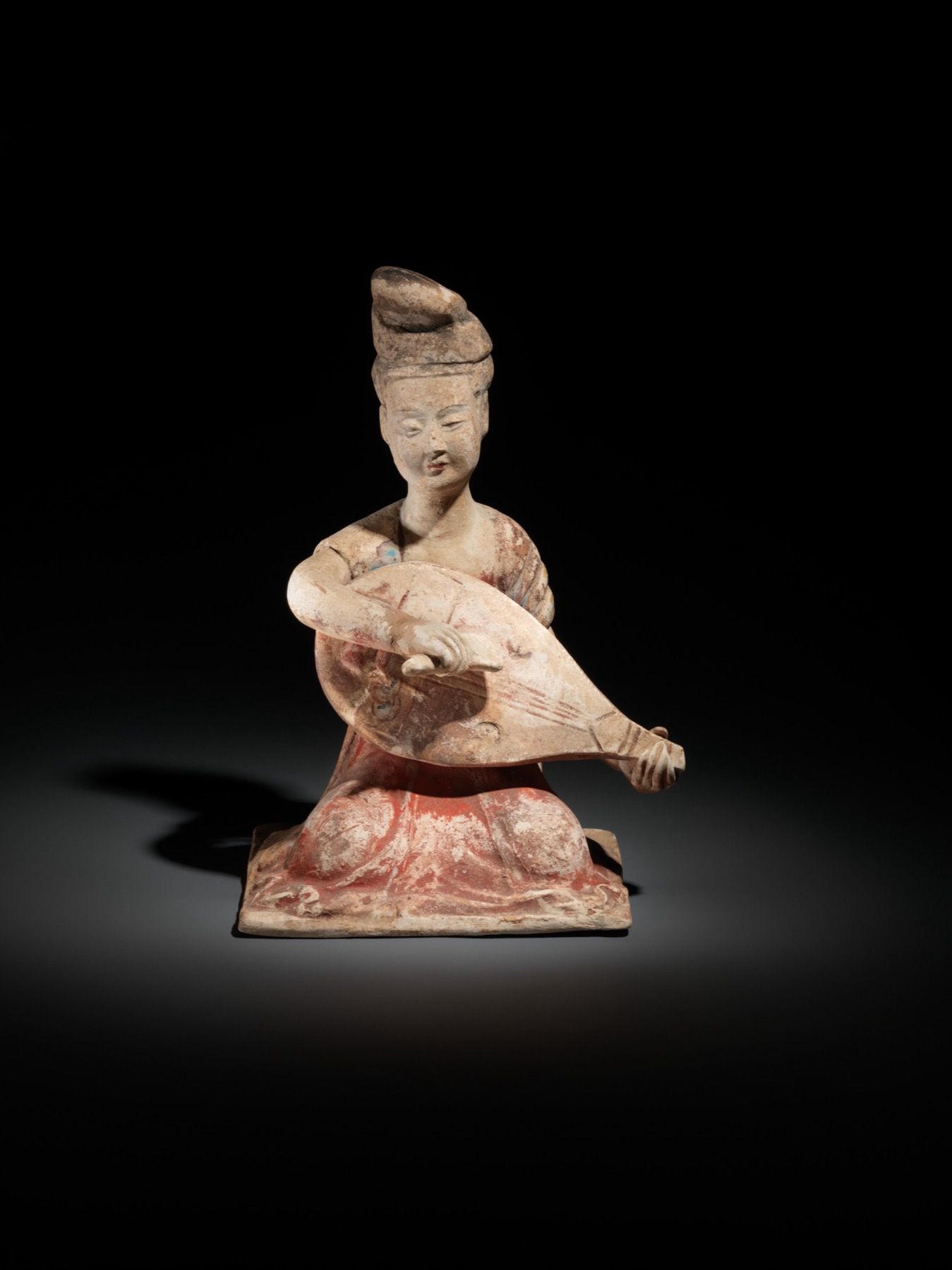
By the Tang dynasty the pipa ruled banquet music. Tomb figures show women musicians holding it across the lap and striking it with a large plectrum.
Chinese listeners have always heard battle in it. In 816 the poet Bai Juyi, demoted to Jiujiang, heard a former Chang’an courtesan play on a boat at night. His poem “Pipa Xing” describes the strings as heavy rain and whispering, then a sudden break:
银瓶乍破水浆迸,铁骑突出刀枪鸣。
A silver jar suddenly bursts and the water gushes out; armoured horsemen charge out, blades and spears ringing.
The war became literal in the Ming. Wang Youding’s “Biography of Pipa Tang” describes the virtuoso Tang Yingzeng playing a piece called Chu–Han, about the war between Chu and Han that followed the fall of Qin: when the two armies met, the sound shook heaven and earth and the roof tiles seemed to fly, and listening closely you could make out gongs, drums, swords, crossbows and horses scattering. A piece with the same story, Ambush from Ten Sides (十面埋伏), was printed in a pipa collection in 1818 and is still the instrument’s most famous showpiece. It follows the battle of Gaixia in 202 BCE, where Liu Bang’s armies surrounded Xiang Yu.
The game’s official soundtrack notes give the pipa exactly those two moods, “ambush” and “tranquility”. Bo also told Metro that he had “tuned the pipa in a really weird way”, a retuning many Chinese listeners told him you should not do to the instrument.
The erhu: two strings and no frets
The erhu’s family is called huqin (胡琴), “fiddle of the Hu”, and it too arrived from the north. Chen Yang’s Book of Music, presented to the Song court around 1100, describes its ancestor, the xiqin:
奚琴本胡乐也,出于弦鼗而形亦类焉,奚部所好之乐也。盖其制两弦间以竹片轧之,至今民间用焉。
The xiqin was originally a foreign instrument, the favourite of the Xi people. It has two strings, rubbed with a strip of bamboo placed between them, and it is still used among the common people today.
Shen Kuo, writing songs for frontier troops in the 1080s, already has a “horsetail huqin” travelling with the army, in a line that sounds like a war film: “The horsetail huqin follows the Han carts; its tune still curses the Xiongnu khan” (马尾胡琴随汉车,曲声犹自怨单于). The modern erhu keeps the design Chen Yang saw: two strings, the bow hair trapped between them, a small sound box covered in python skin, and no fingerboard at all.
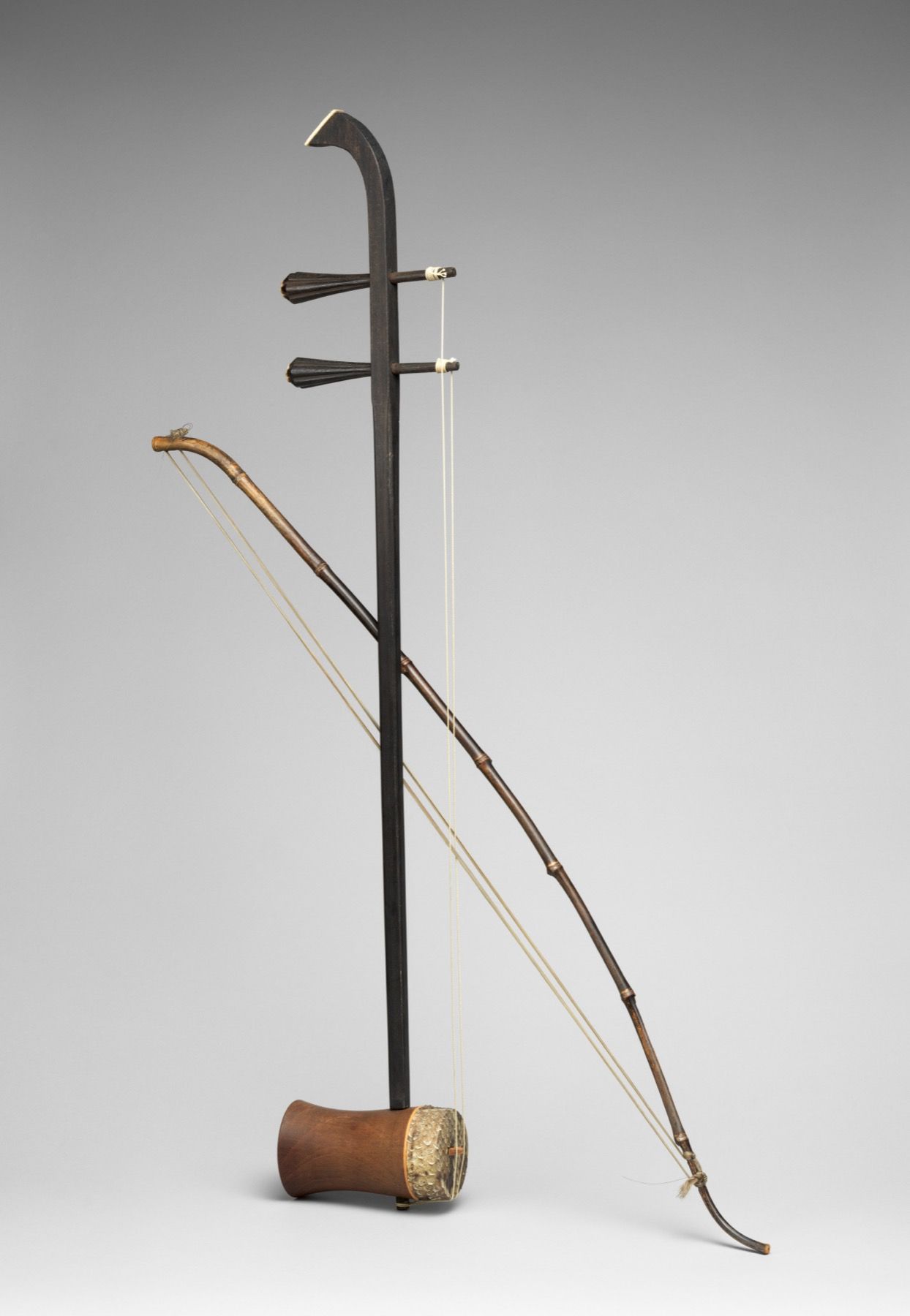
That last point is what Phantom Blade Zero’s composer loves. With no frets, the finger slides anywhere, so the erhu can neigh like a horse, sing like a bird or tear like a scream. Played like a violin, he says, it loses its kung fu. The retail game uses all of it. The official notes say the erhu’s “screaming sounds” stand for the red threads and the core motif of “hero versus manipulation”, and in the fight with the floating Chief Disciple of the Seven-Stars Formation the erhu plays wild “horse-neigh” slides run through guitar effects pedals over heavy metal, as Bo told China Daily.
The suona: the loudest thing on a Ming battlefield
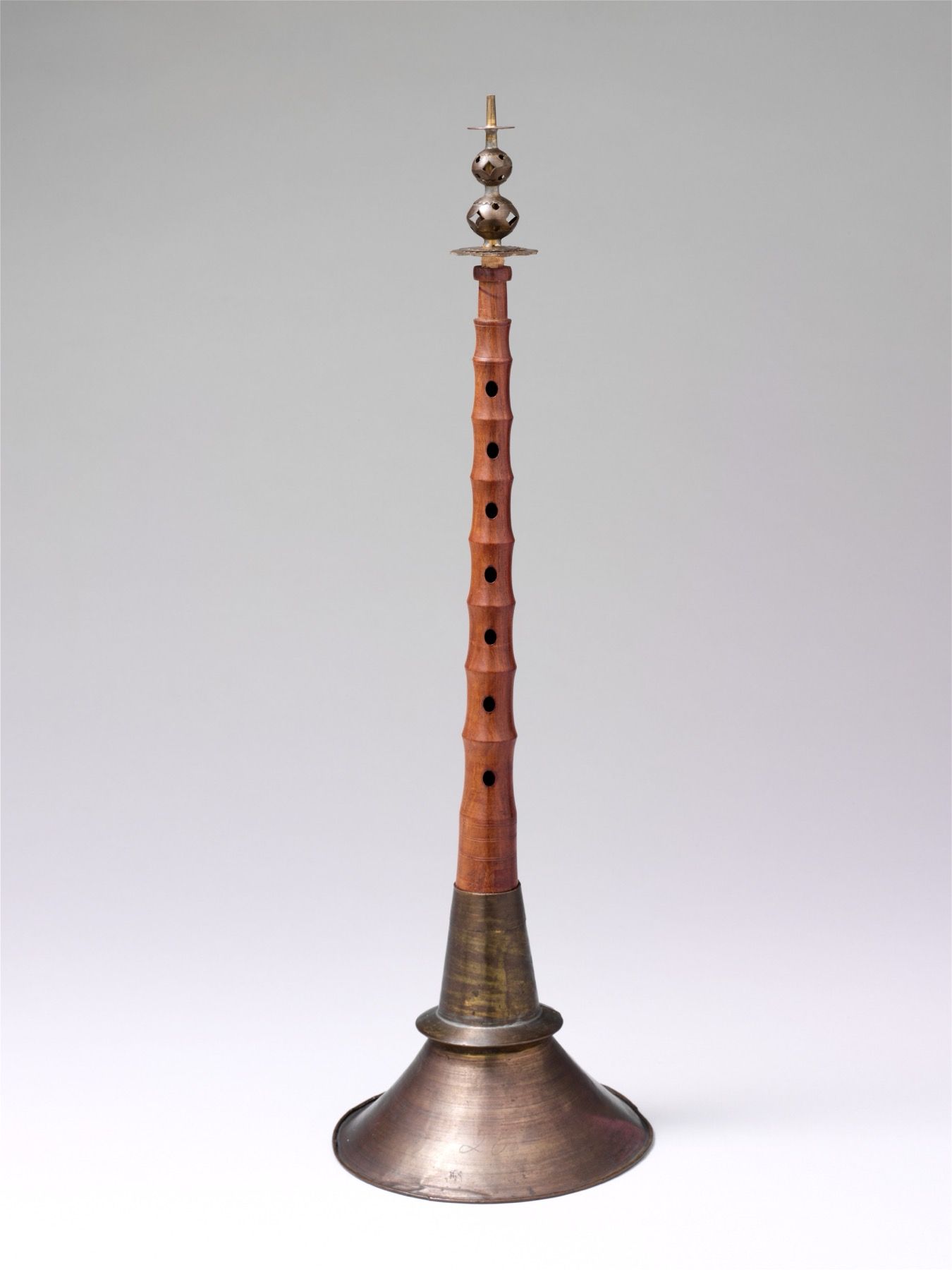
The suona is a conical wooden pipe with a tiny double reed at the top and a flared brass bell at the bottom, and it is brutally loud. Chinese villages still hire suona bands for weddings and funerals because nothing else carries as far. That volume made it a military tool. Qi Jiguang, the Ming general who beat the coastal pirates, wrote a drill manual around 1560 for peasant recruits who could not read, and its signal orders are blunt: “The signal pipe means blowing the suona: it calls the officers and squad leaders in to receive orders” (凡掌号笛,即是吹锁呐).
Civilians found it less heroic. Wang Pan, a Ming poet from Gaoyou on the Grand Canal, wrote a famous satirical song about the horns blaring from officials’ boats, and the households they ruined:
喇叭,唢呐,曲儿小腔儿大。官船来往乱如麻,全仗你抬声价。
Trumpet, suona: a small tune with a huge voice. Officials’ boats come and go in a tangle, and it is your blare that props up their worth.
In the game the suona turns up where a Chinese festival would put it: in the second phase of the lion-dance fight in Pangzhen, with Shanxi gongs and drums and an electric guitar.
Drum to advance, gong to retreat
Before any of these, there was the drum. The Zuozhuan tells how, at Changshao in 684 BCE, Cao Gui of Lu made his duke wait while the Qi army beat its drums three times, then attacked and routed them. Asked why, he gave one of the most quoted lines in Chinese:
夫战,勇气也。一鼓作气,再而衰,三而竭。彼竭我盈,故克之。
Battle is courage. The first drum rouses it, the second drains it, the third exhausts it. They were spent and we were full, so we won.
Two thousand years later the rule was the same. Qi Jiguang told his men their ears should listen only to gong and drum and their eyes only to the flags. A drum roll meant run forward and engage. One stroke of the gong meant stop dead; a second meant fall back. Even with a mountain of gold and silver in front of them, he wrote, if the gong kept sounding they were to turn around. The idiom says it in six words: beat the drum to advance, strike the metal to withdraw (击鼓进军,鸣金收兵).
The lion dance is where the game puts its drums. Bo told China Daily that the first phase of the fight with Flame, the Lion Dance Grandmaster uses “authentic southern-style big drum” (地道的南派原味大鼓), and that the second adds Shanxi gongs and drums, electric guitar and suona, north and south thrown together on purpose. Before launch Gamersky reported that a real lion-dance troupe was recorded on location and 808 drum-machine hits layered over it. The history of the dance itself is in lion dance.
The instruments the retail score adds
The finished score reaches well past the band above. Bo wrote that he went through every Chinese instrument and playing style he could find and used nearly all of them, leaving out only the bawu, the hulusi and the yueqin, whose regional colour was too strong for Phantom Blade’s cold, bleak mood. All the Chinese instruments were recorded live, never with MIDI samples. Each newcomer has a history worth one line:
| Instrument | What it does in the score | One true thing about its history |
|---|---|---|
| Xun 埙, clay vessel flute | “Authority” and “weeping”, in the official notes | The Book of Songs pairs it with the bamboo chi, two brothers playing together: 伯氏吹埙,仲氏吹篪 (“He ren si”) |
| Guqin 古琴, seven-string zither | Bo’s picture of success: 古琴像刀风一样扫过来, the guqin sweeping in like the wind off a blade; the album duet Before the Moon Is Whole (Guqin & Chiba Duet) | UNESCO: over 3,000 years old, seven strings and thirteen marked pitch positions, the instrument of China’s scholars |
| Shakuhachi 尺八, end-blown bamboo flute | The Before the Moon Is Whole duets, credited “Chiba”, the Chinese reading of 尺八; Bo taught himself to play it | The New Book of Tang (ch. 107) praises Lü Cai for making twelve of them, of different lengths, each in tune with the pitch pipes |
| Sanxian 三弦, three-string lute | Experimental sessions with erhu and sanxian players, kept for the Deluxe Edition’s music player | A snakeskin-covered lute whose name first appears in Ming texts (the Ming scholar Yang Shen dated it to the Yuan); it travelled to the Ryukyus as the sanshin and to Japan as the shamisen |
| Reconstructed ancient instruments 复原乐器 | A set recorded by Peng Liying (彭丽颖) of the Beijing musical instrument research institute | Peng’s published reconstructions include a Tang yazheng and a Song zhu, rebuilt from texts such as Chen Yang’s Book of Music |
That last row loops back to this page. The book Peng read to rebuild lost instruments is the same Book of Music quoted above for the xiqin, and the Old Book of Tang (ch. 29) gives the two she is known for a line each: the yazheng is scraped “with a strip of bamboo moistened at the end” (以片竹润其端而轧之), and the zhu is “like a zheng, with a thin neck, struck with bamboo” (如筝,细颈,以竹击之). The zhu is also the instrument of Gao Jianli, who played it for the assassin Jing Ke at the Yi River; our Chinese assassins page tells that story. Bo did not say which reconstructions made it into the score, so neither do we. The full track list, the credits and where each piece plays are on our Phantom Blade Zero soundtrack page.
| Instrument | How it sounds | Earliest record cited here | Battlefield or jianghu role |
|---|---|---|---|
| Pipa 琵琶 | Plucked, 4 strings, frets | Shiming, c. 200 CE | Played on horseback; battle pieces Chu–Han, Ambush from Ten Sides |
| Erhu 二胡 (xiqin, huqin) | Bowed, 2 strings, no fingerboard | Chen Yang, Book of Music, c. 1100 | Folk and street music; Shen Kuo’s frontier songs |
| Suona 唢呐 | Double reed, brass bell, very loud | Qi Jiguang, Jixiao xinshu, c. 1560 | Signal horn calling officers to orders |
| War drum 鼓 | Struck skin | Zuozhuan, 684 BCE | Advance and charge |
| Gong 锣 (“metal”, 金) | Struck bronze, bends in pitch | Qi Jiguang, c. 1560 | Halt and withdraw |
| Xun 埙 | Blown clay, low and breathy | Book of Songs, “He ren si” | Court and ritual music |
How Phantom Blade Zero uses them
Light spoilers: this section names bosses and story characters from the middle of the game.
Bo keeps the band small and close to the ear: one or two Chinese instruments per track, featured heavily and drenched in effects, over electric guitar, synth arpeggios, metal drums, deathcore growls, trap and EDM. The official soundtrack notes turn the lead instruments into a code. The erhu screams for the red threads; the xun means authority and weeping; the pipa means ambush and calm; and a recurring stutter stands for conspiracy and Sha-Chi running out of control. Soul, Mu Xiaokui and Zuo Shang have themes that grow from one A-minor melody, and Xiaokui’s was written by Bo in high school. The mix listens to the player too: die often enough in one boss fight, Bo told Metro, and the music sinks bit by bit so you hear more of the fight itself.
The most Chinese idea in the score may be a rhythmic one. For the return to Pangzhen, the rain-soaked town at the heart of the series, Bo avoided four and three beats and wrote in seven, split 4 + 3 and then 3 + 4, with the strings smearing the accents. Players may not notice, he says, but they feel there is nowhere solid to put a foot. Every phrase in the band above uses that meter.
The shipped album, Phantom Blade Zero (Original Game Soundtrack), has 81 tracks and runs 4 hours 38 minutes. It came out in China as 《影之刃零原声曲辑》 on 2 November 2026 and worldwide on Milan Records on 6 November. Two vocal songs sit outside it. The theme song Heart Lake (《心湖》), sung by Jane Zhang (张靓颖), with words by Hui Minyao (徽敏瑶) and Bo, music by Bo and arrangement by Ren Bin (任斌), plays after the boss fight with Mu Xiaokui. The ending song My Heart Beats True (《劫》) is sung by Sha Baoliang (沙宝亮).
Inside the story, the pipa is a weapon. The Heartrend Pipa (催心琵琶) is a Phantom Edge won from Yuzan, No. 3 Musician Puppet, who hovers in the testing grounds beneath the Three-Puppet Well in the Village of Lu and “looks almost like the Chord’s twin”. Its card calls it “a replica pipa with a clear, mournful tone that rends the heart”, and its music releases unblockable Sonic Blades; the full teardown is on the Heartrend Pipa codex page. The pipa it copies belongs to the Chord, Inanis’s daughter. A year before the story her instrument burst when, Inanis believes, she played the Song of Annihilation, and the depths of the Crimson Forest became the Mirrorwood. Soul gathers its pieces one by one, and Myst restores it as the Illusory Pipa (幻术琵琶), which fires Sonic Blades, controls weak-willed enemies and breaks Phantom Barriers. Its strings come from Yan Qiansui, the Zither Maiden of the Meigu Songhouse, whose fight has its own track, Strings of Qiansui; her story is in opera and songhouses. Even Bo’s method has a counterpart in the game’s books: Notes on a Music Score, an unsigned note found in Yuyin’s house, takes a slow, weeping old score and rearranges it faster, 不为精奇,只求快意, for the thrill rather than the finesse.
Bai Juyi heard cavalry in a pipa on a dark river, and Qi Jiguang ran an army on gongs and horns. The pipa and the erhu were foreign once themselves, brought in from the steppe, and that is Bo’s answer to the purists: “a lot of the Chinese instruments that we know today, they are the product of cultural exchange”. Phantom Blade Zero plugs them into guitars and drum machines and gives them their old job back.
Names in this article · Codex
Frequently asked
Q01What instruments are used in Phantom Blade Zero's music?
Q02Who composed the Phantom Blade Zero soundtrack?
Q03What does each instrument mean in the Phantom Blade Zero score?
Q04What is the difference between a pipa and an erhu?
Q05What is a suona?
Q06Why do some Chinese players say the music is not Chinese enough?
Sources & further reading
- Shiming, ch. 7, “Explaining musical instruments”: the pipa — Liu Xi, c. 200 CE (Wikisource)
- Pipa Xing (琵琶行) — Bai Juyi, 816 (Wikisource)
- Ming wenhai, ch. 419: Wang Youding, “Biography of Pipa Tang” (the Chu–Han piece) — Huang Zongxi (comp.), 17th century (Wikisource)
- Book of Music (樂書), ch. 128: the xiqin and the huqin — Chen Yang, c. 1100 (Wikisource)
- Jixiao xinshu, ch. 2: signal orders (gongs, drums, suona) — Qi Jiguang, c. 1560 (Wikisource)
- Book of Songs, Minor Odes, “He ren si” (何人斯): the xun and the chi — Wikisource
- New Book of Tang, ch. 107: biography of Lü Cai (the twelve shakuhachi) — Ouyang Xiu et al., 1060 (Wikisource)
- Old Book of Tang, ch. 29: Treatise on Music 2 (the yazheng and the zhu) — Liu Xu et al., 945 (Wikisource)
- Guqin and its music — UNESCO Intangible Cultural Heritage
- Sanxian — Wikipedia
- 当古琴拨动“神经”: Peng Liying and her reconstructed yazheng and zhu — Tsinghua University News (from ScienceNet), 16 Feb 2025
- Phantom Blade Zero (Original Game Soundtrack): press release with leitmotif notes and composer biography — Milan Records via Games Press, 6 Nov 2026
- Phantom Blade Zero (Original Game Soundtrack) — Apple Music (81 songs, 4 h 38 min)
- 《影之刃零》音乐被批“太燥 不够中式”!官方发长文回应 (Bo's Zhihu essay) — Gamersky (游民星空), 5 Nov 2026
- 中国日报专访《影之刃零》音乐总监 (lion dance and Chief Disciple music) — Gamersky (游民星空), 5 Nov 2026
- Phantom Blade Zero composer on musical innovation (Metro GameCentral interview, mirror) — Metro via HeadTopics, Nov 2026
- “很多旋律,我在18年前就写好了”:薄彩生专访 — Gcores (机核), Sept 2026
- 《影之刃零》主题曲正式上线!张靓颖:很开心被邀请 — Gamersky (游民星空), 30 Oct 2026
- Phantom Blade Zero review — TheGamer
- Bo Caisheng interview: finding the soul of traditional instruments in Phantom Blade Zero — ChuApp (触乐), 12 Dec 2025
- Bo Caisheng on the music of Phantom Blade Zero — Gamersky (游民星空), 13 Aug 2026
Cite this page
Wuxiapunk Editors. (2026, November 15). Chinese Instruments in Phantom Blade Zero: Pipa, Erhu, Xun, Suona. Wuxiapunk. https://wuxiapunk.com/history/chinese-instruments/
“Chinese Instruments in Phantom Blade Zero: Pipa, Erhu, Xun, Suona.” Wuxiapunk, 15 Nov. 2026, https://wuxiapunk.com/history/chinese-instruments/.