Music · The score
Phantom Blade Zero Soundtrack Explained: Composer, Tracks, Songs and Instruments
影之刃零原声曲辑Yǐng zhī Rèn Líng yuánshēng qūjí
Phantom Blade Zero's soundtrack explained: Caisheng Bo's 81-track score, where each piece plays, Heart Lake and My Heart Beats True, and the instruments in it.
Key facts
- The music of Phantom Blade Zero is by Caisheng Bo (薄彩生), who has worked with Soulframe Liang since 2008, when he emailed him a demo as a high-school student after playing Rainblood.
- The official album has 81 tracks, 4 h 38 min: released in China on 2 Nov 2026 as 《影之刃零原声曲辑》 and worldwide on 6 Nov by Milan Records.
- Two vocal songs sit outside the album: the theme song Heart Lake (《心湖》), sung by Jane Zhang, and the ending song My Heart Beats True (《劫》), sung by Sha Baoliang.
- The official key, in Milan Records' release copy: the erhu stands for the red threads and "hero versus manipulation", the xun for "authority" and "weeping", the pipa for "ambush" and "tranquility".
- Bo's own rule for this score: Chinese instruments are the bones and everything else is the flesh. Take them out and, in his words, the stage is built but there is no lead actor.
- Composer
- Caisheng Bo (薄彩生, Bó Cǎishēng), music director of the series
- Album
- 81 tracks, 4 h 38 min, four discs
- Released
- 2 Nov 2026 (China) · 6 Nov 2026 (worldwide, Milan Records)
- Theme song
- Heart Lake 《心湖》, Jane Zhang (张靓颖), 30 Oct 2026
- Ending song
- My Heart Beats True 《劫》, Sha Baoliang (沙宝亮)
- Lead instruments
- Erhu, pipa, xun, guqin, shakuhachi, suona, drums and gongs
The Phantom Blade Zero soundtrack is the work of one composer, Caisheng Bo , and it is built on Chinese instruments played into rock, metal, trap and electronic music. The official album has 81 tracks running 4 hours 38 minutes. It came out in China on 2 November 2026 as 《影之刃零原声曲辑》 and worldwide on 6 November through Milan Records, a Sony Music label. You can also hear the music inside the game, where songs you unlock replay from a music player. Two vocal songs are released separately: the theme song Heart Lake (《心湖》), sung by Jane Zhang (张靓颖, Zhāng Liàngyǐng), and the ending song My Heart Beats True (《劫》), sung by Sha Baoliang (沙宝亮, Shā Bǎoliàng).
This page names bosses and late areas, because the track titles do; it does not describe the endings. For the plot, see Phantom Blade Zero’s story explained.
The album, the player and the singles at a glance
The music comes in three forms, and they do not hold the same pieces. The album is a selection; the in-game player holds pieces the album leaves out, including both songs.
| Official album | In-game music player | The two songs | |
|---|---|---|---|
| Name | Phantom Blade Zero (Original Game Soundtrack) · 《影之刃零原声曲辑》 | Music player (Deluxe set: 特典音乐集) | Heart Lake 《心湖》 · My Heart Beats True 《劫》 |
| Size | 81 tracks, 4 h 38 min, four discs | Songs unlocked in play, plus the Deluxe bonus set | One track each |
| Released | 2 Nov 2026 (China), 6 Nov 2026 (worldwide) | With the game, 29 Oct 2026 | 30 Oct 2026 (心湖); 2 Nov 2026 (劫, China), 6 Nov (worldwide) |
| Label | S-GAME; Milan Records outside China | In the game only | 靡之音乐 (Heart Lake); S-GAME and Milan (My Heart Beats True) |
| What is special | Official English titles for all 81 tracks | Songs the album lacks, and (Bo says) music cut from the game, such as the original bride music and a jazz piece | Not on the album |
Two numbers in the press do not fit. Milan’s press copy promises “over 60 tracks in total and six hours of listening time”, while its own track list, Apple Music and NetEase all count 81 tracks, and Apple’s track lengths add up to 4 h 38 min. Chinese outlets say 82, counting 《劫》 as well. Before launch the team spoke of five, then six to seven, then more than ten hours of music in the game: the album is a cut of a larger score.
Where to listen
Streaming. The album is on Apple Music and the other services worldwide, and in China on QQ音乐, 酷狗音乐, 酷我音乐 and 网易云音乐. Heart Lake came out the day after the game, on 30 October; 《劫》 came out with the Chinese album on 2 November.
In the game. According to the MapMaster guide, which reads the English client, soundtrack songs “unlock as you play, most of them in the middle of boss fights, and the first arrives during the prologue”: Unbridled Across the Land (2026) plays in the prologue duel with Zuo Shang. Every song you collect replays from the music player, so you can hear a boss theme again without refighting the boss. Songs count toward no trophy.
The Deluxe set. Pre-order and Deluxe owners get a bonus set, unlocked once the prologue ends. Bo filled it with music the game had no room for. He told PCGamesN that “some people in our team found it offensive”, so he rewrote the bride’s fight music, but “I didn’t want to toss it away, so I included it in the pre-order deluxe edition”; there is also “a jazz piece with traditional Chinese instruments, and it sounds really weird”. To Gcores he said that he and the erhu and sanxian players liked those takes so much that throwing them away felt wrong. A fan upload of the Deluxe player on Bilibili numbers 117 pieces; its Chinese titles are the source for the Chinese column in the track list below.
Caisheng Bo: the composer and his method
Bo Caisheng (credited abroad as Caisheng Bo) is the music director of the Phantom Blade series and wrote the album’s music himself. Milan Records’ biography calls him a Beijing-based composer and a graduate of the University of Virginia who began “as an indie-game composer” eighteen years ago.
He tells the start himself. “I remember it was 2008, the year of the Beijing Olympics, and I was still in high school,” he told Gcores in September 2026 (our translation). He played the Chinese indie game 《雨血》 (Rainblood), found the developer’s email address at the end, and sent a demo. The developer, S, was Soulframe Liang (梁其伟, Liáng Qíwěi), then a graduate student at Yale, already working on Rainblood 2: “we hit it off at once.” To Metro’s GameCentral he added that his parents made him study economics abroad, and that when he came back he asked Liang for work on Phantom Blade 2, then a mobile game: “that’s how I officially entered the industry.” The full family tree of these games is in the Phantom Blade series history.
Old melodies. Bo keeps tunes for decades. “The melody of Xiaokui, the heroine of this game, is one I wrote eighteen years ago in high school,” he told Gcores. “What we pass on is the melody” (所谓的传承,就是旋律). Eleven album titles carry the suffix “(2026)”. Bo told Sohu in October 2026 that several old pieces were remade because “now we can record live”, keeping their original arrangements; the suffix most likely marks them.
Music director, not just composer. Level designers sent him recorded playthroughs, “run around, look around, even get hit by a monster a couple of times”, and he decided where each loop starts, stops and resumes. Sometimes the game moved for the music. “If he walks ten seconds more, my music can sound ten seconds longer,” he told Gcores, explaining how he would ask the team to set a character further back so that a fight’s opening cue could play out in full.
Live, not MIDI. “The essence of Chinese folk instruments simply cannot be expressed through MIDI, so this time every Chinese instrument was recorded live,” he told Sohu (our translation). Ten years earlier, he told GameCentral, “We didn’t have the budget to record everything”.
Chinese bones. On 5 November, answering players who called the score “太燥、不够中式” (too restless, not Chinese enough), Bo posted a long essay on Zhihu, quoted by Gamersky. In the early Phantom Blade games, he wrote, he built a Western base and let erhu, pipa and dizi “add colour”, which gave “only the form of a Chinese style, not its spirit” (只有中国风格之’形’,达不到其’意’). This time the order is reversed:
“这次影之刃零的音乐是以中式乐器为骨,其他元素为肉……如果把曲子里面的中国乐器抽掉,如同戏台搭好了却没有主角,曲子本身就一定会散掉。”
“This time the music is Chinese instruments for bones and everything else for flesh… Take the Chinese instruments out and it is a stage built with no lead actor: the piece falls apart.” (our translation)
The last one. In the GameCentral interview Bo called Phantom Blade Zero “probably my last” wuxia score: “If you asked me to compose for another wuxia-inspired game, I don’t know what else I could write.” Gamersky’s report of the same interview adds that he is now scoring Tides of Annihilation (《湮灭之潮》), a game set in London, where he can finally write Western fantasy and orchestral music.
The full Phantom Blade Zero track list
All 81 album tracks, in disc order. English titles are the official ones from the album (Apple Music and Milan). The Chinese titles are the in-game player’s names as typed by the uploader of a fan rip (Bilibili, 2 Nov 2026), matched to the album by length and meaning. The Chinese album’s own track titles were not readable when we checked, so treat this column as a strong reading, not a printed credit. “Where it plays” comes from the official titles, from guides that record unlocks (marked †), or is our reading (marked “likely”). Blank means no source says.
| # | Official English title | 中文 (in-game, fan-transcribed) | Where it plays |
|---|---|---|---|
| 1 | Valley of Mist | 溪谷迷雾 | Likely Weeping Creek Valley |
| 2 | Against the Flow | 逆流而上 | |
| 3 | A Night of Rain (2026) | 一整夜的雨 | Deluxe bonus set † |
| 4 | Mountain Pursuit | 山道追猎 | |
| 5 | The Axemaster | 凶斧巨客 | Peng Meng, the Axemaster |
| 6 | Surging Sha-Chi | 杀气蒸腾 | |
| 7 | The Hunt’s Twin Sickles | 追命双钩 | The Hunt |
| 8 | Forest of Ambush | 伏击之林 | Likely the Crimson Forest |
| 9 | The Drunken Sword | 醉剑千笑 | Hua Qianxiao, the Sword Fanatic † |
| 10 | Thieves’ Refuge | 飞贼聚落 | |
| 11 | No Fear Ahead | 神驰其间 | Deluxe bonus set † |
| 12 | Homesick Puppets | 思乡人偶 | |
| 13 | Hua the Bride | 新娘阿花 | Hua, Deadly Betrothed |
| 14 | Bloodline Legacy | 赤黑传承 | The Gold-Masked One, Weeping Creek Valley † |
| 15 | Where Dusk Lingers | 荡秽旧屋 | Dusk, the Puppeteer, Village of Lu |
| 16 | Asura of Wrath | 嗔恨修罗 | Human-Faced Banyan Tree trial, Crimson Forest † |
| 17 | The White Serpent | 白蛇赤炼 | Bai Chilian, Lady of the Twin Serpents † |
| 18 | As If It Were Yesterday (2026) | 今昼如昨 | Deluxe bonus set † |
| 19 | Forever and Aye (2026) | 殇阙 | Deluxe bonus set † |
| 20 | Soaring Lóng (2026) | 六龙御天 | |
| 21 | Unbridled Across the Land (2026) | 跋扈万里 | Prologue duel with Zuo Shang † |
| 22 | Before the Moon is Whole (Chiba & Guitar Duet) | 十日月星 | Shakuhachi and guitar |
| 23 | Outside the Village of Lu | 陆家村前 | Village of Lu |
| 24 | A Way Through | 拨云见日 (uncertain match) | |
| 25 | When the Clouds Part | 雨霁云开 | Cutscene on entering the fourth region † |
| 26 | Secrets in the Rain (2026) | 雨中秘密 | Quest “Town of Death”, Pangzhen † |
| 27 | Blaze of Vengeance | 冥火流星 | Blaze, Shadow Warden Captain † |
| 28 | Adrift in Mist | 氤氲空水 | Likely Meigu Lake by boat |
| 29 | Backstreets of Pangzhen | 庞镇后街 | Pangzhen |
| 30 | Voice of Wanyue | 婉约歌声 | Gu Wanyue, the Wailing Wraith |
| 31 | Long Awaited Return | 雁字迟归 | |
| 32 | Shifting Illusions | 幽离变幻 | |
| 33 | Shadow Wardens | 甲乙鬼差 | Shadow Wardens |
| 34 | Wan Jun, the Coppermaul | 巨锤万钧 | Wan Jun, Mandate Encampment |
| 35 | The Acolytes | 灭法之法 | The four Acolytes |
| 36 | Red Tassel, Old Bonds | 红缨枪使 | |
| 37 | A Fleeting Journey | 何似飞鸿 | |
| 38 | Reminiscence of Youth | 忆少年时 | |
| 39 | A New Ambition | 新龙野心 | |
| 40 | The Sword’s Echo (2026) | 剑啸川河 | Deluxe bonus set † |
| 41 | Xiaokui (2026) | 葵 | Mu Xiaokui’s theme |
| 42 | Toward the Light | 向阳而生 | Likely Mu Xiaokui |
| 43 | Iron and Jade | 铁玉合璧 | Likely Mu Xiaokui, Queen of Iron and Jade |
| 44 | Before the Moon Is Whole (Guqin & Chiba Duet) | 十日月星 古琴曲 | Guqin and shakuhachi |
| 45 | The Killing String | 独眼厉弓 | Likely the One-Eyed Archer, Meigu Lake |
| 46 | Souls in Wood | 木头疙瘩 | |
| 47 | Strings of Qiansui | 古琴千岁 | Yan Qiansui, the Zither Maiden, Meigu Lake |
| 48 | A Weathered Mandate | 正道沧桑 | Likely the Mandate Encampment |
| 49 | The Waning Sun | 残阳垂暮 | |
| 50 | The Seven-Stars Formation | 七星剑阵 | Chief Disciple of the Seven-Stars Formation |
| 51 | Sword of Despair | 绝望剑意 | |
| 52 | Echoes of Despair | 凄声阵阵 | |
| 53 | The Puppet Pit | 人偶坑洞 | Likely Dusk’s Broken Puppet Pit |
| 54 | A Lightless Sky | 蔽日遮月 | |
| 55 | Snake House (2026) | 蛇屋物阜 | |
| 56 | Grave Hunger | 乱冢饿鬼 | |
| 57 | Mirage Estate | 戏梦山庄 | Mirage Estate |
| 58 | A Stage of Blades | 武场戏台 | Likely the Mirage Estate training grounds |
| 59 | Azure Crescent | 偃月青龙 | Likely Yuding, No. 12, Crescent Blade Puppet |
| 60 | Triple Threat | 三脸人偶 | Aberrant Three-Faced Puppet, Weeping Creek Valley † |
| 61 | A Final Farewell | 赤黑诀别 | |
| 62 | The Awakened Lion | 醒狮擂鼓 | Flame, Lion Dance Grandmaster, phase 1 |
| 63 | The Lion’s Return | 狮尊归位 | Flame, phase 2 |
| 64 | The Past Unbound | 旧事瓢泼 | |
| 65 | Jade-Face | 玉面郎君 | Jade-Face, Mountain of Imprisonment |
| 66 | A Wake of Blood | 血滴荒行 | Huangxing, the Kunlun Renegade |
| 67 | Realm of Mirage | 镜花水月 | Likely Inanis’s Realm of Mirage |
| 68 | The Flawed Pipa | 玉瓒琵琶 | Yuzan, No. 3 Musician Puppet, Village of Lu † |
| 69 | The Three Unbound | 三魔分裂 | |
| 70 | Bound in Frost | 冰雪锢囚 | |
| 71 | Blizzard Blademaster | 风雪刀客 | Blizzard Blademaster, Meigu Lake |
| 72 | Divided by Duty | (not matched) | |
| 73 | A Hero’s Finale | 英雄终曲 | |
| 74 | Soulrend Cliff | 断魂山崖 | Mount Soulrend |
| 75 | The Path Ahead | 咫尺山巅 | |
| 76 | The Crusher and Saw | 力者锯者 | The Crusher and the Saw, Mount Soulrend |
| 77 | The Last Battle (2026) | 最后一役 | |
| 78 | Bound by Threads | 囚命之囚 | Likely Leng Tu and the Thread-Binding Sect |
| 79 | The Lady Descends | 圣母降临 | The Lady of the Veil |
| 80 | The Severed Lóng | 赤黑断龙 | |
| 81 | Lóng Unleashed (2026) | 蛟龙洗巷 | Returning Phantom Blade battle theme |
Some songs live only in the player. The song you unlock in the fight with Hua, Deadly Betrothed, is The Ghost Bride; going by its place in the player’s list, its Chinese title is 《鬼花轿子》 (“the ghost’s bridal sedan”), a piece of about five minutes, while the album’s Hua the Bride runs two. Our reading is that 鬼花轿子 is the original piece Bo cut and 新娘阿花 its rewrite, a point a playthrough check would settle; the custom behind the boss is in ghost marriage in China. Others: A Fleeting Dream (《幻梦泡影》), the flashback after the Crimson Forest Crane Bell; The Crimson Scheme (《血色密谋》), on reaching the Village of Lu; and Child of Insight (《八卦童子》), found at the Pavilion of Knowledge in Pangzhen.
The leitmotifs, and how to hear them
Phantom Blade Zero’s leitmotifs are sounds as much as melodies. Milan Records’ release copy, the only official key, gives four:
| Sound | Stands for (official) |
|---|---|
| A recurring stutter | Conspiracy, and Sha-Chi out of control |
| The screaming erhu | The red threads; “hero versus manipulation” |
| The xun | “Authority” and “weeping” |
| The pipa | “Ambush” and “tranquility” |
Three characters, one melody. Before launch Bo told Gamersky that the themes of Soul, Mu Xiaokui and Zuo Shang all grow from one A-minor melody. In October 2026 he told Sohu that the opening hours deliberately lack a main theme (“这是我们刻意为之的”, “we did that on purpose”), and Gcores that the same motif keeps returning at key story beats, “including Zuo Shang’s, Xiaokui’s, and Soul’s own melody”. Whichever ending you reach, he told Sohu, the music comes to a full close, “and the most perfect ending gets the most perfect close.”
The 赤黑 family. Three album titles begin with 赤黑, “red-black”: Bloodline Legacy (赤黑传承), A Final Farewell (赤黑诀别) and The Severed Lóng (赤黑断龙). 《赤黑》 was the theme song of the 2014 mobile Phantom Blade. Our reading, not a stated fact: this is the series’ old main theme, worn here by the character dressed in red and black, Soul.
Old themes, new recordings. Unbridled Across the Land (跋扈万里) is a Rainblood-era theme named as returning before launch; it now plays in the prologue duel with Zuo Shang, the first song in your collection. Lóng Unleashed (蛟龙洗巷) was a battle theme on the first Phantom Blade soundtrack. Long Awaited Return (雁字迟归) is a near-title of the Rainblood theme 《雁字归川》. The English titles keep Lóng, never “dragon”.
What to listen for in play.
- The music thins as you die. “If you die too many times in one boss fight, you’ll probably feel the music going down a little bit, bit by bit,” Bo told GameCentral, so the sound effects come forward.
- No hard cut into battle. Exploration music “would still stay in that exploration music, but with like drums or other instruments adding on top of that.”
- Each boss has its own mix. Music and effects “fight for the ear”, Bo wrote, so the audio team set which frequency bands give way for each fight; rock bosses and electronic bosses have different settings.
- Side bosses get sound design, main bosses get melody. Bo told Sohu he saved melodies for the main story.
A book in the game reads like Bo’s method. In Notes on a Music Score (琴谱札记), Yuyin finds an old score whose slow movement “weeps” and decides to rearrange it faster: “不为精奇,只求快意”, “I seek neither refinement nor novelty, only the thrill of it.” Our reading: that is what Bo did with eighteen-year-old Rainblood melodies. No developer has linked the two.
The two songs: Heart Lake and My Heart Beats True
Heart Lake (《心湖》), sung by Jane Zhang
Heart Lake is the official theme song. It plays at the end of Chapter 3, after the boss fight with Mu Xiaokui at the lakeside in the Village of Lu: “与沐小葵的Boss战结束后,主题歌《心湖》随之响起”, IGN China wrote over its footage of the fight. The credits: sung by Jane Zhang; words by 徽敏瑶 (Huī Mǐnyáo) and Bo; music by Bo; arranged by 任斌 (Rèn Bīn). It was released on 30 October 2026 on Jane Zhang’s label 靡之音乐. “很开心受到《影之刃零》的邀请,能用歌声走进这片江湖,” she wrote: she was happy to be invited, and to walk into this jianghu with her voice.
 Phantom Blade Zero - Official Boss Fight Gameplay & Theme Song: Heart Lake (Vocals by Jane Zhang)
The label’s description says the song is sung in Mu Xiaokui’s voice: a betrayal she cannot get past, the lake in front of her, and her tangled feelings for the person standing before her. It quotes two lines:
“若是场飘渺的旧梦困住了我,就让它流过。与你约定等蒹葭花几度开落,重逢于此刻。”
“If a hazy old dream holds me, let it flow past. I promised you we would wait while the reeds flowered and fell, and meet again at this moment.” (our translation)
The reeds are a quotation. 蒹葭 (jiānjiā) is the title and first word of a poem in the Book of Songs (诗经), the oldest anthology of Chinese poetry, collected in the Odes of Qin: someone longs for a person on the far side of the water and can never reach them.
蒹葭苍苍,白露为霜。所谓伊人,在水一方。
The reeds are grey-green, the white dew has turned to frost. The one I am thinking of is somewhere on the other side of the water.
Our reading: the song rises over the lake where Xiaokui has just fought Soul, the adoptive brother she grew up with, and he is the one “across the water”. The description also says that people in this song are “浮萍” (fúpíng), duckweed, which has no root and drifts wherever rain and wind push it: an old Chinese image for a life without anchor.
My Heart Beats True (《劫》), sung by Sha Baoliang
My Heart Beats True is the ending song, sung by Sha Baoliang over the closing credits. Milan calls it “the game’s ending theme… written by Bo”. A Bilibili upload of the song, copying the streaming credits, gives the words to Soulframe Liang and Bo, the music to Bo and the arrangement to 任斌; we have not seen that credit on an official page. In China it came out on 2 November as a single next to the album, which most likely explains why Chinese press counts 82 tracks.
The Chinese title is one character, and it does not mean “my heart beats true”. 劫 (jié) has three layers:
- Force. Xu Shen’s Shuowen jiezi, the Han-dynasty dictionary of characters finished in 100 CE, defines it as stopping someone by force: “人欲去,以力胁止曰劫” (when a person wants to leave and you stop them by force, that is 劫). The same word gives 抢劫, robbery.
- Kalpa. Buddhism borrowed it to write the Sanskrit kalpa. Taiwan’s Ministry of Education dictionary defines 劫 as short for 劫波 (kalpa), “一个极为长久的时间单位”: an immensely long unit of time; Buddhism holds that a world lasts many ages and is destroyed and begun again, and that cycle is “一劫”, one kalpa.
- Fated ordeal. From the end of a world the word passed to disaster itself: the same dictionary’s next sense is 灾难, calamity, as in 劫难 and 浩劫. Its example comes from Pu Songling’s Strange Tales from a Chinese Studio (the story “Jiaona”): “今有雷霆之劫”, “now the ordeal of thunder is upon us”.
Our reading: all three fit a game whose hero has sixty-six days, whose world is ending, and whose every bond is a red thread someone else is pulling. The English title answers the Chinese one: a heart that stays true through the ordeal. On two Chinese-client uploads of the Final Battle credits, machine subtitles catch the first sung words as “江湖悠远,恩怨如烟”, “the jianghu goes on and on, old debts drift like smoke”. Since 《劫》 is the only credited ending song, those are probably its lines; the full lyrics were not available to us.
The instruments, and their real history
Bo chose these instruments for what they could do in a fight, not as decoration. The pipa, erhu and suona, with the war drum and gong, are explained in depth in our page on Chinese instruments. The retail score adds more, and the table below covers both.
| Instrument | 中文 | What it does in this score | One true thing about its history |
|---|---|---|---|
| Erhu (two-string fiddle) | 二胡 èrhú | The red threads and “hero versus manipulation”; wild “horse-neigh” slides through guitar pedals over metal in the Chief Disciple fight (China Daily, 5 Nov) | Its ancestor, the xiqin, is described by Chen Yang around 1100 as a “foreign” instrument of the Xi people, sounded by scraping a strip of bamboo against its strings |
| Pipa (plucked lute) | 琵琶 pípa | “Ambush” and “tranquility”; Bo retuned it “in a really weird way”; the Chord’s and Yuzan’s instrument | The Han dictionary Shiming (c. 200 CE) says it was played on horseback |
| Xun (clay vessel flute) | 埙 xūn | “Authority” and “weeping” | Played for about 7,000 years; the Book of Songs pairs it with the bamboo chi, “elder brother” and “younger brother” |
| Guqin (seven-string zither) | 古琴 gǔqín | Bo: “古琴像刀风一样扫过来”, the guqin sweeping in like the wind off a blade; Strings of Qiansui; a guqin-and-shakuhachi duet | UNESCO: over 3,000 years old, one of the four arts a scholar was expected to master |
| Shakuhachi (end-blown bamboo flute) | 尺八 chǐbā | The two Before the Moon Is Whole duets, credited “Chiba”, the Chinese reading of 尺八 | The Tang histories credit Lü Cai with a set of twelve, of different lengths, tuned to the pitch pipes |
| Sanxian (three-string lute) | 三弦 sānxián | Experimental takes with the erhu that went into the Deluxe set | Origin disputed; it flourished as an accompaniment to Yuan dynasty drama |
| Suona (double-reed horn) | 唢呐 suǒnà | With Shanxi gongs and electric guitar in the lion dance’s second phase | In Qi Jiguang’s Ming drill manual, a suona call summons the officers and squad leaders for orders |
| Southern lion-dance drum; Shanxi gongs and drums | 南派大鼓;山西锣鼓 | The lion dance: “authentic southern drum” in phase 1, “north and south mixed” in phase 2 | Lion-dance drumming is its own art; see lion dance |
| Morin khuur and khoomei (reported) | 马头琴;呼麦 | Chinese press summaries say they carry the dread of giant enemies | UNESCO lists khoomei (2009), one singer producing several voice parts at once |
| Reconstructed ancient instruments | 复原乐器 | A set recorded by Peng Liying (彭丽颖) of the Beijing musical instrument institute | See below |
Xun. The xun is a hollow clay egg with finger holes, one of the oldest instruments in China. Its sound is low and breathy, which suits the “weeping” the score gives it. In the Book of Songs it appears in a curse on a former intimate:
伯氏吹埙,仲氏吹篪。及尔如贯,谅不我知。出此三物,以诅尔斯。
The elder brother plays the xun, the younger the chi; you and I were like beads on one string, and yet you do not know me. I bring out the three sacrificial beasts to curse you.
Clay and bamboo, a pair made to play together, end in a curse. In a game about two boys raised as brothers who end as enemies, the lines cut.
Shakuhachi. The shakuhachi is famous as a Japanese instrument, but its name is a Chinese length: one chi and eight tenths. The New Book of Tang (ch. 107) records the ministers Wang Gui and Wei Zheng praising the scholar Lü Cai (吕才) to Emperor Taizong because he “制尺八凡十二枚,长短不同,与律谐契”: he made twelve shakuhachi of different lengths, each in tune with the pitch pipes. The flute reached Japan from Tang China. Bo plays it himself; he told Sohu he taught himself some shakuhachi, so the “Chiba” on the duets may well be him, though no credit says so.
The reconstructed instruments. Bo’s 5 November essay says the team “邀请北京乐器研究所的彭丽颖老师参与录制了一批她制作的复原乐器”, inviting Peng Liying to record a batch of reconstructed instruments she had made. Which ones, Bo did not list. Chinese press summaries name the zhu (筑), xiqin (奚琴), yazheng (轧筝) and se (瑟); we report that as their claim. Two of them have famous histories. The zhu, a struck zither, is the instrument of Gao Jianli (高渐离), the friend of the assassin Jing Ke: at the Yi River, Sima Qian writes, “高渐离击筑,荆轲和而歌”, Gao struck the zhu and Jing Ke sang, and every man there wept. After Qin conquered the world, the First Emperor spared Gao for his playing, put out his eyes and kept him to play the zhu; Gao hid lead inside the instrument, swung it at the emperor, and missed. The yazheng is a zither bowed with a strip of bamboo; the Old Book of Tang treatise on music (ch. 29) disposes of it in one line, “轧筝,以片竹润其端而轧之”, “the yazheng: moisten the end of a strip of bamboo and scrape the strings with it”. The assassins’ history behind Soul’s trade is in China’s assassins.
What Bo left out. “除了巴乌、葫芦丝、月琴等此类地域特色过于强、不适用于影之刃肃杀萧索风格的,我基本能用上的都用了”: apart from the bawu, hulusi and yueqin, whose regional colour was too strong for Phantom Blade’s cold, bleak mood, he used every instrument he could.
Music inside the world of the game
The game’s own world is full of musicians, and several fights are concerts. The Chord, Inanis’s daughter, is a pipa master whose instrument, Inanis believes, burst while she played the Song of Annihilation and turned the depths of the Crimson Forest into the Mirrorwood that traps Bai Chilian. Yuzan, a puppet who looks like her twin, plays the pipa that becomes the Heartrend Pipa. Yan Qiansui was once Yan’er, star player of the Meigu Songhouse (Yan’er’s Memory Flower). Gu Wanyue sings opera at the bottom of a well; her lover’s story is told as a duet in two Fragments of a Play. Before launch Liang cited the Six-Fingered Qin Demon, a wuxia musician who kills with sound, as a model for the game’s sonic attacks; the character is not in the retail game, but the pipas that fire blades are. That world of songhouses, opera roles and puppet stages has its own page: opera and songhouses.
How the score was received
Critics outside China loved the score; part of the Chinese audience did not, and Bo answered them in public. TheGamer called it “one of the coolest soundtracks to date”, praising “the fusion of deathcore screaming and Chinese instrumentation”. Wall of Sound, an Australian music site, called it “one of 2026’s best gaming soundtracks” and the Flame fight one of the decade’s finest. Fextralife wrote that “You never really hear the same music happen more than once or twice.” The Russian site iXBT, in a mixed review, found the exploration music flat but remembered the boss music, Asura of Wrath above all. In China, 3DM’s 10/10 review singled out the Wan Jun and final-boss music and asked whether wuxia with synths, metal and growled vocals really works: “反正我觉得是挺带感的”, “I think it rocks.”
At home, the complaint was “too restless, not Chinese enough”. Bo had expected it. Chinese players, he told GameCentral, found the music “probably too aggressive, or maybe a little bit offensive”, because “I’m using Chinese instruments in a way that’s never been used before… A lot of people are like you shouldn’t tune the pipa.” His answer: “the best way to protect the culture, the best way to defend your culture, is by innovation.” His Zhihu essay ends with a test for the listener and a shrug:
“如果你在某个Boss战里,听到熟悉的二胡突然变得凌厉,听到古琴像刀风一样扫过来……那我这次想做的事就算成立了一部分……做得不好就承认,菜就多练。”
“If in some boss fight you hear the familiar erhu suddenly turn savage, hear the guqin sweep in like the wind off a blade… then part of what I set out to do has worked… Where I fell short, I admit it, and I will practise more.” (our translation)
He took the argument back to kung fu cinema. Old Hong Kong martial-arts films, he told Gcores, “were so avant-garde”, full of synthesisers and of ideas like 《六指琴魔》. That is the wuxiapunk bet, made in sound: the oldest instruments in China played through the newest gear, as the kung fu films did in their day.
Names in this article · Codex
Frequently asked
Q01Who composed the Phantom Blade Zero soundtrack?
Q02How many tracks are on the Phantom Blade Zero soundtrack?
Q03Who sings the Phantom Blade Zero theme song?
Q04What is the ending song of Phantom Blade Zero?
Q05Does Phantom Blade Zero have a music player?
Q06What Chinese instruments are in the Phantom Blade Zero soundtrack?
Sources & further reading
- Phantom Blade Zero Original Soundtrack, to the hit video game, with music by Caisheng Bo (press release, 6 Nov 2026) — Milan Records via Games Press
- Phantom Blade Zero (Original Game Soundtrack): track list and durations — Apple Music
- 《影之刃零》音乐被批“太燥 不够中式”!官方发长文回应 (Bo's Zhihu essay quoted, 5 Nov 2026) — Gamersky (游民星空)
- “很多旋律,我在18年前就写好了”:薄彩生专访 (Sept 2026) — Gcores (机核)
- 中国日报专访《影之刃零》音乐总监 (5 Nov 2026) — Gamersky (游民星空)
- 专访薄彩生 (interview with Bo Caisheng, Oct 2026) — Sohu (搜狐)
- 《影之刃零》幕后神级大佬不参与续作!不过正在做《湮灭之潮》 (report of the Metro interview, 4 Nov 2026) — Gamersky (游民星空)
- Phantom Blade Zero composer discusses musical innovation (mirror of the Metro GameCentral interview) — Metro / HeadTopics
- 《影之刃零》主题曲正式上线!张靓颖:很开心被邀请 (credits, 30 Oct 2026) — Gamersky (游民星空)
- 《影之刃零》主题歌《心湖》张靓颖演唱 (where the song plays) — IGN China
- 心湖: label description with lyric lines — Douban Music
- Phantom Blade Zero Soundtrack Songs: unlocks and the music player — MapMaster
- Phantom Blade Zero composer interview (the cut bride music and the Deluxe player) — PCGamesN
- 【影之刃零】特典音乐集·Hi-Res无损OST (fan upload of the in-game player, 117 parts, 2 Nov 2026) — Bilibili
- 《影之刃零》原声曲辑收录了多少首曲子?由谁制作? (aggregator summary: instrument roles, reconstructed instruments) — Sina (新浪)
- Phantom Blade Zero review — TheGamer
- Phantom Blade Zero game review — Wall of Sound
- Phantom Blade Zero review — Fextralife
- Phantom Blade Zero review (5 Nov 2026) — iXBT Games
- 《影之刃零》评测:无愧于心 — 3DM
- Book of Songs, Odes of Qin: Jianjia (詩經·秦風·蒹葭) — Wikisource
- Xu Shen, Shuowen jiezi, ch. 13: 劫 — Wikisource
- 劫 (definitions, including kalpa and calamity) — Revised Mandarin Chinese Dictionary (萌典)
- Book of Songs, Minor Odes: He ren si (詩經·何人斯) — Wikisource
- Sima Qian, Records of the Grand Historian, ch. 86: Biographies of the Assassins — Wikisource
- Old Book of Tang, ch. 29: Treatise on Music II (the yazheng) — Wikisource
- New Book of Tang, ch. 107: Lü Cai (the twelve shakuhachi) — Wikisource
- Liu Xi, Shiming, ch. 7: the pipa — Wikisource
- Chen Yang, Book of Music (樂書), ch. 128: the xiqin — Wikisource
- Qi Jiguang, Jixiao xinshu, ch. 2: signals (the suona) — Wikisource
- Xun (instrument) — Wikipedia
- Shakuhachi (history and name) — Wikipedia
- 三弦 (origins and Yuan drama) — Chinese Wikipedia
- Guqin and its music — UNESCO Intangible Cultural Heritage
- Mongolian art of singing: Khoomei — UNESCO Intangible Cultural Heritage
Cite this page
Wuxiapunk Editors. (2026, November 15). Phantom Blade Zero Soundtrack Explained: Composer, Tracks, Songs and Instruments. Wuxiapunk. https://wuxiapunk.com/music/phantom-blade-zero-soundtrack/
“Phantom Blade Zero Soundtrack Explained: Composer, Tracks, Songs and Instruments.” Wuxiapunk, 15 Nov. 2026, https://wuxiapunk.com/music/phantom-blade-zero-soundtrack/.
Keep reading
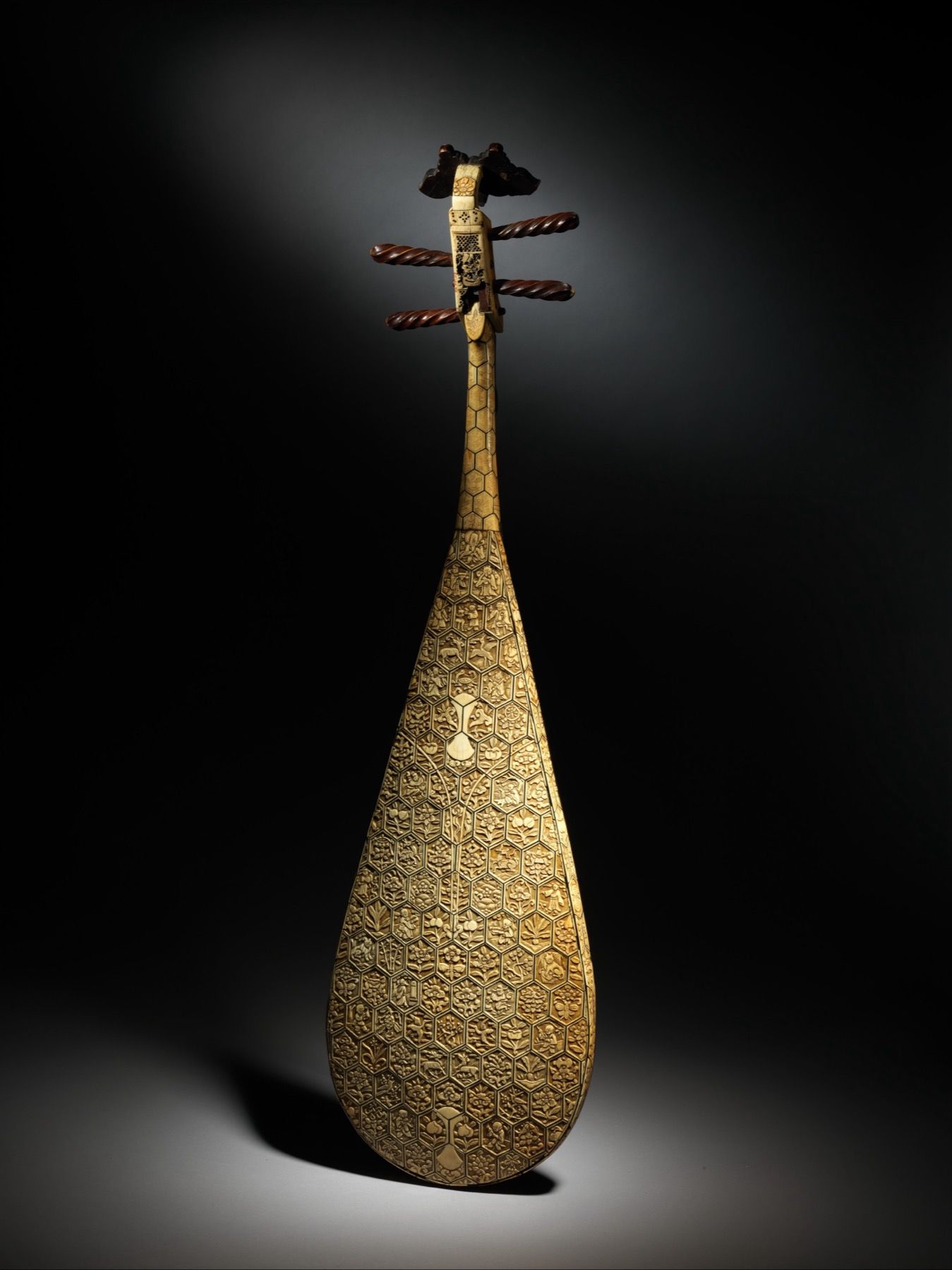
Chinese Instruments in Phantom Blade Zero: Pipa, Erhu, Xun, Suona
The Chinese instruments in Phantom Blade Zero's score: pipa, erhu, xun, suona, guqin and drums, their real battlefield history, and what each one means in the game.
Lion Dance in Phantom Blade Zero: The Real Roots
Lion dance explained: Northern and Southern lions, eye-dotting, plucking the greens, plum-blossom poles, and Flame, the Lion Dance Grandmaster of Phantom Blade Zero.
From Rainblood to Zero: The Phantom Blade Series History
How a free RPG Maker game by an architecture student became Phantom Blade Zero: every Rainblood and Phantom Blade release, the dates, and what the finished Zero changed.