History · Myth & folk religion
Chinese Mythology & Folklore in Phantom Blade Zero
神话 / 民俗shénhuà / mínsú
Is Phantom Blade Zero based on Chinese mythology? The real folk rituals behind it — nuo masks, puppets, deity processions, red threads, Kunlun — and what's invented.
Key facts
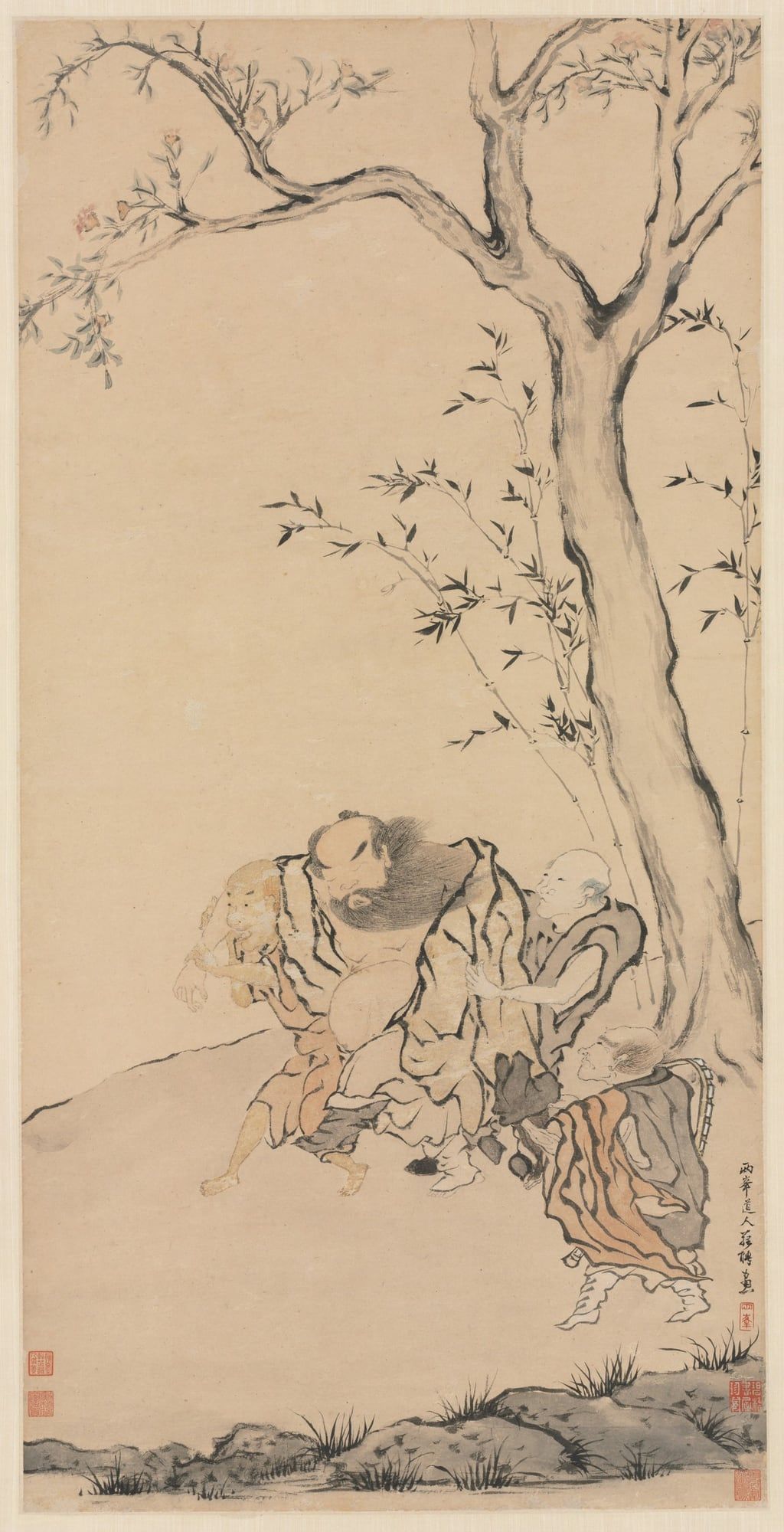
- Chinese mythology spans creation myths, Daoist and Buddhist cosmology and village folk religion; Phantom Blade Zero adapts none of them as its story, unlike Black Myth: Wukong's take on Journey to the West.
- Director Soulframe Liang says the game instead recasts folk culture and intangible heritage: ancestral-hall rites, Guangdong lion dance, Zhejiang puppetry, Fujian deity processions, Jiangxi nuo masks, Sichuan face-changing and Beijing opera.
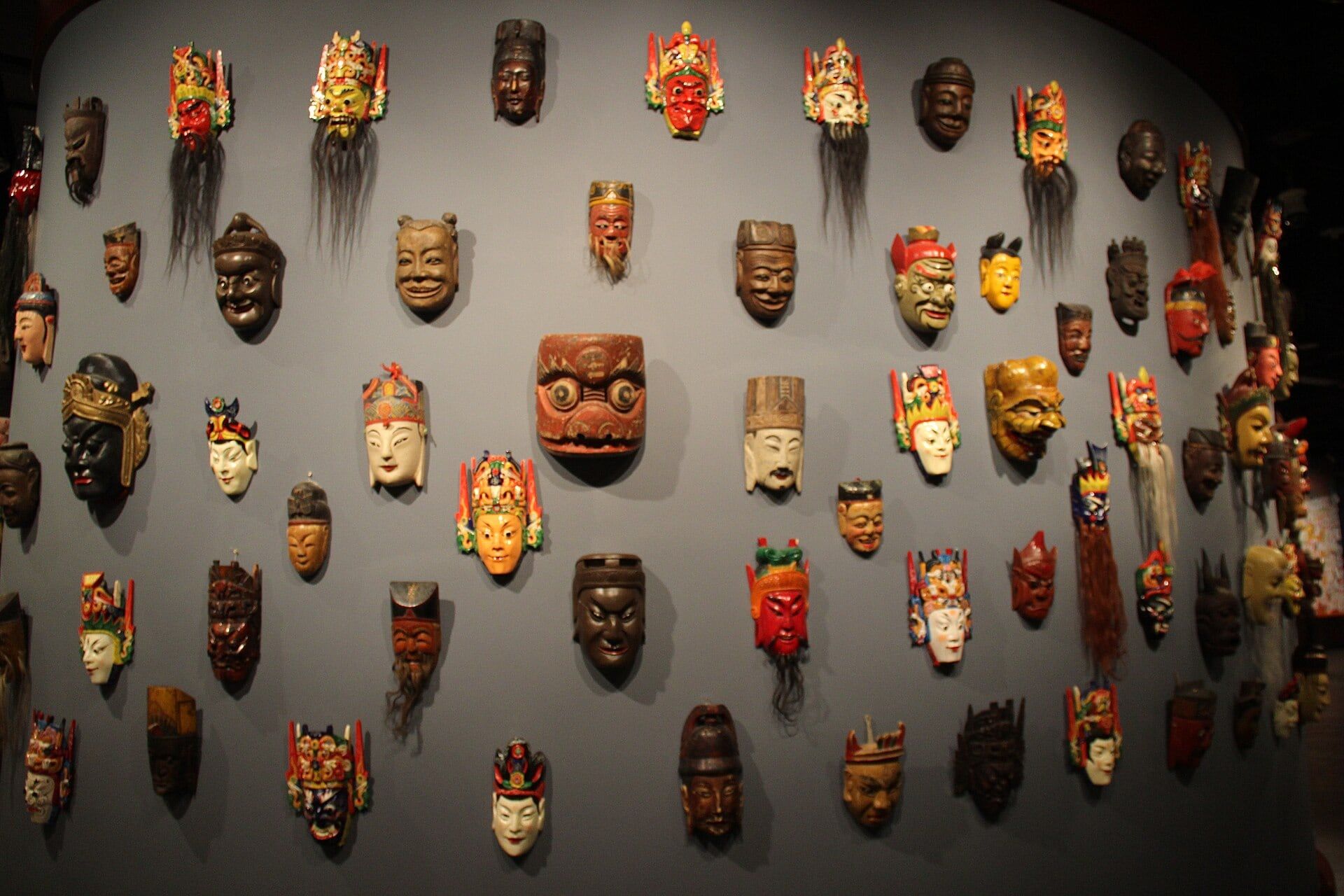
- Art director Michael says almost every fallen villain wears a mask, while the unmasked stand for xia who keep their conscience — a rule with deep roots in nuo exorcism and opera face-paint.
- The game's red threads echo the Tang tale of the Old Man under the Moon, whose red cords bind destined spouses even across enemy houses.
- Its Chinese tagline borrows the Buddhist Dharma-ending age (末法), and its world nods to Kunlun, the Big Dipper's Seven Stars and the folk treasure basin.
- Topic
- Folk religion, ritual theatre and myth motifs
- Studio's list
- Ancestral rites · lion dance · puppetry · deity processions · nuo · face-changing · Beijing opera
- Key motifs
- Masks · red threads · Seven Stars · Kunlun · 末法
- Not adapted
- Journey to the West, or any single myth cycle
- Genre
- Original wuxia fiction (kungfupunk)
Chinese mythology is the vast body of myths, legends and folk beliefs that runs from creation figures such as Pangu and Nüwa, through Daoist immortals and Buddhist hells, to the village gods still carried through the streets at festivals. Phantom Blade Zero does not retell any one myth. Its developers say they mined living folk ritual instead — masks, puppets, processions, lion dances — and rebuilt it as kungfupunk.
Is Phantom Blade Zero based on Chinese mythology?
Not in the way its famous rival is. Black Myth: Wukong (Game Science, 2024) adapts Journey to the West, a 16th-century novel of gods and demons. Phantom Blade Zero is original wuxia fiction set in the Phantom World, a fantasy China of martial artists, machines and the occult, and its hero is a mortal assassin, not a god. Soulframe Liang drew the line himself in an interview with Jiefang Daily:
如果说《黑神话:悟空》是对佛教文化和物质文化的再现,那么我希望可以对民俗文化和非物质文化遗产进行传承。 — “If Black Myth: Wukong re-presents Buddhist culture and material culture, then I hope to carry on folk culture and intangible cultural heritage.”
It helps to see “Chinese mythology” as several layers, only some of which the game touches:
| Layer | Examples | In Phantom Blade Zero? |
|---|---|---|
| Creation and classical myth | Pangu, Nüwa, the Classic of Mountains and Seas | Only as vocabulary, such as Kunlun |
| Gods-and-demons novels (shenmo) | Journey to the West, Investiture of the Gods | Not adapted — Black Myth’s territory |
| Buddhist and Daoist cosmology | The Dharma-ending age, the Big Dipper | In the tagline and boss design |
| Folk religion and ritual theatre | Nuo, puppets, processions, lion dance | The core of the studio’s list |
| Wuxia fiction | Jin Yong, Gu Long | The game’s genre |
For the setting question in full, see Is Phantom Blade Zero based on real Chinese history?; for the head-to-head, see Phantom Blade Zero vs Black Myth: Wukong.
The folk traditions the studio names
Liang gave Jiefang Daily a specific list of traditions that appear in the game, recast in kungfupunk form, alongside imperial ceremony. Each is a real, living practice:
| Tradition | The real practice | Game link and status |
|---|---|---|
| Ancestral-hall worship (宗祠祭祀) | Clans honour ancestral tablets in lineage halls; Zhu Xi’s Family Rituals popularised the name 祠堂, and commoners could build them widely only from the Ming Jiajing era (1522–1566) | S-GAME says it scouted ancestral halls in Fujian (official) |
| Lion dance (舞狮) | A two-person lion that drives off evil to drums and gongs | A late-game boss (press) — see our lion dance page |
| Puppet theatre (木偶戏) | Marionettes, glove and rod puppets, born as funeral music | A ritual warehouse of hanging puppets; a marionette boss (official) |
| Deity processions (游神) | Gods carried out of their temples to patrol their territory | Named by Liang; no specific scene confirmed yet |
| Nuo masks (傩面) | Exorcism masks going back to the Zhou dynasty | Masks mark fallen villains (art director) |
| Face-changing (变脸) | Sichuan opera’s split-second mask changes | Named by Liang |
| Beijing opera (京剧) | Qing-era theatre of song, acrobatics and painted faces | Named by Liang; “Chinese traditional opera” also cited as a kung fu ingredient |
Nuo masks, opera faces and the rule of the mask
The oldest mask on that list belongs to nuo , the exorcism rite. The Rites of Zhou describes its officiant, the Fangxiang shi, in an outfit that would not look out of place on a Phantom Blade boss:
方相氏掌蒙熊皮,黄金四目,玄衣朱裳,执戈扬盾,帅百隶而时难,以索室驱疫。
The Fangxiang shi wears a bearskin, with four eyes of gold, a black tunic and a red skirt. Holding a dagger-axe and raising a shield, he leads a hundred attendants in the seasonal exorcism, searching every house to drive out pestilence.
Nuo is still performed. Also known as “ghost theatre” (鬼戏), it has been on China’s national intangible heritage list since 2006, with entries from Jiangxi counties such as Wanzai and De’an, and at Spring Festival masked dancers still go door to door in villages around Nanfeng, Jiangxi.
Opera turned the mask into paint. Peking opera, born when four Anhui troupes came to Beijing for the Qianlong Emperor’s 80th birthday in 1790, encodes character in face colour: the warlord Cao Cao wears an all-white powdered face, the sign of a man who never shows his true face. Sichuan opera went further with bian lian , face-changing, in which a performer switches masks in an instant by wiping, blowing or pulling, to make a character’s inner turmoil visible. Its secrets were passed down within families, traditionally only to men.
Phantom Blade Zero builds a moral rule on this. Art director Michael told Gamersky that masks symbolise the disguise, confinement and repression of the jianghu, wrapping each character’s madness, obsession and inner struggle; almost every fallen villain appears masked, while the “unmasked” stand for xia who keep to their conscience and their code. (Liang has also joked that masks save facial-capture work.) Our reading: nuo inverts neatly here. In the old rite, putting on the mask turns a villager into a god; in the game, the mask marks the fall.
Puppets and processions: ritual theatre turned uncanny
Chinese puppetry began at the graveside. The Tang encyclopedia Tongdian says of the earliest puppet plays:
作偶人以戏,善歌舞。本丧乐也,汉末始用之于嘉会。
They make figures to perform plays, skilled at song and dance. Originally this was funeral music; only at the end of the Han was it first used at joyful banquets.
That ritual aura never quite left. Marionette troupes descended from the Fujian tradition still perform to drive off evil, and the game leans into the creepiness: the August 2026 State of Play showed “an abandoned warehouse filled with hanging puppets where a dark ritual seems to be taking place”, Chinese previews mention puppet-type enemies that shrug off bleeding, and in the Seven Stars fight the Chief Disciple’s surviving students work him like a marionette on crimson threads.
 Phantom Blade Zero - Year of the Snake Gameplay Trailer 2025
Deity processions, youshen , are ritual theatre at the scale of a whole town. Temple gods are carried out in sedan chairs to tour the streets, inspect the territory they rule and sweep away evil, trailed by drummers, stilt-walkers and lion dancers. In Fujian they were established by the Song dynasty at the latest, and they could be terrifying. When plague struck Fuzhou in 1642, villages staged processions for the Five Emperors, plague gods housed and fed like magistrates; townsmen painted themselves with ghost faces, and decorated boats were launched to carry the epidemic out to sea. A local record sums up the year:
自二月至八月,市镇乡村日成鬼国。
From the second month to the eighth, every day the towns and villages became a country of ghosts.
In southern Fujian, rival processions that met on the road were known to come to blows. Liang names Fujian deity processions among the game’s sources, but we have not seen a specific scene confirmed, so treat any one-to-one match as speculation for now.
Red threads of fate
The game’s most visible motif comes from a love story with a knife in it. In a Tang tale by Li Fuyan, preserved in the Taiping guangji, a young man named Wei Gu meets an old man reading by moonlight in 628. He is the Old Man under the Moon (月下老人), keeper of the underworld’s marriage registers, and his bag holds red cords:
赤绳子耳,以系夫妇之足……虽仇敌之家,贵贱悬隔,天涯从宦,吴楚异乡,此绳一系,终不可逭。
Only red cords, to tie the feet of husband and wife. Though their families be enemies, their ranks far apart, their posts at the ends of the earth or their homes in distant lands, once this cord is tied there is no escaping it.
Wei Gu is shown his destined bride, a toddler in a market, and sends a servant to stab her. Fourteen years later he marries a beautiful girl who always wears an ornament between her brows to hide a scar. Fate holds. Note the detail: the original Chinese cord binds the feet, not the little finger of later retellings.
Art director Michael says Phantom Blade Zero’s red threads work on both levels: they literally suspend and bind characters and objects, as with the snake boss and the Chief Disciple, and abstractly stand for the jianghu’s entanglements of love, hate and fate. S-GAME’s 2025 S-Party in Beijing was staged at the Shougang steelworks strung with thousands of crimson threads.
Kunlun, the Seven Stars and the Dharma-ending age
The game’s Chinese store tagline reads 在失序末法的武林中以身证道,以命寻心 — “in a disordered, Dharma-ending Wulin, prove the Way with your body and seek the heart with your life.” Mofa is a Buddhist term: after the age of the True Dharma and the age of its Semblance comes the Final Dharma, when the teaching survives only in decay. To “prove the Way with one’s body” (以身证道) is to realise it through lived, physical practice — a phrase that lands hard in a game where factions modify bodies with Sha-Chi.
| Term | Real meaning | In the game | Status |
|---|---|---|---|
| 末法 mòfǎ | The Buddhist age of the Dharma’s decline | Chinese store tagline | Official |
| 昆仑 Kūnlún | The gods’ mountain of the far west in the Classic of Mountains and Seas; also a classic wuxia sect | Boss 荒行子 (Huangxing), read by fans as a “Kunlun Renegade” | Chinese press / fan reading |
| 七星 qīxīng | The seven stars of the Big Dipper; Daoist priests “pace the Dipper” (步罡踏斗) in ritual | The Seven Stars sword formation (七星剑阵) | Official; Daoist link is our reading |
| 圣母娘娘 Shèngmǔ Niángniang | Folk title for mother goddesses — Mazu, for one, is hailed as 天上圣母 | The Lady of the Veil | Official name; real referent unknown |
| 彼岸花 bǐ’ànhuā | Red spider lily, said in East Asian lore to bloom along the road to the underworld | A greatsword that casts red spider lilies | Shacknews review |
| 聚宝盆 jùbǎopén | The folk “treasure basin” that multiplies whatever is put in it, tied to legends of the Ming tycoon Shen Wansan | Treasure Basin accessory: +10% Remnant Dust | Official |
Chinese coverage describes the Seven Stars swordsmen as “stepping on the seven stars” (脚踏七星) to form their array, which a single “unified brain” AI controls. Wuxia readers will think of Jin Yong, whose Quanzhen Daoists fight in a Big Dipper formation in The Legend of the Condor Heroes — a comparison, not a developer claim.
 Making a Chinese Nuo Opera Mask|中国传统傩面具的制作全过程
Folklore as raw material, not scripture
Black Myth: Wukong asks players to know a novel. Phantom Blade Zero asks them to recognise a texture: the bearskin and golden eyes of the nuo exorcist, the funeral puppet, the plague procession, the cord tied around an ankle. None of it is retold faithfully, and the developers never claim it is. That is the wuxia way — take the gods and ghosts of the village and put them in the hands of mortals who fight.
Names in this article · Codex
Frequently asked
Q01Is Phantom Blade Zero based on Chinese mythology?
Q02How is Phantom Blade Zero different from Black Myth: Wukong?
Q03What do the masks mean in Phantom Blade Zero?
Q04What is the red thread of fate in Chinese folklore?
Q05What does 末法 mean in Phantom Blade Zero's tagline?
Sources & further reading
- Zhouli (Rites of Zhou), “Xiaguan”: the Fangxiang shi exorcist — Wikisource
- Taiping guangji, juan 159: “Dinghun dian” (the Old Man under the Moon), from Li Fuyan's Xu Xuanguai lu — Wikisource
- Tongdian, juan 146 (on puppet plays) — Du You, 801 CE (Wikisource)
- Rongcheng jiwen (account of the 1642 Fuzhou plague processions) — Late Ming – early Qing local record
- Interview with Soulframe Liang on folk culture and intangible heritage — Jiefang Daily (解放日报), 21 Feb 2025
- Pre-order screening Q&A with Soulframe Liang, Bo Caisheng and art director Michael — Gamersky (游民星空), 12 Aug 2026
- Phantom Blade Zero store page (Chinese tagline) — Steam / S-GAME
Cite this page
Wuxiapunk Editors. (2026, October 27). Chinese Mythology & Folklore in Phantom Blade Zero. Wuxiapunk. https://wuxiapunk.com/history/chinese-mythology-folklore/
“Chinese Mythology & Folklore in Phantom Blade Zero.” Wuxiapunk, 27 Oct. 2026, https://wuxiapunk.com/history/chinese-mythology-folklore/.
Keep reading
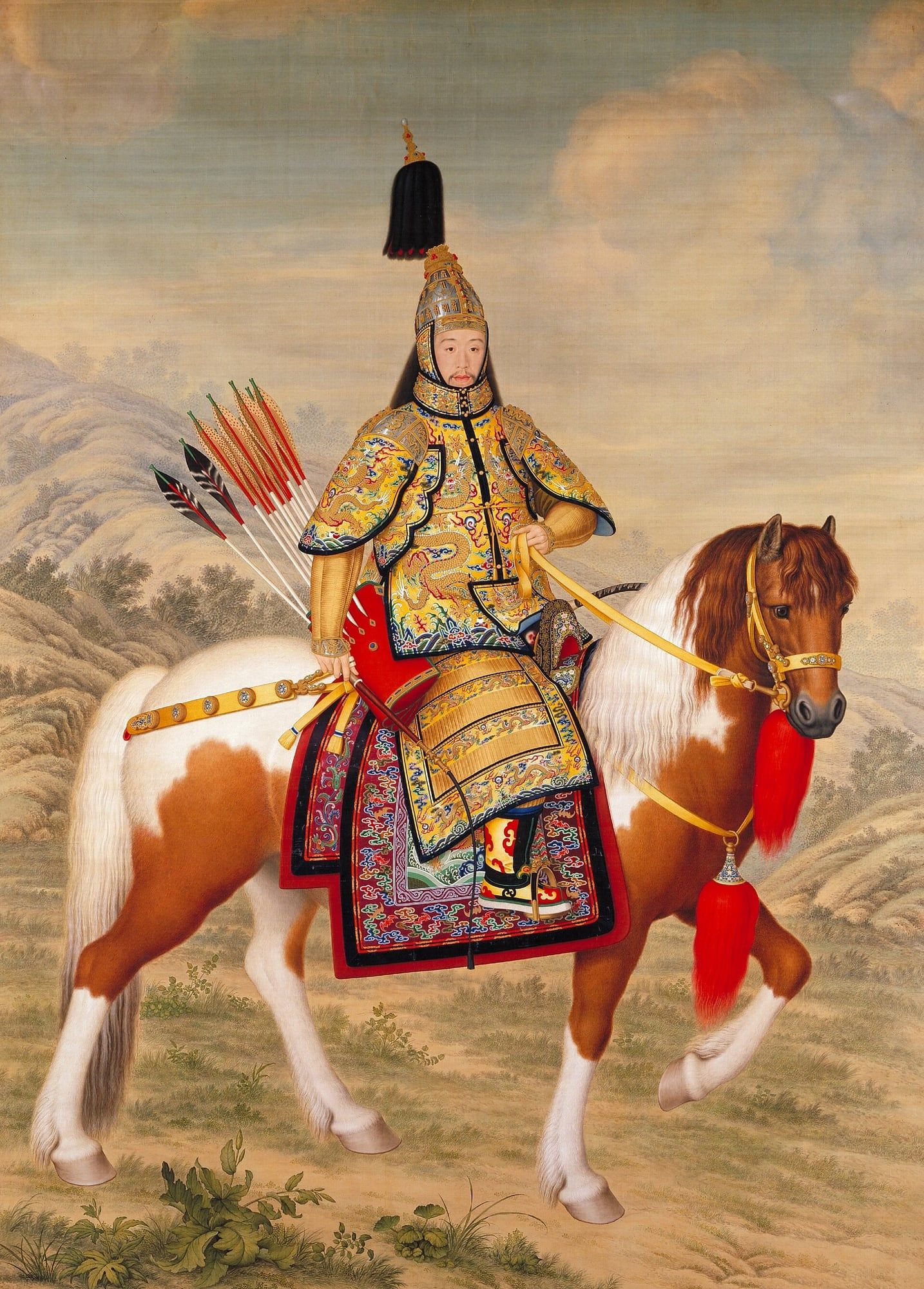
Is Phantom Blade Zero Based on Real Chinese History?
No: Phantom Blade Zero is original fiction in a fantasy China its director places “more or less” in the Ming era. What is real, what is invented, and why it matters.
Phantom Blade Zero vs Black Myth: Wukong — Culture Compared
Not a review: how Phantom Blade Zero's wuxia, folk heritage and attack-while-defending combat differ from Black Myth: Wukong's gods, demons and Buddhist world.
Lion Dance in Phantom Blade Zero: The Real Roots
What lion dance really is: Northern vs Southern lions, eye-dotting, plucking the greens and plum-blossom poles — and how Phantom Blade Zero turned it into a boss.