Core · The themes
What Phantom Blade Zero Is About: 末法, 以身证道 and 寻心
失序末法 · 以身证道 · 以命寻心shīxù mòfǎ · yǐ shēn zhèng dào · yǐ mìng xún xīn
What Phantom Blade Zero is about: its tagline (末法, 以身证道, 寻心) traced to its Chinese sources, the heart as central image, revenge, the xia, and power's price.
Key facts
- Phantom Blade Zero is about a dying assassin who chooses to keep his feelings over his life: offered a cure that would leave him pure calculation, Soul takes a poison that gives him 66 days.
- The Chinese store sums the game up in one line, 在失序末法的武林中以身证道,以命寻心: in a martial world that has lost its order, prove the Way with your body and seek the heart with your life (our translation; the English store has no such line).
- The words are classical: 末法 and 证道 stand together in the Tang monk Yongjia Xuanjue's Song of Proving the Way, and 寻心 is Mencius' “seek the lost heart” (求其放心).
- 心, the heart, is the game's central image: organ, feeling and conscience at once, from the prologue's two heart-arts to chapter titles such as Heartless Remnants (失心村) and The Heart's Trail (心之踪迹).
- Director Soulframe Liang (梁其伟) glosses 末法 himself: wuxia is the story of “a group of sick people” in an age “when order has collapsed”.
- Tagline (Chinese store)
- 在失序末法的武林中以身证道,以命寻心
- Official English premise
- A journey through “kindness and vengeance” (恩与仇) “in search of a heart” (寻心之旅)
- Central image
- 心: the Hollow Heart (闭心之术), the Tainted Heart (毒心之术), the Radiant Heart (无限煌心)
- Classical roots
- Song of Proving the Way, Mencius, Wang Yangming, Suwen, Zhuangzi, Sima Qian
- Fullest maker statement
- Podcast 《侠》, six hours with Soulframe Liang, released 13 Nov 2026
Phantom Blade Zero is about a dying assassin who would rather keep his heart than his life, and about what that heart turns out to be for. Its Chinese tagline says it in three phrases: in a Wulin that has lost its order (失序末法), Soul must prove the Way with his body (以身证道) and seek the heart with his life (以命寻心).
This page traces each phrase to the Chinese text it comes from and follows it through the game, down to the book or Memory Flower. The sections above the spoiler line quote scenes from across the game but say nothing about how it ends; the endings start below that line. The endings themselves are told in Phantom Blade Zero’s endings explained.
The tagline, word by word
The line ends the short description on the Simplified Chinese store page: “在失序末法的武林中以身证道,以命寻心。” The English store has no equivalent, so every English version, ours included, is a translation; it keeps only two of the ideas, a journey through “kindness and vengeance” (恩与仇) “in search of a heart” (寻心之旅). The words are Buddhist and Confucian, and the three phrases run in order: a world, a method, a goal.
失序末法: an age when order has failed
Shīxù is plain Chinese for “out of order”. Mòfǎ is the Buddhist Final Dharma, the last of three ages after the Buddha: after the True Dharma (正法) and the Semblance Dharma (像法), the scriptures remain and no one is saved by them. The monk Huisi (慧思) first counted the ages in Chinese, in the sixth century (our Lady of the Veil article quotes him).
The tagline’s two religious words, 末法 and 证道, appear together in one poem: the Song of Proving the Way (证道歌) by the Tang Chan monk Yongjia Xuanjue (永嘉玄觉). Its lament for the last age reads:
嗟末法,恶时世,众生福薄难调制。去圣远兮邪见深,魔强法弱多怨害。
Alas for the Final Dharma, an evil age: beings are poor in merit and hard to tame. Far from the sages, wrong views run deep; demons are strong, the Dharma is weak, and grievance and harm abound.
The makers use the word more loosely. In the six-hour podcast 《侠》 (Xia, released 13 November 2026), director Soulframe Liang (梁其伟, Liáng Qíwěi) defined wuxia with it: “在这个末法时代,在这个秩序崩塌的时代的一群病人的故事,我觉得这可能就是武侠故事了” (“the story of a group of sick people in this age of the Final Dharma, this age when order has collapsed: that, I think, may be what a wuxia story is”; our translation of the video’s machine subtitles). For Liang, 末法 means 失序. The rules no longer protect anyone.
The game shows that collapse institution by institution. In Reflections, a traveller’s eighteen-page guide to the world (Soul already carries three pages when the prologue ends), the Mandate (正道联盟), the alliance of righteous sects, loses the Lóng Clan that founded it and then its last strong leaders; by the page on the Village of Lu it exists in name only (名存实亡), and the abandoned villagers have turned to a new goddess. In the Mandate Encampment the Chief Disciple of the Seven Stars says it outright: “这个正道联盟,早就是空壳了!” (“this Mandate has long been an empty shell!”; petal II, our translation). The Order, the assassins’ guild Soul served, swapped good and evil for “rules”.
Into the gap comes a saviour. The Lady of the Veil (圣母娘娘) bears a boss title that begins 救苦救难, “she who saves from suffering”, a stock epithet of the bodhisattva Guanyin. Pure Land Buddhism taught that in the Final Dharma one’s own practice can no longer save, so one must rely on another’s saving power (他力). Our reading: the Lady is that answer, offered as a trap. The villagers’ petitions to her survive in Prayers and Vows.
以身证道: proving the Way with the body
Zhèng dào , the title word of Xuanjue’s poem, means to verify the Way: to realise it in your own experience rather than know it from books. 以身, “with the body”, makes the proof physical. We found no classical source for the four-character phrase; it reads as a modern coinage from old parts. The poem even hands the practitioner a blade: “大丈夫,秉慧剑” (“the true man grips the sword of wisdom”; our translation).
The classic image of proving with the body is bloodier. In The Gateless Barrier (无门关), a thirteenth-century collection of Chan cases, Huike (慧可), later the Second Patriarch, stands in the snow before Bodhidharma and cuts off his own arm:
二祖立雪断臂云:弟子心未安,乞师安心。磨云:将心来,与汝安。祖云:觅心了不可得。磨云:为汝安心竟。
The Second Patriarch stood in the snow, cut off his arm and said: “Your disciple’s heart is not at peace. Master, I beg you, set it at peace.” Bodhidharma said: “Bring me your heart and I will set it at peace.” The Patriarch said: “I have searched for the heart and cannot find it.” Bodhidharma said: “There. I have set it at peace for you.”
A mutilated body in the snow, a heart that cannot be found, a search that turns out to be the cure: no text sits closer to Phantom Blade Zero, whose last mountain is buried in snow. The link is our reading; no source says the writers used it.
In the game, bodies are where every idea is tested. Transcension (杀气改造) implants a device that generates Sha-Chi, and its own page in Mystery of Transcension warns: “But Sha-Chi gained in this way gradually erodes the user’s mind, eventually reducing the user to a mindless killing machine.” Perfect Transcension was pressed on the Mandate camp as an art that “focuses on enhancing strength while preserving clarity of mind” (Huangxing’s Betrayal); the youngest of the Seven Stars answers that “you’ll still lose yourself… just more slowly” (petal VI). Moji (墨玑子, Mòjīzǐ) of the Pillars of Kunlun refused it and was sealed, still living, in a clay statue (Moji’s Final Letter).
Our reading: two kinds of 以身证道 compete. The Transcended prove a way by rebuilding the body; Soul (魂, Hún) proves his by spending a body that is running out.
以命寻心: seeking the heart with a life
Mìng means both “life” and “fate”; xún xīn is “to seek the heart”. The clause names the price: the body is the proof, and life is what it costs. The classical form of the idea is Mencius, in the fourth century BCE:
仁,人心也;义,人路也。舍其路而弗由,放其心而不知求,哀哉!人有鸡犬放,则知求之;有放心,而不知求。学问之道无他,求其放心而已矣。
Humaneness is the human heart; rightness is the human road. To leave the road and not walk it, to lose the heart and not know to look for it: how sad! When people lose a chicken or a dog they know to look for it, but when they lose their heart they do not. The way of learning is nothing else: it is to seek the lost heart.
The passage just before names the opposite fate: 失其本心, “losing one’s original heart”. The Ming philosopher Wang Yangming (王阳明, 1472 to 1529) put all of morality inside the heart: “心即理也。天下又有心外之事、心外之理乎?” (“The heart is principle. Is there any affair, any principle, outside the heart?”; Instructions for Practical Living, vol. 1). Right and wrong are not rules to look up but what a heart cleared of selfish desire sees.
The game’s evidence starts in the prologue. Soul and his sworn brother Zuo Shang (左殇, Zuǒ Shāng) have pierced each other’s hearts. The Flesh Sculptor (鬼手) offers Soul two cures. The Hollow Heart would make his heart beat like new, but in the Chinese voice track he would lose “常人的七情六欲”, every ordinary feeling, and act only by “absolute reason and calculation” (our translation). The Tainted Heart 毒心之术 dúxīn zhī shùLiterally “the poisoned-heart art”: one of the two cures the Flesh Sculptor offers after Zuo Shang pierces Soul’s heart. The Hollow Heart (闭心之术) would mend the heart and take every feeling with it; the Tainted Heart keeps his feelings and gives him sixty-six days. Soul takes the poison.Glossary → keeps the heart beating with poison, “but in sixty-six days, it will claim your life.” Soul takes the poison. Zuo Shang, his bestiary entry says, chose the Hollow Heart: “His plan cannot afford to be swayed by emotion.”
From then on the game keeps naming the search. Its first two achievements are The Heart’s Journey (寻心路) and An Unwavering Heart (逆行不逆心); Chapter 3 is Heartless Remnants (失心村), and one Pangzhen chapter is The Heart’s Trail (心之踪迹). Facing the Herald, Soul says, as players transcribe the Chinese audio, “就算只活66天,我也希望作为一个真正的人而活” (“even if I live only 66 days, I want to live them as a real person”). That is Mencius’ lost heart, refused.
The 66 days belong to the same argument. At the last Lóng Pillar, Mó Yuan (魔渊, Mó Yuān) leaves Soul one lesson: “记住,无论生命还剩几天,都要让每一天无愧于心” (“however many days are left, let every day be one your heart need not be ashamed of”). Mencius again: “夭寿不贰,修身以俟之,所以立命也”, “short life or long, do not waver; cultivate yourself and wait: that is how you establish your fate” (Jinxin I, 1). Our pre-launch reading of the number is Why 66 days?; the retail game makes it a measure of a life, not a timer.
Spoiler line. From here on the page discusses the late game and all four endings.
The heart: the game’s central image
In Phantom Blade Zero 心 means three things at once: the organ (心脏), feeling (the 七情六欲 the Hollow Heart removes) and conscience (本心, the heart you answer to). Soul keeps the second and third by spending the first; in our reading, the whole story is built on that trade.
The game gives the organ a classical frame. Notes on the Heart Meridian, page 7 of Mystery of Transcension, opens with an unattributed line, 心者,生之本也, “the heart is the root of life”, then asks whether replacing the heart with “an exquisite Sha-Chi device” would give endless killing power and a longer life. The line comes from the Basic Questions (素问) of the Yellow Emperor’s Inner Classic:
心者,生之本,神之变也,其华在面,其充在血脉。
The heart is the root of life and the place where the spirit changes; its splendour shows in the face, its fullness in the blood vessels.
The game keeps “root of life” and drops “spirit”. The chapter before it makes the heart a ruler: “心者,君主之官也,神明出焉”, “the heart is the office of the sovereign, from which spirit and clarity issue”, and warns “主不明则十二官危”, “when the sovereign is not clear, the twelve offices are in danger” (ch. 8, 灵兰秘典论). Our reading: that is the Transcension plot in the language of medicine. A body whose sovereign is a machine is a body in danger.
The prize of the main story is such a machine: the Radiant Heart (无限煌心, wúxiàn huángxīn). Its blueprint, signed by Xuan Yu of the Eleven, is the last page of Zuo Shang’s Game; Zuo Shang traded the plans to the Herald, Leng Tu (冷荼, Lěng Tú) (Leng Tu’s Memory Flower), who built it in his workshop (The Herald’s Experiment Notes); captives were shipped off “to offer their last humble strength to calibrating the Radiant Heart” (Yu’er’s Memory Flower). Its item text leaves the verdict open: “A greedy heart that would devour all things… Or perhaps, a heart whose sense of justice has never faded.”
The ending cards put “心” in quotation marks in both languages: in Final Battle “the “Heart” was found”; in Undying Grudge Soul “failed to… find the “Heart””. Before the last fights Inanis (虚空) tells a ready Soul, “Follow your own heart!”, which we read as Wang Yangming’s ethic in four words. After the true ending’s credits she points out that implanting the Radiant Heart would itself be a Transcension, and Soul answers, as players transcribe the Chinese, “我找回了血,是否又要舍弃心”: “I have found my blood; must I now give up my heart?” (our translation). The game stops there.
Our reading: this is Huike in the snow again. The Chan answer to “I searched for the heart and cannot find it” is that the searching was the heart. The card says the heart was found; the last scene keeps the search open.
恩仇: grievance starts the story, kindness ends it
Ēnchóu , debts of kindness and debts of hatred, is wuxia’s engine, and Liang says so in the podcast: “仇恨和冤屈其实是那个因,侠义精神才是那个果” (“hatred and injustice are the cause; the chivalrous spirit is the result”; our translation). Every main relation in the game is a debt. Mu Tianmiao (沐天邈, Mù Tiānmiǎo), founder of the Order, raised two orphans after destroying both their birth clans. Zuo Shang’s plan starts as revenge for that, and he framed Soul by arranging for Soul’s own hand to kill their adoptive father. In the final duel he says, as players transcribe it, “你若知道沐天邈做过什么,你也会想杀了他的” (“if you knew what Mu Tianmiao had done, you would have wanted to kill him too”).
Soul never takes revenge. He fights to stop a plan, not to repay a wrong, and gives his reason for the poison: “因为我不想变成你这样” (“because I didn’t want to become like you”). Kindness wins instead. On the snow road up Mount Soulrend the people Soul helped wait to see him off (players report that who appears depends on how far their quests went), and old enemies return as golden spirits to fight beside him. The endings article reads this through Confucius’ “repay injury with uprightness”.
The brothers’ version is told twice. The side tale Kin Against Kin (相煎何急), carried by the Bitter Kin flowers, borrows the title of Cao Zhi’s Seven-Step Poem for two brothers of a Pangzhen farming family who fall out over money for a wedding; its English subtitle, “Shared roots, divergent fates”, echoes the poem’s “same root”. Our reading: the main plot plays the same poem among heirs. In Undying Grudge, the ending reached only on 66 Days difficulty, Zuo Shang pours wine at Soul’s grave and, as players transcribe the Chinese audio, says that no one now stands in his way and no 知己 (zhījǐ), no friend who truly knew him, is left. The codex entry for his last form, the True Lóng, had already said it: “he had already lost the possibility of having a ‘kindred spirit.’”
侠: from Han Feizi to “Do not play the hero”
The xia 侠 xiáA person who acts on personal righteousness — protecting the weak, repaying debts and keeping promises — even against the authorities.Glossary → has been defined against the law from the start. Han Feizi, in the third century BCE, counted him among the vermin of the state: “儒以文乱法,侠以武犯禁”, “scholars disorder the law with letters; the xia break its bans with force”. Sima Qian quoted that line to open his chapter on the wandering xia, and then answered it:
今游侠,其行虽不轨于正义,然其言必信,其行必果,已诺必诚,不爱其躯,赴士之厄困。
The wandering xia of today do not keep to the path of righteousness in what they do; but their word is always kept, their deeds are always carried through, a promise once given is always honoured; they do not spare their own bodies, and they hasten to men in trouble.
He also took the side of the commoners among them, “the xia of the common lanes” (闾巷之侠), whom Confucian and Mohist writers left out of their books, and regretted that the commoner xia before the Qin had vanished without a record: “自秦以前,匹夫之侠,湮灭不见,余甚恨之” (“of the commoner xia before the Qin, nothing survives, and I deeply regret it”). What is wuxia tells the longer history.
Liang’s xia is Sima Qian’s almost point for point: a commoner who appears where “秩序已经崩塌”, where order has collapsed and the law cannot reach, and who must take a real risk, “侠一定是要承受巨大风险的” (“a xia must bear great risk”; podcast). He calls that courage “a kind of sickness, but a positive one” (“这也是一种病态,但那种病态是正向的”).
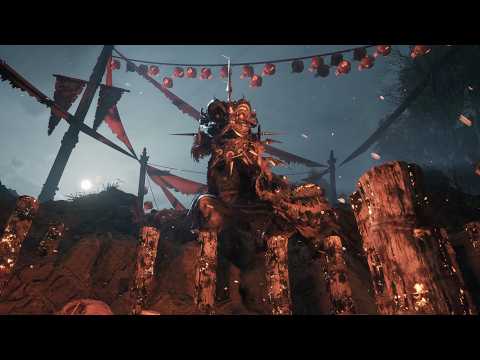 What exactly is Wuxia? Phantom Blade Zero Director Soulframe Breaks It Down
The Order stands on the other side. Its creed opens The Order series: “The Order kills those no one else can kill. It saves those no one else can save.” Mu Tianmiao’s teaching to the children he raised was shorter: “Do not play the hero.” (切勿行侠仗义). Our reading: the Order keeps Sima Qian’s chapter on assassins (刺客列传) and tears out the chapter on the wandering xia, and Soul’s 66 days move him from one chapter to the other. Chinese assassins covers the first.
The game’s texts argue the point. In Qianqian’s Memory Flower, Moji tells his disciple that true chivalry “is not in deeds that shake heaven and earth, but in guarding, at every moment, the sense of right in your heart” (our translation). The introduction to the Twin Heroes’ flowers asks of the Mandate’s orders “可这算什么正道?谁的正道?” (“what kind of righteous way is this? whose?”). Near the end Mu Xiaokui (沐小葵), the founder’s daughter, says it in one line: “没想到这个武林,最后竟然只有你会去管大多数人的死活” (“who would have thought that in this Wulin, in the end, only you would care whether most people live or die”).
The price of power: 机心 against Transcension
The oldest Chinese warning against Transcension is about a well. In the Zhuangzi chapter “Heaven and Earth” (天地), Confucius’ disciple Zigong finds an old gardener carrying water up from a well in a jar, and shows him a well-sweep, a weighted lever that lifts water with little effort. The gardener refuses it:
吾闻之吾师:有机械者必有机事,有机事者必有机心。机心存于胸中则纯白不备,纯白不备则神生不定,神生不定者,道之所不载也。吾非不知,羞而不为也。
I have heard from my teacher: whoever has machines will have machine business, and whoever has machine business will have a machine heart. With a machine heart in your breast, your purity is lost; with your purity lost, your spirit has no rest; and a spirit with no rest is one the Way will not carry. It is not that I do not know of it. I would be ashamed to use it.
Jīxīn , literally “machine heart”, is the gardener’s word for the scheming mind that machines breed. Phantom Blade Zero builds its world out of it: Sha-Chi Towers, engine art, devices bolted into bodies (Sha-Chi towers, steam and iron covers the machinery). Liang says the fallen heroes, Huangxing (荒行子, Huāngxíngzǐ) among them, “曾经也坚守侠义本心” (“once held fast to the chivalrous heart”; August 2026), and of Zuo Shang that he would wipe out his own humanity to grow strong and “失去自己的心”, “lose his own heart” (podcast).
Our reading goes one step further. The Hollow Heart is a Transcension of the mind: reason without feeling. Soul’s whole story refuses it, and the reward for refusing is the Radiant Heart, “an intricate mechanical heart”, the most perfect Transcension in the game. The true ending’s last question is the gardener’s: whether to take the machine. Wuxia has its own version, the forbidden manual that gives power at the cost of the self and ends in 走火入魔 (zǒu huǒ rù mó), the madness of forced inner power. Phantom Blade Zero turns the manual into surgery.
Themes and their roots at a glance
| Theme | Chinese phrase | Classical source | Where the game shows it |
|---|---|---|---|
| The world after order fails | 失序末法 | The three ages of the Dharma (Huisi); Song of Proving the Way: 魔强法弱多怨害 | Reflections: the Mandate “in name only”; Seven Stars II, “an empty shell”; the Lady’s cult and Prayers and Vows |
| Proof in the body | 以身证道 | Song of Proving the Way; Gateless Barrier 41, Huike’s arm | Mystery of Transcension; Moji sealed in a statue; Soul’s poisoned heart |
| Seeking the heart | 以命寻心 | Mencius, 求其放心 and 失其本心; Wang Yangming, 心即理 | The prologue choice; achievements 寻心路 and 逆行不逆心; chapters 失心村 and 心之踪迹 |
| A life measured, not timed | 立命 | Mencius, 夭寿不贰,修身以俟之 | Mó Yuan’s “让每一天无愧于心”; the 66 Days mode |
| The heart as root and ruler | 心者,生之本 | Suwen, chapters 8 and 9 | Notes on the Heart Meridian; the Radiant Heart; “心” on the ending cards |
| Kindness and vengeance | 恩仇, 恩与仇 | The 知己 ideal; Cao Zhi’s “same root” | Soul refuses revenge; the road up Mount Soulrend; Bitter Kin |
| The xia | 侠, 行侠仗义 | Han Feizi, 侠以武犯禁; Sima Qian, 游侠列传 | The Order’s “Do not play the hero”; Qianqian; Twin Heroes |
| The price of power | 机心 | Zhuangzi, “Heaven and Earth” | Transcension, Perfect Transcension, the Radiant Heart |
Three debates, both sides
The arguments players and critics have had since launch are mostly about method, not about these themes. Each verdict below is ours.
Wuxia or kungfupunk?
The English store sells the look: “The golden age of wuxia cinema collides with punk fantasy.” Liang gives the term a meaning in the podcast: “武侠是从自己走向他者……朋克是从自我走向自我” (“wuxia goes from the self toward others; punk goes from the self back to the self”). Against the game, the Bilibili essayist 念空楼主 asks whether the dark shell leaves anything of the xia, and a commenter says it “只突出了游戏的武,侠的感觉一点都体会不到”, all martial and no chivalry. For it, the video essayist Leya (蕾雅) concludes that it “依旧可以被视作一个传统朴素的武侠故事”, still a plain, traditional wuxia story.
Our verdict: both, in Liang’s own terms. Soul sets out to save himself and ends up saving the world, which is wuxia; the question he is left with, about his own heart, is punk. “Kungfupunk” names the surface; the Chinese tagline speaks the old language of Buddhists and Confucians. The look has its own page: What wuxiapunk looks like.
Gu Long or Jin Yong?
For Gu Long: Liang made the comparison himself, “李寻欢是肺痨,那魂就是心脏病了” (“Li Xunhuan had consumption; Soul has heart disease”), and named a Gu Long horror novel, rendered 《雪鹦鹉》 in the subtitles and which we take to be 《血鹦鹉》 (The Blood Parrot), as a model for his student game Rainblood: Town of Death. For Jin Yong: the righteous alliance, the six sects, a hypocrite sect leader and a bloodline feud are his furniture, and Liang lists The Smiling, Proud Wanderer (笑傲江湖) among the books that shaped him.
Our verdict: the world is Jin Yong’s; the hero, a sick and silent killer with a deadline, and the telling, all cuts and fragments around a nameless organisation, are Gu Long’s.
Is the story too fragmented?
IGN’s Travis Northup wrote that the story “tries to do a bit too much, shoving in a whole bunch of mystical jargon, dozens of characters, and a needlessly complex timeline”. Kotaku’s Imran Khan found it “overbearing and incomprehensible”. Polygon’s Paulo Kawanishi answered that the game gives “little to no exposition” and that “to enjoy a story like Phantom Blade Zero’s is to trust the process”. Liang told Gamersky on 9 October 2026 that the main line is told plainly and the fragments are kept for side characters and bosses, to show that “每个配角、每个小人物都有自己的恩怨情仇,芸芸众生各有宿命”: every minor figure has his own grievances, every living soul a fate.
Our verdict: critics who judged the cutscenes found a muddle; those who read the fragments found the story. Nearly every theme on this page lives in one of the 218 books in the Library or the 37 Memory Flowers (130 pickups), and this site explains each one.
What the makers said, in date order
- 11 August 2026, pre-order screening (Gamersky transcript). Liang: of the game’s three layers of human ties, the bond between the xia and ordinary people is “最核心的一层”, the most central. Art director Michael: masks stand for disguise and confinement, while the unmasked “代表乱世中坚守本心、恪守侠义的侠客” (“stand for the xia who keep their original heart in a time of chaos”); see masks, red threads and costume.
- 9 October 2026, Gamersky interview. A “末世武侠” world, wuxia after the apocalypse; plain main line, fragmented side stories, by design.
- 28 October 2026, launch letter “Reason and Madness” (Steam). The story’s darkness and the 66-day countdown exist “to take that sense of strength beyond what you can do in battle and make it something you feel within yourself.”
- 13 November 2026, podcast 《侠》, recorded before launch (all podcast quotes on this page are taken from the video’s machine subtitles). 末法 as an age of collapsed order, the xia’s positive sickness, and the plot’s inversion: “魂是他本意是要救自己,他最后的结果是拯救世界,然后左殇的本意是拯救世界,他最后的结果是毁灭世界” (“Soul set out to save himself and ended up saving the world; Zuo Shang set out to save the world and ended up destroying it”).
As of 15 November 2026 S-GAME has not explained the endings, nobody on the team has glossed 以身证道 or 以命寻心, and who wrote the tagline is not known.
Liang’s inversion is the shortest summary of the game. A man who wanted only to save himself keeps his heart and saves the world; a man who wanted to save the world gives up his heart and nearly ends it. Every theme above, the last age, the body as proof, the lost heart, the debt, the xia and the machine, is a way of telling which of the two you are looking at.
Names in this article · Codex
Frequently asked
Q01What is Phantom Blade Zero about?
Q02What does 以身证道,以命寻心 mean?
Q03What does 末法 mean in Phantom Blade Zero?
Q04Why did Soul choose the Tainted Heart instead of the Hollow Heart?
Q05Is Phantom Blade Zero a revenge story?
Sources & further reading
- Phantom Blade Zero store text, Simplified Chinese (tagline, premise) — Steam
- Phantom Blade Zero store text, English (premise, kungfupunk) — Steam
- Soulframe Liang, “Reason and Madness” (launch letter, 28 Oct 2026) — Steam announcements
- 《侠》|对影之刃零制作人梁其伟6小时访谈 (podcast video, 13 Nov 2026) — Zhang Xiaojun, 商业访谈录 (Bilibili)
- 《影之刃零》预购观影会问答 (pre-order screening Q&A, Aug 2026) — Gamersky (游民星空)
- 《影之刃零》专访 (interview with Soulframe Liang, Oct 2026), page 3 — Gamersky (游民星空)
- Phantom Blade Zero review (Travis Northup, 26 Oct 2026) — IGN
- Phantom Blade Zero: The Kotaku Review (Imran Khan) — Kotaku
- Phantom Blade Zero review (Paulo Kawanishi, 26 Oct 2026) — Polygon
- Yongjia Xuanjue, Song of Proving the Way (永嘉證道歌) — Wikisource
- 末法 (the three ages of the Dharma; Huisi; Pure Land and 他力) — Chinese Wikipedia
- 观世音菩萨 (Guanyin, “大慈大悲”, saving from suffering) — Chinese Wikipedia
- The Gateless Barrier (無門關), case 41: Bodhidharma sets the heart at peace — Wikisource
- Mencius, Gaozi I (孟子·告子上), 10 and 11 — Wikisource
- Mencius, Jinxin I (孟子·盡心上), 1 — Wikisource
- Wang Yangming, Instructions for Practical Living (傳習錄), vol. 1 — Wikisource
- Yellow Emperor's Inner Classic, Suwen vol. 3 (靈蘭秘典論, 六節藏象論) — Wikisource
- Han Feizi, The Five Vermin (韓非子·五蠹) — Wikisource
- Sima Qian, Records of the Grand Historian, ch. 124: The Wandering Knights (游俠列傳) — Wikisource
- Zhuangzi, Heaven and Earth (莊子·天地) — Wikisource
Cite this page
Wuxiapunk Editors. (2026, November 15). What Phantom Blade Zero Is About: 末法, 以身证道 and 寻心. Wuxiapunk. https://wuxiapunk.com/history/what-phantom-blade-zero-is-about/
“What Phantom Blade Zero Is About: 末法, 以身证道 and 寻心.” Wuxiapunk, 15 Nov. 2026, https://wuxiapunk.com/history/what-phantom-blade-zero-is-about/.
Keep reading
Phantom Blade Zero Endings Explained: All 4 Endings and the True Ending
Phantom Blade Zero's four endings explained: the two quests that decide them, what happens in each, the post-credits question, and what the finale means.
Why 66 Days? The Meaning Behind Soul's Countdown
Why does Soul have 66 days to live in Phantom Blade Zero? The Tainted Heart he chose, what the count does in retail, the 66 Days mode and Undying Grudge, and lucky six.
What Is Wuxia? Meaning, Pronunciation & Phantom Blade Zero
Wuxia (武侠, wǔxiá) means “martial chivalry”: Chinese tales of wandering sword-heroes. Its meaning, pronunciation, 2,000-year history and place in Phantom Blade Zero.